CPUID restores temperature monitoring for Nvidia RTX 50 series
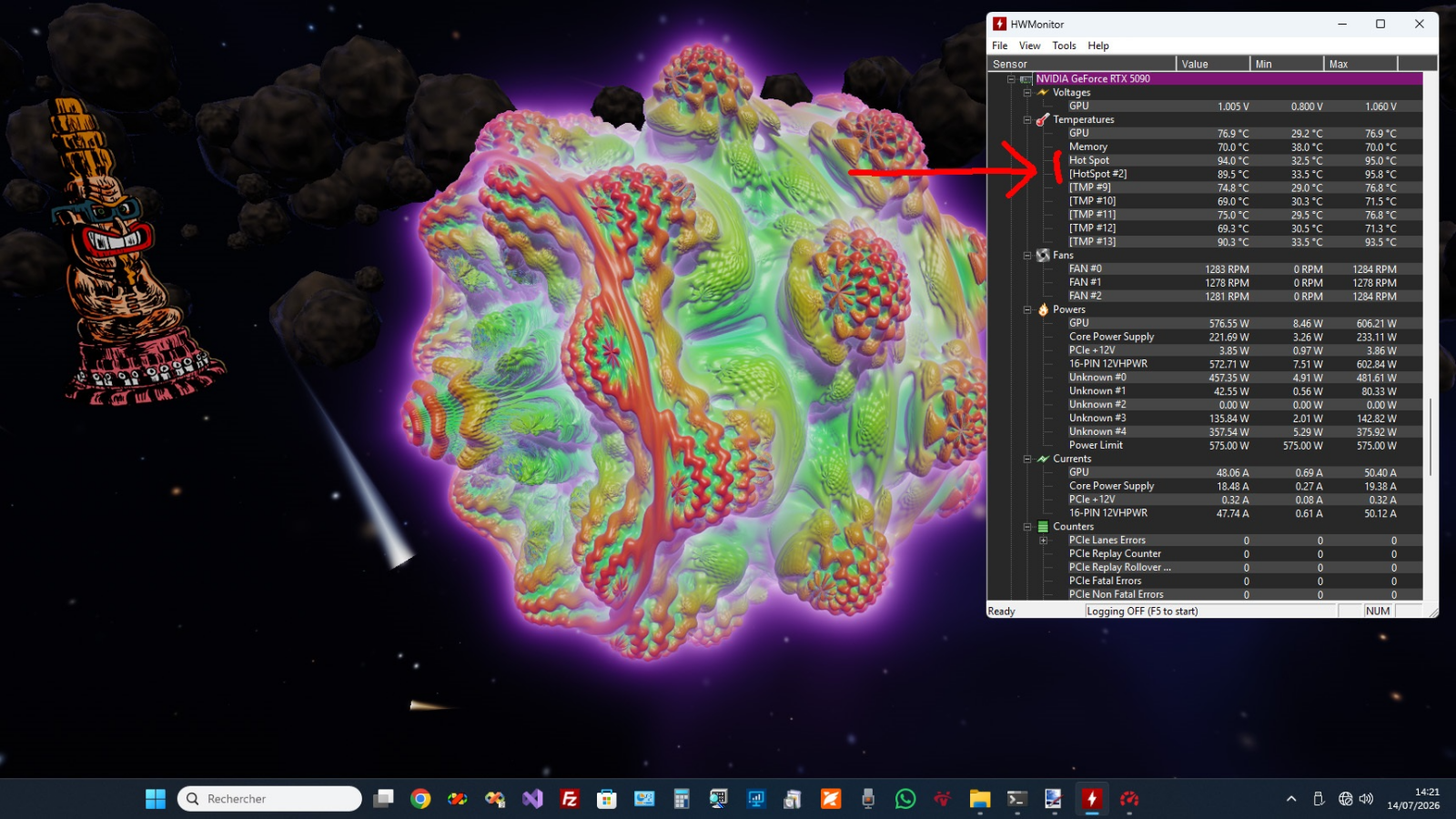
💡Critical for AI developers using RTX 50 GPUs to prevent thermal throttling during intensive model inference.
⚡ 30-Second TL;DR
What Changed
Nvidia disabled native temperature monitoring on RTX 50 series via software
Why It Matters
AI developers running local inference on RTX 50 series GPUs can now accurately monitor thermal performance to optimize batch processing and prevent hardware degradation.
What To Do Next
If you are running local LLM inference on RTX 50 series cards, install the latest CPUID update to ensure your cooling solution is performing under heavy AI workloads.
Key Points
- •Nvidia disabled native temperature monitoring on RTX 50 series via software
- •CPUID team developed a workaround to access hardware sensor data
- •Monitoring is essential for preventing thermal throttling and hardware damage
🧠 Deep Insight
AI-generated analysis for this event.
🔑 Enhanced Key Takeaways
- •The restriction was reportedly linked to Nvidia's new 'Blackwell' telemetry API, which restricts third-party access to specific thermal registers to prioritize proprietary software suites.
- •CPUID's workaround utilizes a low-level driver bypass that queries the GPU's SMBus directly, circumventing the locked-down Nvidia kernel-mode driver interface.
- •Community backlash intensified after early RTX 50 series adopters reported that standard monitoring tools like MSI Afterburner and HWiNFO were unable to pull data until the CPUID update.
- •Nvidia has officially stated that the telemetry restriction is intended to ensure data accuracy and prevent conflicts with their 'Nvidia App' monitoring overlay.
- •The CPUID update specifically addresses the 'Hot Spot' and 'Memory Junction' temperature reporting, which were the primary metrics obscured by the initial software lock.
📊 Competitor Analysis▸ Show
| Feature | CPUID (HWMonitor) | HWiNFO | MSI Afterburner | GPU-Z |
|---|---|---|---|---|
| RTX 50 Series Support | Restored (Workaround) | Pending/Partial | Limited | Pending |
| Pricing | Free (Freemium) | Free (Personal) | Free | Free |
| Data Depth | High | Very High | Moderate | High |
🛠️ Technical Deep Dive
- The RTX 50 series utilizes a new Blackwell-based thermal management architecture that encrypts telemetry data packets between the GPU firmware and the OS driver.
- CPUID's implementation involves a custom polling routine that targets the I2C/SMBus addresses assigned to the thermal sensors, bypassing the standard WMI (Windows Management Instrumentation) calls.
- The workaround requires the user to run the monitoring software with elevated administrative privileges to allow the driver to interact with the hardware registers directly.
- This method effectively ignores the Nvidia driver's software-level 'block' by reading the raw voltage and temperature values directly from the sensor ICs on the PCB.
🔮 Future ImplicationsAI analysis grounded in cited sources
⏳ Timeline
Weekly AI Recap
Read this week's curated digest of top AI events →
👉Related Updates
AI-curated news aggregator. All content rights belong to original publishers.
Original source: cnBeta (Full RSS) ↗