SourceITmedia AI+ (日本)•Stalecollected in 87m
Copilot Goes Token-Based Pay-Per-Use
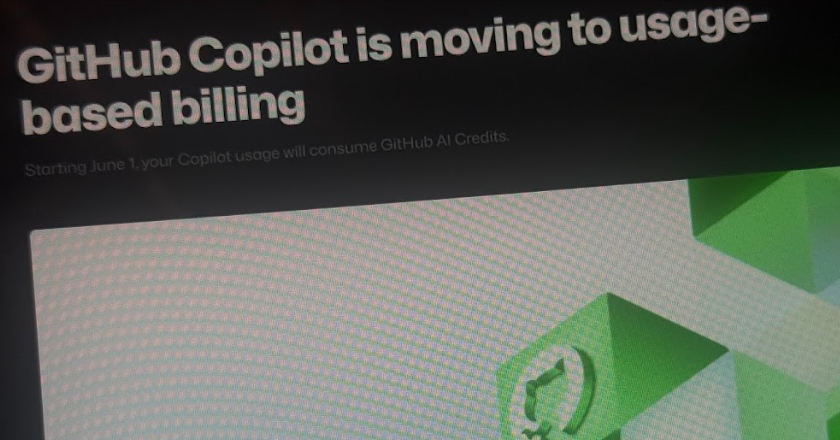
💡Copilot drops unlimited: token billing hits agentic devs hard
⚡ 30-Second TL;DR
What Changed
Switches to per-token billing
Why It Matters
Heavy users face higher costs but fairer model; may slow casual adoption while suiting enterprises. Signals trend in AI tool monetization.
What To Do Next
Audit your Copilot usage logs to forecast token costs under new model.
Who should care:Developers & AI Engineers
Key Points
- •Switches to per-token billing
- •Ends unlimited flat-rate plans
- •Targets agentic use cost alignment
- •Fixes request-over-fee discrepancies
🧠 Deep Insight
AI-generated analysis for this event — not the original article.
🔑 Enhanced Key Takeaways
- •The transition includes a tiered 'Token Allowance' system where enterprise customers can set hard spending caps to prevent runaway costs associated with autonomous agent loops.
- •GitHub is introducing a new 'Usage Analytics Dashboard' that provides real-time visibility into token consumption per repository and per developer, enabling granular cost attribution.
- •The shift is driven by the integration of multi-modal models (like GPT-5 and specialized coding models) which have significantly higher inference costs compared to the previous generation of Copilot models.
📊 Competitor Analysis▸ Show
| Feature | GitHub Copilot | Cursor (Composer) | Amazon Q Developer |
|---|---|---|---|
| Pricing Model | Token-based (Pay-per-use) | Subscription + Usage-based | Subscription + Usage-based |
| Agentic Capability | High (Multi-file/Repo) | High (Context-aware) | High (AWS-integrated) |
| Billing Transparency | High (New Dashboard) | Moderate | Moderate |
🛠️ Technical Deep Dive
- •The new billing engine utilizes a real-time telemetry pipeline that intercepts API calls to the inference backend to calculate token counts (input + output) before the response is fully streamed.
- •Token counting logic accounts for 'System Prompts' and 'Context Window' overhead, which are now explicitly billed rather than being subsidized by the flat-rate fee.
- •Implementation involves a new API gateway layer that enforces per-user token quotas, integrating directly with GitHub's existing billing infrastructure for seamless invoicing.
🔮 Future ImplicationsAI analysis grounded in cited sources
Developer productivity metrics will shift from 'lines of code' to 'cost-per-feature'.
As organizations gain granular visibility into token spend, they will inevitably tie AI expenditure directly to the delivery velocity of specific software modules.
The market will see a surge in 'Token-Efficient' prompting tools.
With direct financial incentives to minimize token usage, third-party middleware will emerge to optimize context window management and prompt compression.
⏳ Timeline
2021-10
GitHub Copilot launches in technical preview.
2022-06
General availability of GitHub Copilot for Individuals.
2023-03
Introduction of Copilot X, expanding into chat and CLI interfaces.
2024-05
GitHub Copilot Workspace announced, enabling agentic task planning.
2026-04
GitHub officially transitions to token-based billing for Copilot.
📰
Weekly AI Recap
Read this week's curated digest of top AI events →
👉Related Updates

AI-curated news aggregator. All content rights belong to original publishers.
Original source: ITmedia AI+ (日本) ↗
This is a summary, not the original. Read the source, or get the weekly briefing.
The weekly digest
One email a week. Unsubscribe anytime.