Cooking Robots Scale in Chinese Catering
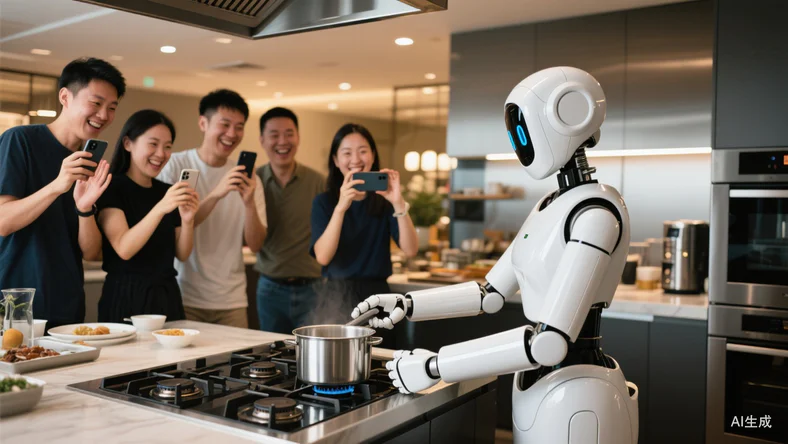
💡Robotics invading catering: efficiency vs novelty paths for AI apps in service industry
⚡ 30-Second TL;DR
What Changed
Pancake robots automate precise spreading, egg cracking, saucing in street stalls and malls.
Why It Matters
Robots challenge catering labor shortages but face adoption hurdles from high capex and consumer preference for human interaction. Success hinges on proving ROI in efficiency or novelty.
What To Do Next
Test pancake robot prototypes in a pilot store to measure throughput vs human benchmarks.
Key Points
- •Pancake robots automate precise spreading, egg cracking, saucing in street stalls and malls.
- •Coffee humanoid robots act as front-facing attractions, assisted by humans for actual brewing.
- •2025 called 'fry-cooking robot year' with scale-up from exhibitions to production.
- •Two paths: standardization/efficiency vs emotional/traffic value.
- •High costs (tens to hundreds of thousands USD) offset labor savings but lack human touch.
🧠 Deep Insight
Background and context from public sources — not the original article. 5 sources cited.
🔑 Enhanced Key Takeaways
- •Pancake robots in Chinese street stalls and malls automate precise spreading, egg cracking, and saucing, boosting efficiency as deployments scale in 2025.[1]
- •Hangzhou's 24 Solar Terms AI Robot Restaurant began trial operations on January 20, 2026, featuring over a dozen robots for cooking noodles, coffee, serving, and cleaning, blending AI with traditional Chinese wellness principles.[2]
- •Cooking robots in Hangzhou precisely chop ingredients, measure spices, control stir-frying force and speed, and prepare over 100 local dishes like three-cup chicken and noodles in about three minutes.[1]
- •2025 saw a shift from exhibition demos to production-scale deployments of fry-cooking robots in Chinese catering, with high costs (tens to hundreds of thousands USD) debated against labor savings and lack of human touch.[article]
- •Two development paths emerge: standardization for efficiency in tasks like pancake making vs novelty attractions like coffee humanoids to draw crowds.[article]
📊 Competitor Analysis▸ Show
| Feature | Hangzhou 24 Solar Terms Restaurant | General Cooking Robots |
|---|---|---|
| Dishes | 100+ local Chinese, noodles in 3 min, three-cup chicken | Pancakes, stir-fry, coffee |
| Robots | 12+ types (cooking, noodle, coffee, serving, cleaning) | Specialized (pancake, humanoid coffee) |
| Pricing | Not specified | Tens to hundreds of thousands USD |
| Benchmarks | Precise chopping, spice measurement, force/speed control | Efficiency in stalls/malls, novelty crowds |
🛠️ Technical Deep Dive
- Robots imitate human chef movements via pre-established AI programs for adding ingredients, mixing, and cooking dishes like three-cup chicken.[1]
- Noodle robot grips and lowers noodles into boiling water, cooks three types simultaneously in ~3 minutes.[1][2]
- Coffee robot rotates tray to pour milk and add sugar with precision.[2]
- Technology enables accurate chopping, precise spice measurement, exact stir-frying force and speed for consistent taste and appearance.[1]
- Coordinated system where robots handle ordering, cooking, serving, cleaning; customers view via glasses.[1]
🔮 Future ImplicationsAI analysis grounded in cited sources
Rise of cooking robots in 2025 signals shift from demos to real-world deployments in Chinese catering, potentially reducing labor needs but raising debates on high costs vs savings and loss of human touch; full automation like Hangzhou's trial could redefine restaurant operations, making human cooking a luxury.[1]
⏳ Timeline
📎 Sources (5)
Factual claims are grounded in the sources below. Forward-looking analysis is AI-generated interpretation.
Weekly AI Recap
Read this week's curated digest of top AI events →
👉Related Updates

AI-curated news aggregator. All content rights belong to original publishers.
Original source: 虎嗅 ↗
This is a summary, not the original. Read the source, or get the weekly briefing.
Weekly AI briefing
One email a week. Unsubscribe anytime.