Product Sense Beats Coding in Vibe Coding Era
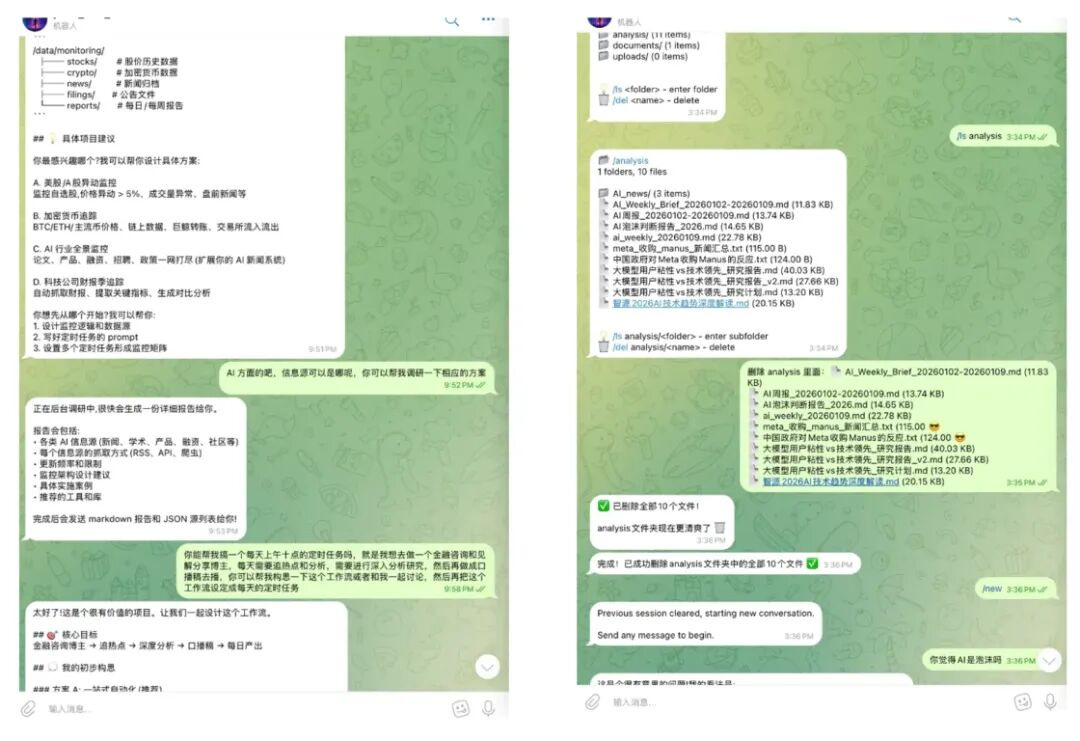
💡Master Vibe Coding: Build AI products via chat, no code needed—product sense now key skill.
⚡ 30-Second TL;DR
What Changed
Build AI agents without code using Claude Code and Agent SDK via natural dialogue.
Why It Matters
Empowers non-technical builders to prototype rapidly, shifting AI development toward product intuition. Reduces entry barriers, making demo-driven validation standard for startups and PMs.
What To Do Next
Adapt a GitHub React dashboard template with Claude Code to build your first Vibe Coding demo.
Key Points
- •Build AI agents without code using Claude Code and Agent SDK via natural dialogue.
- •Demos are highest-density format for conveying ideas and gaining trust over reports or slides.
- •Technique 1: Adapt GitHub open-source designs instead of creating dashboards from scratch.
- •Technique 2: Query AI 'why' before each step for contextual learning like SSH and Docker.
- •Technique 3: Sequence development as data models, core logic, constraints, then integrations.
🧠 Deep Insight
Background and context from public sources — not the original article. 5 sources cited.
🔑 Enhanced Key Takeaways
- •Vibe coding, introduced by Andrej Karpathy in February 2025, enables software creation via natural language prompts to LLMs, accepting generated code without deep review, shifting focus from coding to idea guidance[3].
- •In 2026, over 80% of developers use or plan AI tools for vibe coding, with tools like Replit Agent allowing non-coders to build, deploy full apps from prompts, handling setup, databases, and testing[1][4].
- •Product sense and orchestration by experts outweigh raw coding as vibe tools accelerate prototyping but require professionals for security, integration, and resilience in complex systems[1].
- •Core techniques align with web findings: adapt existing codebases (e.g., Plan Mode in tools), incremental integration with tests, and treat AI output as untrusted via automated scans[1][4].
- •Demos via vibe coding externalize ideas rapidly, building trust faster than reports, ideal for non-programmers using conversational AI like Claude to create AI agents[4].
📊 Competitor Analysis▸ Show
| Tool | Key Features | Best For | Pricing/Benchmarks |
|---|---|---|---|
| Replit Agent | Autonomous build/deploy from prompts, env setup, DB/auth, self-testing | Zero-to-one creators, prototypes | Not specified; strong for MVPs[1][4] |
| Cursor/Copilot | Codebase analysis, refactor, planning mode | Complex codebases, engineers | Subscription-based; high accuracy in changes[4] |
| Retool | Enterprise governance, operational apps, data write-back | Ops/data teams, production | Enterprise-ready, centralized controls[4] |
| Bolt/Lovable | No-infra prototypes, handoff to eng | Designers, semi-technical | Rapid prototyping, less governance[4] |
🛠️ Technical Deep Dive
- Vibe coding relies on LLMs like Claude or GPT to generate code from natural language; users provide goals/examples/feedback without manual coding[3].
- Tools feature Plan Mode (analyze codebase first), incremental integration with diff reviews/unit tests, automated security scans (Snyk/Semgrep)[1][4].
- Replit Agent: Handles dependencies, APIs (Stripe), spins browser for AI self-testing; supports Design/Iterate or full MVP modes[4].
- Outputs treated as untrusted: security-by-design, high availability patterns required for enterprise[1].
🔮 Future ImplicationsAI analysis grounded in cited sources
Vibe coding lowers barriers for non-coders to prototype AI agents, emphasizing product sense over coding skills, but demands expert orchestrators for production-scale systems with security and integration[1][3].
⏳ Timeline
📎 Sources (5)
Factual claims are grounded in the sources below. Forward-looking analysis is AI-generated interpretation.
Weekly AI Recap
Read this week's curated digest of top AI events →
👉Related Updates

AI-curated news aggregator. All content rights belong to original publishers.
Original source: 虎嗅 ↗
This is a summary, not the original. Read the source, or get the weekly briefing.
Weekly AI briefing
One email a week. Unsubscribe anytime.