Construction worker builds AI-powered Japanese politician tracker
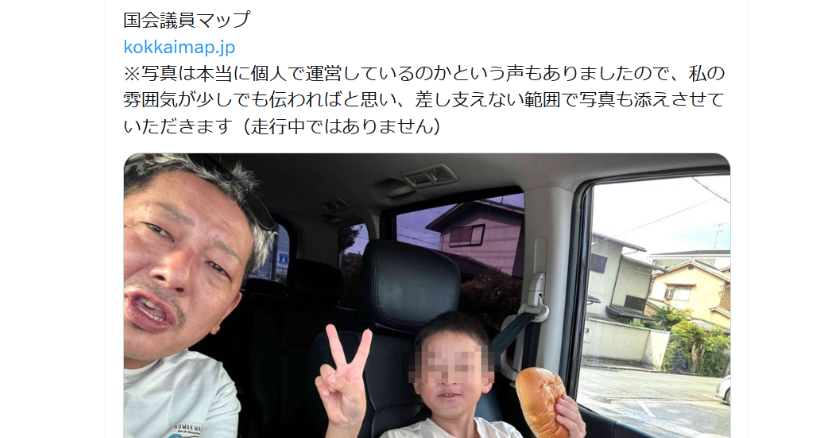
💡See how a solo builder used GenAI to turn complex political data into a user-friendly, transparent civic-tech tool.
⚡ 30-Second TL;DR
What Changed
Developed by a solo builder with no prior professional software background
Why It Matters
Demonstrates how low-code/no-code and LLM integration empower individuals to build impactful civic-tech tools without large teams. It highlights the potential for AI to bridge the gap between complex government data and public understanding.
What To Do Next
Explore using LLM APIs to summarize local government meeting minutes to identify opportunities for civic-tech automation in your own region.
Key Points
- •Developed by a solo builder with no prior professional software background
- •Uses generative AI to parse and summarize complex political data
- •Focuses on transparency and accessibility of Japanese parliamentary activities
- •Operated as a non-profit personal project
🧠 Deep Insight
Background and context from public sources — not the original article. 6 sources cited.
🔑 Enhanced Key Takeaways
- •The developer, Shinnosuke Nakajima, a 40-something construction company owner, was motivated to create the platform after a work injury led him to realize the impact of taxes and regulations, sparking his interest in politics for the first time last year.
- •The 'Kokkai Giin Map' sources its speech data from the National Diet Library's 'Diet Record Search System' API and utilizes Anthropic's 'Claude 4.5 Haiku' for generating AI summaries.
- •Beyond summarizing statements, the platform offers features such as searching for local representatives by postal code, displaying voting records, and a 'voting matching' function to help users identify political parties aligned with their policy preferences.
- •The project operates on a non-profit basis, with the developer personally covering monthly server, database, domain, and AI usage fees, which amount to several tens of thousands of yen, supplemented by optional user support fees and donations.
- •The concept for 'Kokkai Giin Map' was inspired by the 'Saibankan Map' (Judge Map), a similar citizen-developed transparency tool that provides information and reviews on judges.
📊 Competitor Analysis▸ Show
| Feature/Product | Kokkai Giin Map | KOKKAI DOC | GIIN (App) | Team Mirai (Party Tools) |
|---|---|---|---|---|
| Purpose | Public-facing politician tracker, transparency | Academic-driven parliamentary analysis, public web app | Mobile app for Diet record analysis, political learning | Party-specific AI tools for voter engagement, policy input |
| Developer | Solo construction worker (Shinnosuke Nakajima) | University students/researchers | App developer | Political party (Takahiro Anno) |
| AI Use | Generative AI (Claude 4.5 Haiku) for summarization | LLM-driven framework for scaling political stances, summarization | AI summarization of Diet minutes | AI Avatar for Q&A, AI for bill parsing/summarization |
| Data Sources | National Diet Library's Diet Record Search System API, voting records, political funds | Parliamentary speeches, legislative data | Diet minutes | Official disclosures, manifestos, citizen input |
| Key Features | AI summaries, postal code search, voting records, voting matching, user reviews | AI-scaled political stances, diachronic analysis of party positions | Chat-format minutes, keyword tracking, AI summaries | AI Interviewer, 'gikai' (bill parsing), 'marumie' (financial transparency) |
| Monetization | Non-profit, optional support fees/donations | Free web application (academic project) | Free app (with potential in-app purchases/ads) | Free to use for public (party-funded) |
| Accessibility | Web-based | Web-based | Mobile app | Web-based platforms |
| Neutrality | Emphasizes neutrality, non-partisan | Aims for data-driven insight | Aims for direct primary information | Party-aligned, but tools are open-source |
| Launch/Prominence | May 2026 (gained rapid attention) | May 2025 (academic paper, web app) | March 2026 (Google Play) | May 2025 (party launch), tools developed since then |
🛠️ Technical Deep Dive
- AI Model: Utilizes Anthropic's 'Claude 4.5 Haiku' for generating concise summaries of parliamentary statements.
- Data Acquisition: Extracts speech data directly from the National Diet Library's 'Diet Record Search System' API.
- Core Functionality: Processes complex political data, including parliamentary speeches and voting records, to provide accessible summaries and insights.
- Development Environment: Developed by an individual with prior experience in HTML website creation, leveraging AI assistance in the development process.
- Cost Structure: Incurs monthly operational costs for server maintenance, database, domain registration, AI model usage fees (for summarization and classification), and various API subscriptions, which are personally funded by the developer.
- User Interaction: Features include a postal code search to identify local representatives, display of voting records, and a 'voting matching' diagnostic tool.
- User-Generated Content: Incorporates a review/comment system for politicians, with a 100-yen fee for posting to mitigate spam and abuse.
🔮 Future ImplicationsAI analysis grounded in cited sources
⏳ Timeline
📎 Sources (6)
Factual claims are grounded in the sources below. Forward-looking analysis is AI-generated interpretation.
Weekly AI Recap
Read this week's curated digest of top AI events →
👉Related Updates
AI-curated news aggregator. All content rights belong to original publishers.
Original source: ITmedia AI+ (日本) ↗
This is a summary, not the original. Read the source, or get the weekly briefing.
The weekly digest
One email a week. Unsubscribe anytime.