Complexity in Gacha Game Skill Descriptions
Learn why 'over-packaging' technical content hurts user adoption and how to balance depth with clarity.
30-Second TL;DR
What Changed
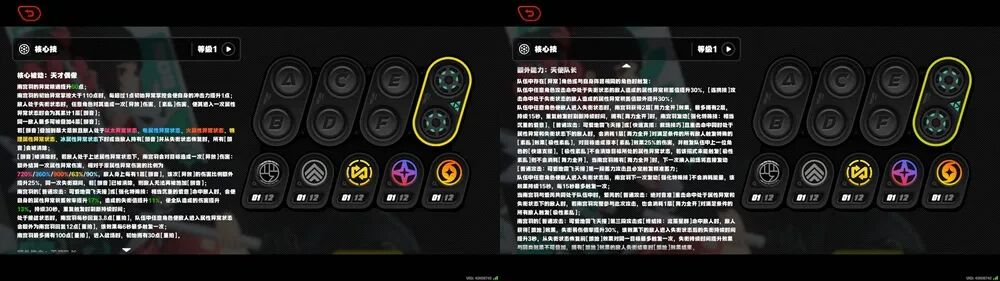
Skill descriptions in top-tier gacha games are becoming excessively long, sometimes exceeding 1,000 words.
Why It Matters
The trend suggests a disconnect between game design complexity and user accessibility, potentially increasing churn rates for casual players who find the barrier to entry too high.
What To Do Next
If you are building complex AI agents or tools, prioritize a 'layered' documentation approach: provide a high-level summary first, followed by granular technical specifications.
Key Points
- •Skill descriptions in top-tier gacha games are becoming excessively long, sometimes exceeding 1,000 words.
- •Developers use 'copywriting packaging' to enhance world-building, but this often leads to 'jargon nesting' that confuses players.
- •Internal constraints, such as developer hierarchies and the need for unique branding, often override the goal of user-friendly documentation.
- •Players increasingly rely on third-party content creators to 'translate' complex game mechanics into understandable terms.
Deep Insight
Background and context from public sources — not the original article. 18 sources cited.
Enhanced Key Takeaways
- •The increasing complexity in gacha game skill descriptions is a symptom of "skill description powercreep," where new characters are designed with overloaded kits to maintain player engagement and differentiate them in an ever-expanding roster.
- •This complexity is exacerbated by developers' tendency to assign unique, often lore-heavy, names to every element within a character's kit, leading to "jargon nesting" that makes understanding abilities difficult without external interpretation.
- •The design choice to prioritize world-building and unique branding through verbose skill descriptions often conflicts with fundamental UI/UX principles of clarity and readability, leading to player frustration and a reliance on community-driven guides for comprehension.
- •While some complexity aims to foster strategic depth and player improvisation, it can also serve as a monetization strategy, where "whale" players can bypass intricate mechanics by simply acquiring overpowered characters through spending.
Technical Deep Dive
- Core Gacha Mechanics: Gacha systems fundamentally rely on Random Number Generation (RNG) to determine rewards, with variations like "Solid Token," "Shard," and "Merge Gacha" models influencing how players acquire characters and items.
- UI/UX Design Principles: Effective in-game documentation and skill presentation should adhere to principles of clear information hierarchy, high readability (contrast, legible typography, thoughtful spacing), and consistency across the interface to minimize cognitive load.
- Skill Description Implementation: The verbosity in skill descriptions can stem from the need for unambiguous language for game coding and localization, where unique naming conventions help developers and translators but often obscure meaning for players.
- Player Feedback Loop: Game design often considers a "skill atom" model where player actions lead to system updates and visual feedback, which players then use to update their mental model of the game. Overly complex descriptions can break this feedback loop.
Future ImplicationsAI analysis grounded in cited sources
Timeline
- 1960sOrigins of 'gachapon' vending machines in Japan, dispensing random capsule toys.
- 2010Gacha mechanics transition to mobile gaming, pioneered by titles like Dragon Collection, Puzzle & Dragons, and Brave Frontier.
- 2012The 'complete gacha' monetization model faces controversy and is effectively banned in Japan due to gambling-like concerns.
- 2016Honkai Impact 3rd is released, showcasing 3D graphics and complex gameplay, marking a shift in gacha game design.
- 2023-10Reverse: 1999, a gacha game noted for its complex mechanics and skill descriptions, is released.
- 2024-07Zenless Zone Zero, another gacha game cited for its complex skill descriptions, is launched.
Sources (18)
Factual claims are grounded in the sources below. Forward-looking analysis is AI-generated interpretation.
Weekly AI Recap
Read this week's curated digest of top AI events →
AI-curated news aggregator. All content rights belong to original publishers.
Original source: 虎嗅 ↗
This is a summary, not the original. Read the source, or get the weekly briefing.
The weekly digest
One email a week. Unsubscribe anytime.