Competition and Strategy of China's Cross-border Energy Pipelines
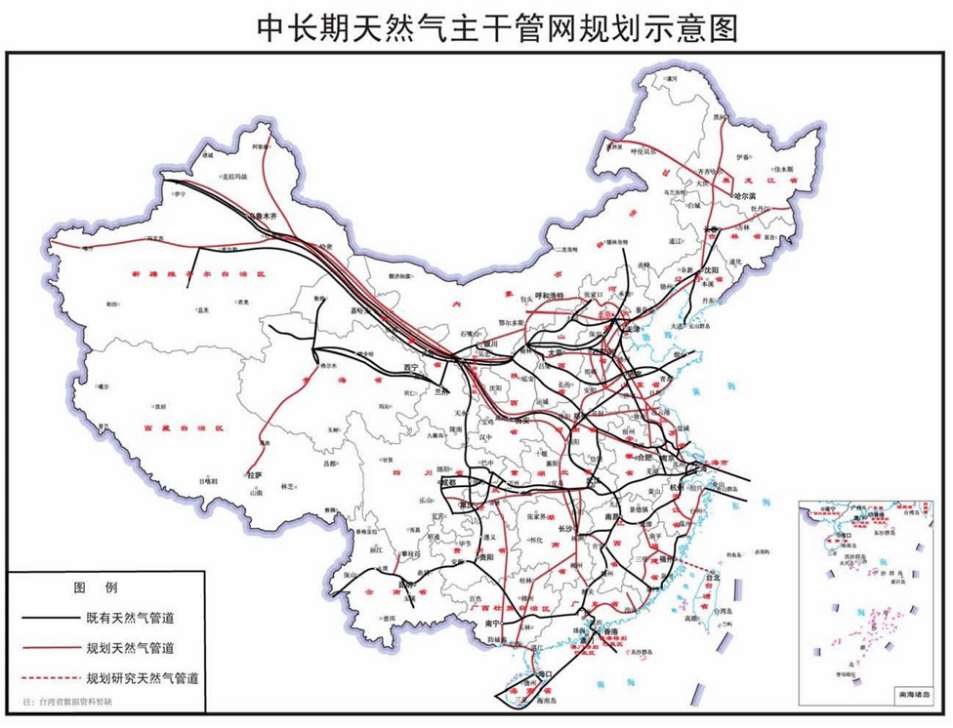
💡Understand the geopolitical and infrastructure shifts in energy supply that underpin the stability of industrial AI comp
⚡ 30-Second TL;DR
What Changed
The 'Power of Siberia 2' project remains stalled due to China's insistence on favorable pricing and flexible terms.
Why It Matters
The shift toward energy independence and diversified land-based pipelines reduces reliance on vulnerable maritime chokepoints. This strategic pivot influences long-term industrial energy costs and infrastructure investment priorities.
What To Do Next
Analyze how energy infrastructure shifts impact regional industrial electricity costs to optimize data center location strategies.
Key Points
- •The 'Power of Siberia 2' project remains stalled due to China's insistence on favorable pricing and flexible terms.
- •China is prioritizing domestic energy security through advancements in nuclear, solar, and clean coal technologies.
- •The Central Asia pipeline is expanding with the 'Line D' project to increase supply capacity to 650 billion cubic meters.
- •The China-Myanmar oil and gas pipeline provides a strategic alternative to traditional maritime routes through the Malacca Strait.
🧠 Deep Insight
Background and context from public sources — not the original article. 23 sources cited.
🔑 Enhanced Key Takeaways
- •The 'Power of Siberia 2' project, designed to transport 50 billion cubic meters (bcm) of gas annually from Russia's Yamal fields to China via Mongolia, has seen recent agreements (May 2026) between Russia and China to accelerate its implementation, with a 'shared understanding' on the route and construction methods, despite ongoing negotiations over pricing and financing.
- •China's 15th Five-Year Plan (2026-2030) outlines a strategy to become an 'energy powerhouse' by building a clean, low-carbon, safe, and efficient new energy system, aiming for over 80% energy self-sufficiency, while simultaneously ensuring stable growth in domestic crude oil and natural gas output.
- •The Central Asia Gas Pipeline (CAGP) 'Line D' is projected to add an additional 30 bcm/year capacity, increasing the total network capacity to 85 bcm/year, with PetroChina expecting to resume its construction in 2024 once upstream gas supply contracts with Turkmenistan are finalized, as pricing disagreements have previously stalled progress.
- •The China-Myanmar oil and gas pipelines, operational since 2013 (gas) and 2017 (oil), provide China with a strategic overland route for energy imports, bypassing the vulnerable Malacca Strait and offering a shorter transit for Middle Eastern crude oil.
- •China's overall energy import strategy emphasizes diversification across both pipeline gas and liquefied natural gas (LNG), with Central Asia being the largest pipeline gas supplier and Australia the leading LNG supplier, aiming to avoid over-reliance on any single source or maritime route.
🛠️ Technical Deep Dive
- Power of Siberia 2 Pipeline: Designed for an annual capacity of 50 billion cubic meters (bcm) of natural gas, with a planned route exceeding 2,600 kilometers (1,615 miles) from Russia's Yamal Peninsula to China via Mongolia.
- Central Asia-China Gas Pipeline (CAGP): Comprises three operational lines (A, B, C) with a combined capacity of 55 bcm/year. Lines A and B have a diameter of 1,067 mm, while Line C has a larger diameter of 1,219 mm. The proposed Line D is 966 km in length with a capacity of 30 bcm/year, which would bring the total CAGP capacity to 85 bcm/year.
- China-Myanmar Gas Pipeline: The Myanmar segment is 793 kilometers long, and the China segment is 1,727 kilometers, both with a diameter of 1016 mm and an annual capacity of 12 bcm.
- China-Myanmar Oil Pipeline: Approximately 771 kilometers long, with an annual capacity of 22 million tonnes (440,000 barrels per day) of crude oil.
- National Pipeline Network: China's long-distance oil and gas pipelines collectively span over 200,000 kilometers.
- LNG Receiving Capacity: China's liquefied natural gas (LNG) receiving capacity exceeds 120 million tonnes per year.
🔮 Future ImplicationsAI analysis grounded in cited sources
⏳ Timeline
📎 Sources (23)
Factual claims are grounded in the sources below. Forward-looking analysis is AI-generated interpretation.
- caspiannews.com
- elpais.com
- washingtonpost.com
- csis.org
- cctv.com
- news.cn
- gem.wiki
- wikipedia.org
- spglobal.com
- lowyinstitute.org
- gem.wiki
- wikipedia.org
- chinacenter.net
- oillink.com
- youtube.com
- themoscowtimes.com
- dailysabah.com
- agora-energiewende.org
- cnpc.com.cn
- wikipedia.org
- columbia.edu
- themoscowtimes.com
- energyandcleanair.org
Weekly AI Recap
Read this week's curated digest of top AI events →
👉Related Updates



AI-curated news aggregator. All content rights belong to original publishers.
Original source: 虎嗅 ↗
This is a summary, not the original. Read the source, or get the weekly briefing.
The weekly digest
One email a week. Unsubscribe anytime.