Coding and Office Productivity Define China's LLM Success
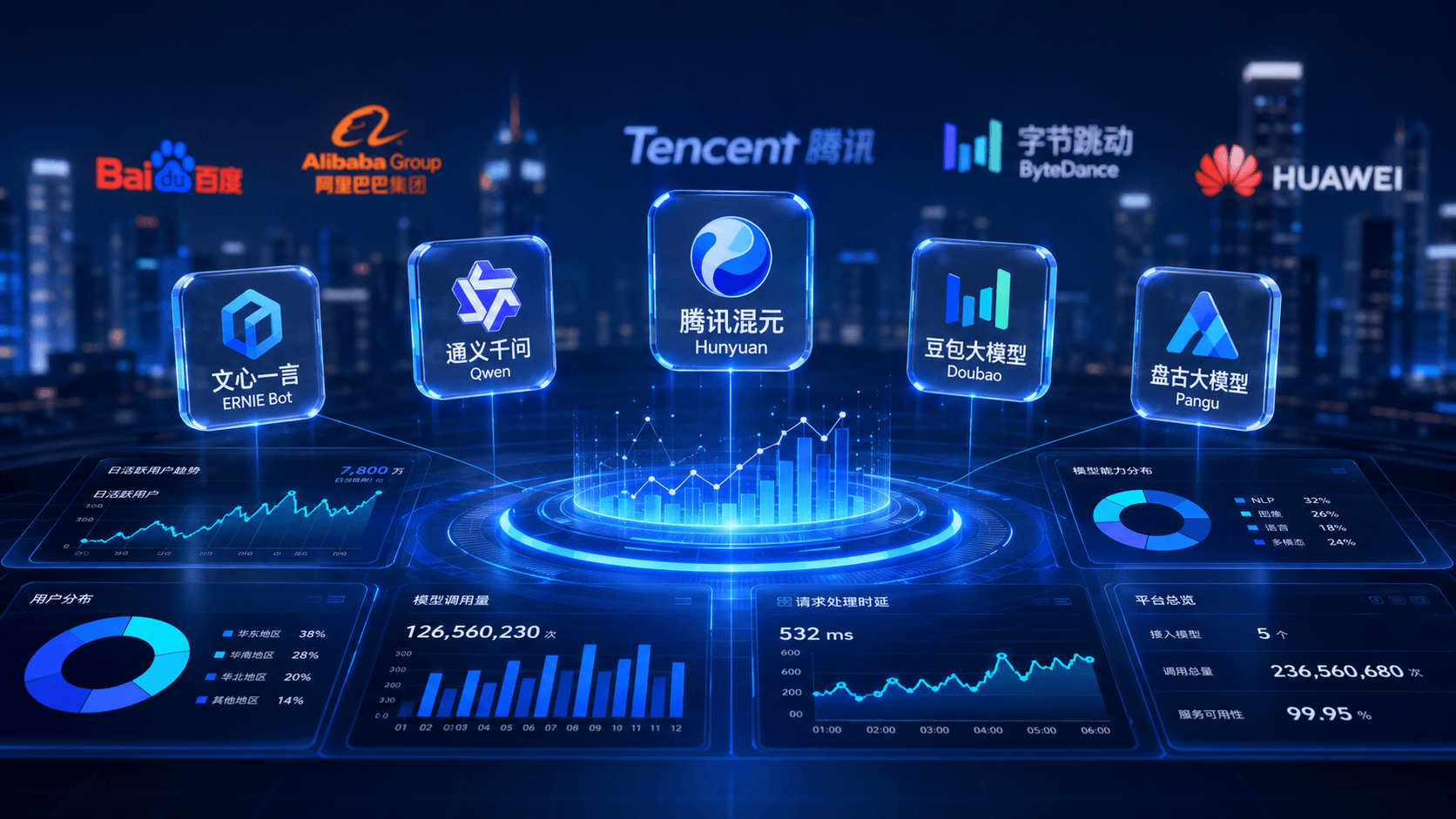
💡Understand the strategic shift in Chinese LLMs toward coding and productivity to optimize your model selection.
⚡ 30-Second TL;DR
What Changed
Coding capability is becoming a primary benchmark for LLM performance
Why It Matters
The focus on specialized productivity tasks suggests a maturing market where model quality is measured by tangible ROI. Developers should prioritize fine-tuning for specific enterprise workflows.
What To Do Next
Benchmark your current LLM stack against coding and office automation tasks to see if specialized Chinese models offer better performance for your specific use cases.
Key Points
- •Coding capability is becoming a primary benchmark for LLM performance
- •Office productivity integration is a key differentiator for enterprise adoption
- •Chinese model developers are prioritizing utility over general-purpose chat
🧠 Deep Insight
Background and context from public sources — not the original article. 32 sources cited.
🔑 Enhanced Key Takeaways
- •Chinese LLMs like DeepSeek V4 Pro (Max), Kimi K2.6, and Qwen3.5 397B are achieving top scores in coding benchmarks, often rivaling or surpassing Western models such as GPT-5.4 and Gemini 3.1 Pro in specific performance categories.
- •The global adoption of Chinese LLMs is rapidly increasing, with these models accounting for approximately 61% of total token consumption on OpenRouter, a major LLM API aggregation platform, by February 2026, largely due to their lower costs and open-source strategies.
- •Leading Chinese tech companies are deeply embedding their LLMs into existing enterprise collaboration and office suites; for instance, Alibaba's Tongyi Qianwen is integrated into DingTalk and ONLYOFFICE, while Tencent's Hunyuan powers AI features in Tencent Meeting and its CodeBuddy developer tool.
- •Many prominent Chinese LLMs, including DeepSeek V3, Qwen3, GLM-5, and ERNIE 4.5/5.0, leverage Mixture-of-Experts (MoE) architectures to deliver high performance alongside improved computational efficiency and reduced inference costs.
- •China's LLM market is characterized by a robust open-source (or open-weight) ecosystem, featuring numerous models available under permissive licenses, which fosters rapid innovation and democratizes access to advanced AI for developers and businesses.
📊 Competitor Analysis▸ Show
| Model Family | Key Features (Coding/Productivity) | Architecture Highlights | Benchmarks (Coding) | Cost/Efficiency Notes |
|---|---|---|---|---|
| DeepSeek | Coding powerhouse, code generation, debugging, reasoning, long-context support. | MoE (671B total, 37B active), sparse attention. | DeepSeek V4 Pro (Max): 89.8 (coding score); very good scores on HumanEval/EvalPlus. | Absurdly cheap (under $1 for most tasks); trained with 90% less computational power than ChatGPT. |
| Qwen (Alibaba) | Multilingual, multimodal, content creation, summarization, translation, code generation/analysis; integrated into ONLYOFFICE and DingTalk. | MoE (Qwen3-235B-A22B: 235B total, 22B active), dual-mode reasoning. | Qwen3-Max-Coder: 74.1 on LiveCodeBench v6, 95.4% on HumanEval. | Competitive pricing via Alibaba Cloud. |
| GLM (Zhipu AI) | Optimized for AI agent applications, tool use, web browsing, software/frontend development; strong project context understanding. | MoE (GLM-5: 744B total, 40B active; GLM-4.5: 335B total). | GLM-5: 77.8 on SWE-bench Verified. | Middle-tier, reasonable pricing. |
| ERNIE (Baidu) | Multimodal (text, image, audio, video), strong in reasoning, coding, and reduced hallucinations; effective for Chinese content generation and marketing analysis. | MoE (ERNIE 4.5: 424B total, 47B/3B active; ERNIE 5.0: 2.4T total, ~3% active). | ERNIE 4.5: 77.77 on DataCamp (coding, reasoning). | ERNIE 4.5: $0.55 input / $2.20 output per 1M tokens (3.2x cheaper than GPT-5.2 input, 6.4x cheaper output). |
| Kimi (Moonshot AI) | Advanced long-context processing (128K+ tokens), multimodal (text, images, code), strong agentic capabilities; pivoting to enterprise productivity. | MoE architecture. | Kimi K2.6: 88.7 (coding score); 80.2% on SWE-Bench. | Strong coding performance, highly relevant in the market. |
| Doubao (ByteDance) | General-purpose assistant, text generation, document translation, programming assistance, code troubleshooting; integrated into operating systems. | Proprietary AI models, advanced transformer architecture. | Doubao-Seed-Code: supports 200+ programming languages, high code executability. | Actively pursuing monetization for workplace productivity. |
🛠️ Technical Deep Dive
- Many leading Chinese LLMs, including DeepSeek V3, Qwen3, GLM-5, and ERNIE 4.5/5.0, utilize Mixture-of-Experts (MoE) architectures, which selectively activate parts of the model per query to reduce computational load while maintaining performance.
- DeepSeek V3, for instance, has 671 billion parameters but only activates 37 billion per input, and its V3.2-Exp version incorporates sparse attention for faster long-context processing.
- GLM-5 scales to 744 billion parameters (40B active) and is pre-trained on a substantially larger dataset, optimized for agentic and coding benchmarks.
- ERNIE 4.5/5.0 models feature a heterogeneous modality structure within their MoE architecture, allowing parameter sharing across modalities while also having dedicated parameters for individual modalities (text, image, video) for enhanced multimodal understanding.
- Models like DeepSeek-R1 and Kimi K2.6 support ultra-long context windows, with DeepSeek-R1 handling up to 128,000 tokens and Kimi K2.6 offering a 256,000-token window, crucial for tasks like document analysis and complex coding.
- Training efficiency is a key focus, with DeepSeek-R1 demonstrating it can be trained using 90% less computational power than some established platforms.
- Tencent Hunyuan Turbo, based on MoE, has doubled training efficiency and reduced inference costs by 50%, supporting over 700 Tencent products.
🔮 Future ImplicationsAI analysis grounded in cited sources
⏳ Timeline
📎 Sources (32)
Factual claims are grounded in the sources below. Forward-looking analysis is AI-generated interpretation.
- benchlm.ai
- index.dev
- xavor.com
- economictimes.com
- tech-user.co.uk
- onlyoffice.com
- aixsociety.com
- scmp.com
- tencent.com
- prnewswire.com
- jetservices.com.cn
- alphamatch.ai
- secondtalent.com
- siliconflow.com
- overchat.ai
- juliangoldie.com
- intuitionlabs.ai
- stanford.edu
- substack.com
- thinkchina.sg
- index.dev
- reddit.com
- merchmindai.net
- latenode.com
- baidu.com
- newsfilecorp.com
- uptodown.com
- howaiworks.ai
- kr-asia.com
- dev.to
- nvidia.com
- letsdatascience.com
Weekly AI Recap
Read this week's curated digest of top AI events →
👉Related Updates


AI-curated news aggregator. All content rights belong to original publishers.
Original source: Pandaily ↗
This is a summary, not the original. Read the source, or get the weekly briefing.
The weekly digest
One email a week. Unsubscribe anytime.