來源Pandaily•較早收集於 75m
程式開發與辦公生產力:中國 LLM 競爭的決勝關鍵
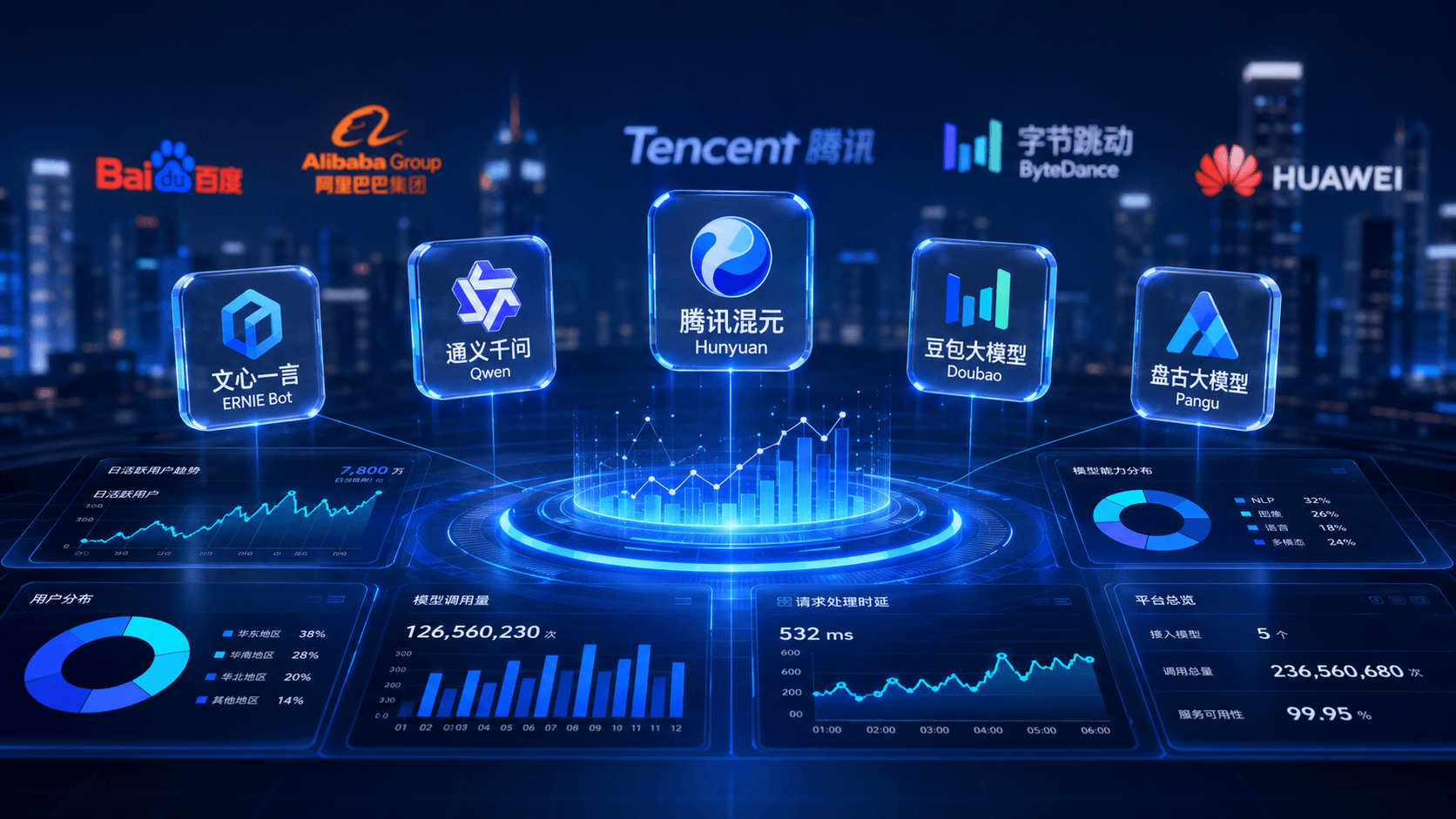
💡了解中國 LLM 在程式開發與生產力工具上的策略轉向,以優化您的模型選擇。
⚡ 30 秒速覽
有什麼變化
程式開發能力正成為 LLM 效能的核心指標
為什麼重要
專注於專業生產力任務顯示市場正趨於成熟,模型品質將由具體的投資報酬率(ROI)來衡量。開發者應優先針對特定企業工作流程進行微調。
下一步行動
針對程式開發與辦公自動化任務評估您目前的 LLM 技術堆疊,確認專門的中國模型是否能為您的特定應用場景提供更佳效能。
誰應關注:Developers & AI Engineers
關鍵要點
- •程式開發能力正成為 LLM 效能的核心指標
- •辦公生產力整合是企業採用的關鍵差異化因素
- •中國模型開發者正優先發展實用性而非通用對話功能
🧠 深度解析
背景與延伸:來自公開資料,非原文內容。引用 32 個來源。
🔑 增強重點摘要
- •Chinese LLMs like DeepSeek V4 Pro (Max), Kimi K2.6, and Qwen3.5 397B are achieving top scores in coding benchmarks, often rivaling or surpassing Western models such as GPT-5.4 and Gemini 3.1 Pro in specific performance categories.
- •The global adoption of Chinese LLMs is rapidly increasing, with these models accounting for approximately 61% of total token consumption on OpenRouter, a major LLM API aggregation platform, by February 2026, largely due to their lower costs and open-source strategies.
- •Leading Chinese tech companies are deeply embedding their LLMs into existing enterprise collaboration and office suites; for instance, Alibaba's Tongyi Qianwen is integrated into DingTalk and ONLYOFFICE, while Tencent's Hunyuan powers AI features in Tencent Meeting and its CodeBuddy developer tool.
- •Many prominent Chinese LLMs, including DeepSeek V3, Qwen3, GLM-5, and ERNIE 4.5/5.0, leverage Mixture-of-Experts (MoE) architectures to deliver high performance alongside improved computational efficiency and reduced inference costs.
- •China's LLM market is characterized by a robust open-source (or open-weight) ecosystem, featuring numerous models available under permissive licenses, which fosters rapid innovation and democratizes access to advanced AI for developers and businesses.
📊 競品分析▸ Show
| Model Family | Key Features (Coding/Productivity) | Architecture Highlights | Benchmarks (Coding) | Cost/Efficiency Notes |
|---|---|---|---|---|
| DeepSeek | Coding powerhouse, code generation, debugging, reasoning, long-context support. | MoE (671B total, 37B active), sparse attention. | DeepSeek V4 Pro (Max): 89.8 (coding score); very good scores on HumanEval/EvalPlus. | Absurdly cheap (under $1 for most tasks); trained with 90% less computational power than ChatGPT. |
| Qwen (Alibaba) | Multilingual, multimodal, content creation, summarization, translation, code generation/analysis; integrated into ONLYOFFICE and DingTalk. | MoE (Qwen3-235B-A22B: 235B total, 22B active), dual-mode reasoning. | Qwen3-Max-Coder: 74.1 on LiveCodeBench v6, 95.4% on HumanEval. | Competitive pricing via Alibaba Cloud. |
| GLM (Zhipu AI) | Optimized for AI agent applications, tool use, web browsing, software/frontend development; strong project context understanding. | MoE (GLM-5: 744B total, 40B active; GLM-4.5: 335B total). | GLM-5: 77.8 on SWE-bench Verified. | Middle-tier, reasonable pricing. |
| ERNIE (Baidu) | Multimodal (text, image, audio, video), strong in reasoning, coding, and reduced hallucinations; effective for Chinese content generation and marketing analysis. | MoE (ERNIE 4.5: 424B total, 47B/3B active; ERNIE 5.0: 2.4T total, ~3% active). | ERNIE 4.5: 77.77 on DataCamp (coding, reasoning). | ERNIE 4.5: $0.55 input / $2.20 output per 1M tokens (3.2x cheaper than GPT-5.2 input, 6.4x cheaper output). |
| Kimi (Moonshot AI) | Advanced long-context processing (128K+ tokens), multimodal (text, images, code), strong agentic capabilities; pivoting to enterprise productivity. | MoE architecture. | Kimi K2.6: 88.7 (coding score); 80.2% on SWE-Bench. | Strong coding performance, highly relevant in the market. |
| Doubao (ByteDance) | General-purpose assistant, text generation, document translation, programming assistance, code troubleshooting; integrated into operating systems. | Proprietary AI models, advanced transformer architecture. | Doubao-Seed-Code: supports 200+ programming languages, high code executability. | Actively pursuing monetization for workplace productivity. |
🛠️ 技術深入
- Many leading Chinese LLMs, including DeepSeek V3, Qwen3, GLM-5, and ERNIE 4.5/5.0, utilize Mixture-of-Experts (MoE) architectures, which selectively activate parts of the model per query to reduce computational load while maintaining performance.
- DeepSeek V3, for instance, has 671 billion parameters but only activates 37 billion per input, and its V3.2-Exp version incorporates sparse attention for faster long-context processing.
- GLM-5 scales to 744 billion parameters (40B active) and is pre-trained on a substantially larger dataset, optimized for agentic and coding benchmarks.
- ERNIE 4.5/5.0 models feature a heterogeneous modality structure within their MoE architecture, allowing parameter sharing across modalities while also having dedicated parameters for individual modalities (text, image, video) for enhanced multimodal understanding.
- Models like DeepSeek-R1 and Kimi K2.6 support ultra-long context windows, with DeepSeek-R1 handling up to 128,000 tokens and Kimi K2.6 offering a 256,000-token window, crucial for tasks like document analysis and complex coding.
- Training efficiency is a key focus, with DeepSeek-R1 demonstrating it can be trained using 90% less computational power than some established platforms.
- Tencent Hunyuan Turbo, based on MoE, has doubled training efficiency and reduced inference costs by 50%, supporting over 700 Tencent products.
🔮 前景展望基於引用來源的 AI 分析
Chinese LLMs will increasingly challenge Western dominance in global enterprise AI markets.
Their competitive performance, lower costs, and strategic focus on practical applications like coding and office productivity are driving rapid international adoption and token consumption.
The emphasis on open-source and efficient architectures will accelerate AI democratization worldwide.
Permissive licensing and the widespread adoption of MoE designs reduce computational barriers, fostering broader developer engagement and innovation across the AI ecosystem.
Deep integration into existing software ecosystems will be the decisive factor for commercial success in the LLM market.
Moving beyond general chatbots, LLMs that seamlessly enhance workflows within coding environments and office suites are better positioned to capture significant enterprise market share by delivering tangible utility.
⏳ 時間線
2019
Baidu begins developing the ERNIE line of large language models.
2023-04
Alibaba Cloud unveils Tongyi Qianwen, later integrated into DingTalk for enterprise productivity.
2023-08
ByteDance launches Doubao, a multimodal AI assistant, which later focuses on workplace productivity.
2024
Alibaba open-sources its Qwen 2.5 family, contributing to the open-weight LLM ecosystem.
2025-01
DeepSeek-R1, a reasoning-optimized model, is released, showcasing highly efficient and capable open-weight models for reasoning and coding.
2025-09
Tencent introduces CodeBuddy, an AI coding tool, and enhances Tencent Meeting with Hunyuan-powered AI features.
📎 來源 (32)
Factual claims are grounded in the sources below. Forward-looking analysis is AI-generated interpretation.
- benchlm.ai
- index.dev
- xavor.com
- economictimes.com
- tech-user.co.uk
- onlyoffice.com
- aixsociety.com
- scmp.com
- tencent.com
- prnewswire.com
- jetservices.com.cn
- alphamatch.ai
- secondtalent.com
- siliconflow.com
- overchat.ai
- juliangoldie.com
- intuitionlabs.ai
- stanford.edu
- substack.com
- thinkchina.sg
- index.dev
- reddit.com
- merchmindai.net
- latenode.com
- baidu.com
- newsfilecorp.com
- uptodown.com
- howaiworks.ai
- kr-asia.com
- dev.to
- nvidia.com
- letsdatascience.com
📰
AI 週報
閱讀本週精選 AI 大事摘要 →
👉相關動態


AI 策展新聞聚合。所有內容版權歸原始發布者所有。
原始來源: Pandaily ↗
每週電子報
每週一封,可隨時退訂。