Claude Gets a Voice
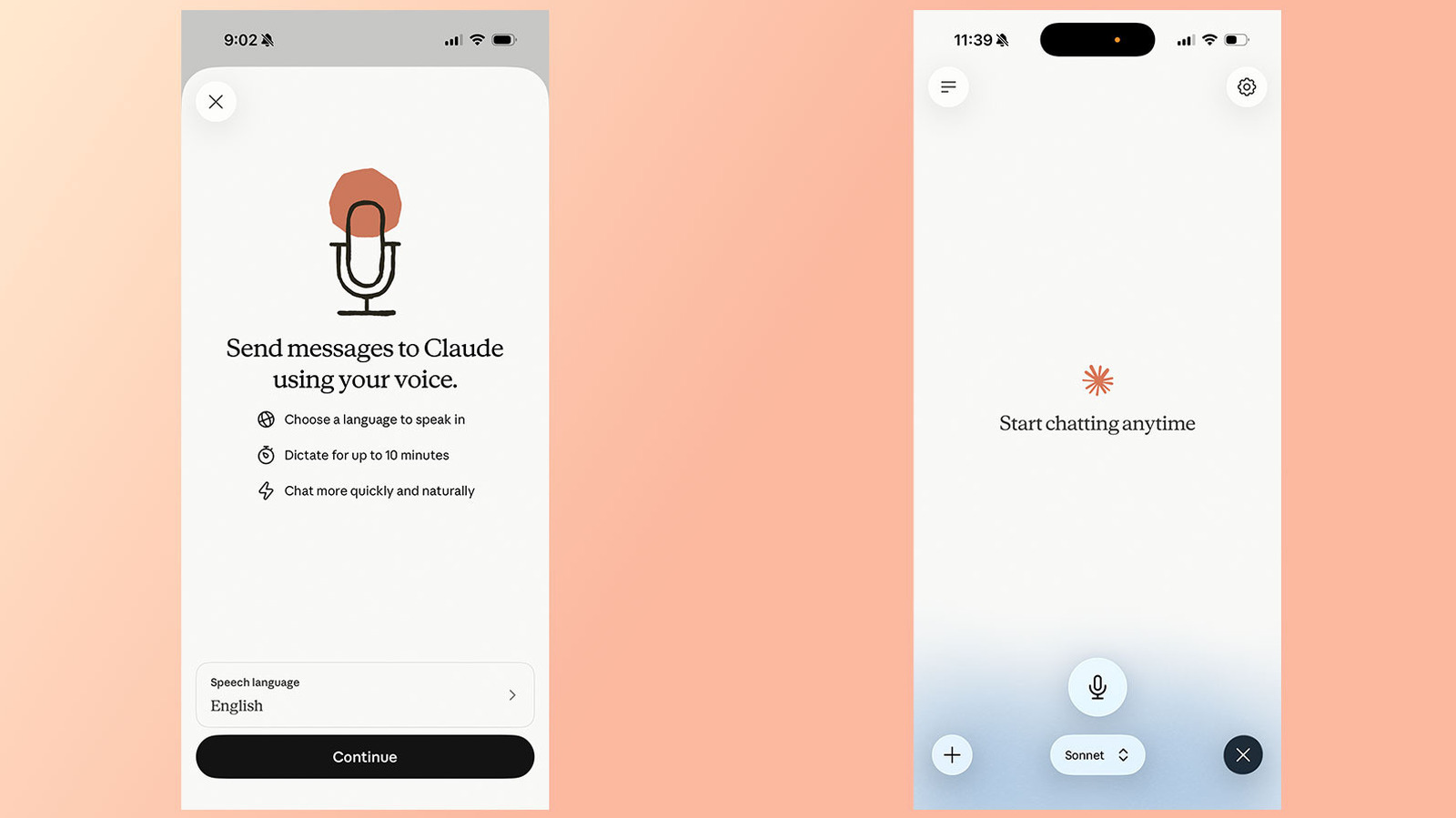
See how Claude's voice mode works before adding speech interactions to your AI product.
30-Second TL;DR
What Changed
Claude supports voice-based interactions through its voice mode
Why It Matters
Voice interaction can improve accessibility and make conversational AI more natural in mobile or hands-busy scenarios. Developers evaluating chatbot interfaces may find it useful as a reference for multimodal user experiences.
What To Do Next
Open Claude and test voice mode with a short task, then assess transcription accuracy, response latency, and hands-free usability for your product.
Key Points
- •Claude supports voice-based interactions through its voice mode
- •The article provides practical instructions for enabling and using the feature
- •Voice input and spoken responses can make chatbot sessions more hands-free
Deep Insight
AI-generated analysis for this event — not the original article.
Enhanced Key Takeaways
- •Anthropic's voice mode utilizes a low-latency architecture designed to minimize the delay between user speech and model response, aiming for a more natural conversational cadence.
- •The feature is integrated directly into the Claude mobile application, leveraging the device's native microphone and audio processing capabilities for improved noise cancellation.
- •Unlike some competitors that use a separate text-to-speech engine, Claude's voice mode is optimized to handle nuances in tone, emotion, and emphasis to make the AI's output sound more human-like.
- •Anthropic has implemented specific safety guardrails within the voice interface to detect and mitigate potential misuse, such as voice-based prompt injection or harmful content generation.
- •The rollout of voice mode is part of Anthropic's broader strategy to transition Claude from a text-centric assistant to a multimodal agent capable of processing and generating audio, vision, and text.
Competitor Analysis
- Claude (Voice Mode)
- Low (Optimized)
- OpenAI (Advanced Voice)
- Ultra-Low
- Google (Gemini Live)
- Low
- Claude (Voice Mode)
- High
- OpenAI (Advanced Voice)
- High
- Google (Gemini Live)
- Moderate
- Claude (Voice Mode)
- Anthropic/Standalone
- OpenAI (Advanced Voice)
- OpenAI/Apple/Microsoft
- Google (Gemini Live)
- Google/Android/Workspace
- Claude (Voice Mode)
- Included in Pro/Team
- OpenAI (Advanced Voice)
- Included in Plus/Team
- Google (Gemini Live)
- Included in Advanced
| Feature | Claude (Voice Mode) | OpenAI (Advanced Voice) | Google (Gemini Live) |
|---|---|---|---|
| Latency | Low (Optimized) | Ultra-Low | Low |
| Emotional Range | High | High | Moderate |
| Ecosystem | Anthropic/Standalone | OpenAI/Apple/Microsoft | Google/Android/Workspace |
| Pricing | Included in Pro/Team | Included in Plus/Team | Included in Advanced |
Technical Deep Dive
- Architecture: Utilizes a multimodal pipeline that processes raw audio input through an encoder before passing it to the core LLM, bypassing traditional speech-to-text transcription where possible to preserve prosody.
- Latency Optimization: Employs streaming inference techniques to begin generating audio responses before the full text response is finalized.
- Audio Synthesis: Uses a proprietary neural vocoder to convert model-generated tokens into high-fidelity, natural-sounding speech with support for multiple regional accents.
- Context Window: Maintains the same long-context capabilities as the text-based model, allowing the voice agent to reference previous parts of a long conversation during spoken interaction.
Future ImplicationsAI analysis grounded in cited sources
Timeline
- 2023-03Anthropic releases Claude, a large language model focused on helpful, harmless, and honest interactions.
- 2024-03Launch of Claude 3 model family, marking a significant leap in multimodal capabilities.
- 2024-06Anthropic releases Claude 3.5 Sonnet, introducing the Artifacts UI for improved collaboration.
- 2026-08Anthropic officially rolls out voice mode for Claude, enabling spoken conversational interactions.
Weekly AI Recap
Read this week's curated digest of top AI events →
Related Updates

AI-curated news aggregator. All content rights belong to original publishers.
Original source: Engadget ↗
This is a summary, not the original. Read the source, or get the weekly briefing.
The weekly digest
One email a week. Unsubscribe anytime.