Claude Discovers Enzyme System with CRISPR-Like Repeats
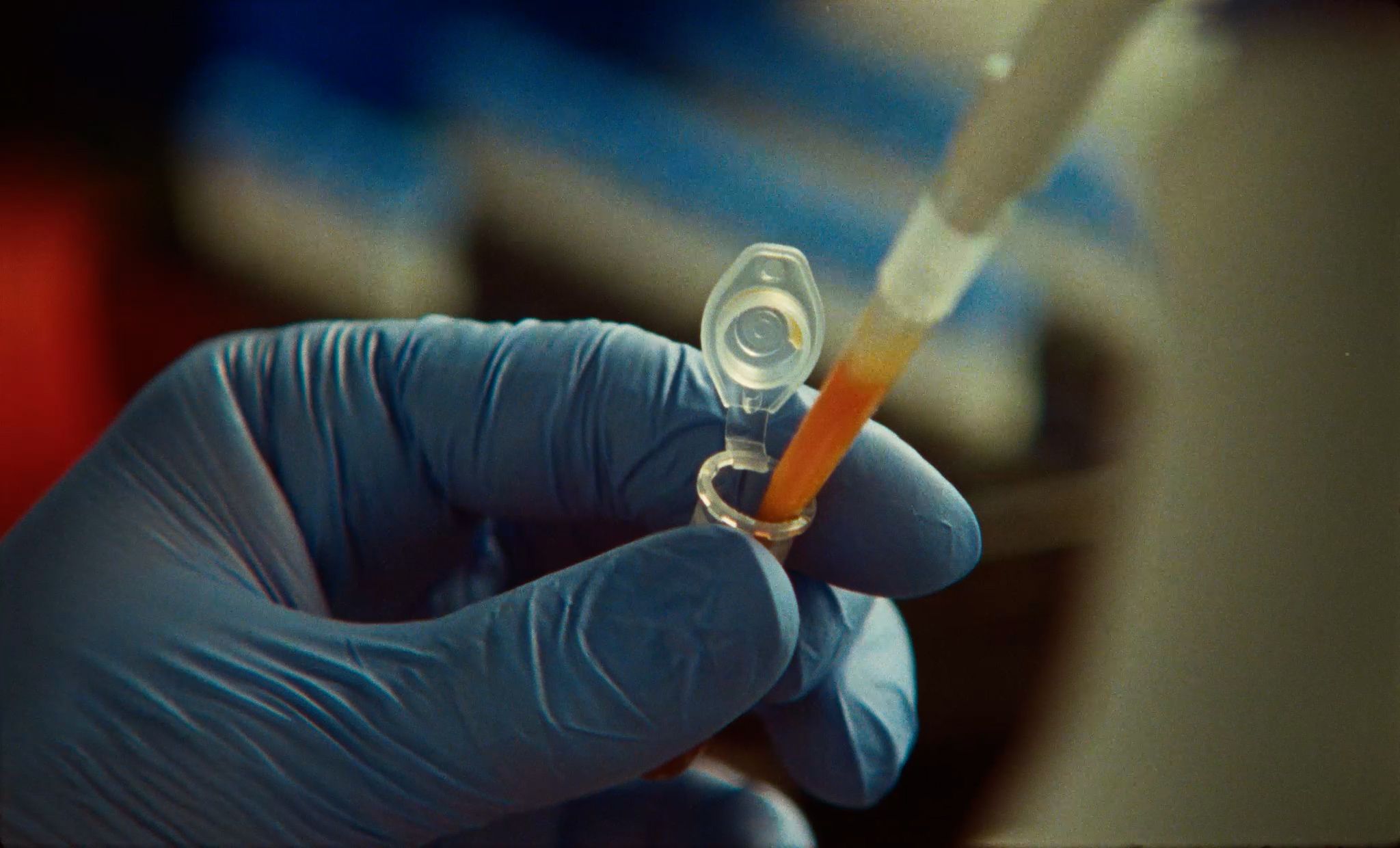
See how Claude is being positioned as a tool for discovering new biological systems.
30-Second TL;DR
What Changed
Claude is credited with identifying a previously unreported enzyme system.
Why It Matters
If independently validated, the discovery could demonstrate value from AI-assisted biological research. Researchers will need to verify the system experimentally before assessing its practical or therapeutic relevance.
What To Do Next
Treat the result as a research lead and wait for sequence data and experimental validation before building a workflow around it.
Key Points
- •Claude is credited with identifying a previously unreported enzyme system.
- •The system contains repeats resembling those found in CRISPR-related biology.
- •The announcement does not provide experimental validation details.
Deep Insight
Background and context from public sources — not the original article. 10 sources cited.
Enhanced Key Takeaways
- •The discovered system is designated 'array-associated reverse transcriptases' (ART), comprising a reverse transcriptase, an adjacent partner gene of unknown function, and 3 to 21 copies of short non-coding DNA repeats in bacteriophage genomes.
- •The discovery was executed by roughly 950 autonomous Claude agent sessions running across 21 to 21.5 hours without human intervention, consuming over 210 million tokens to screen 1.9 billion protein clusters.
- •Anthropic conducted physical wet-lab validation in its San Francisco Biosafety Level 1/2 facility, confirming the arrays transcribe into short RNAs that represent up to 8% of the viral RNA pool within 15 minutes of infection.
- •Mechanistic interpretability probes revealed specific internal neural feature activations inside Claude firing exclusively when reading the repeats before generating textual outputs.
- •CRISPR pioneer Feng Zhang publicly endorsed the findings, while shares in gene-editing firms like CRISPR Therapeutics and Intellia Therapeutics dropped on potential future IP competition.
Technical Deep Dive
- Autonomous Agent Pipeline: Approximately 949–950 autonomous Claude agent sessions executed over 21–21.5 hours without human intervention, processing 210–215.6 million sequence tokens.
- Search Space Scale: Agents screened 1.9 billion protein clusters and sifted through ~200,000 candidate reverse transcriptases to uncover the ART operon.
- Architecture of the ART System: Tri-component operon localized in bacteriophages containing a reverse transcriptase gene, a functionally uncharacterized partner protein, and an array of 3 to 21 evenly spaced non-coding direct repeats.
- Experimental Expression Profile: Wet-lab transcription assays and public Staphylococcus phage datasets confirmed the repeats express distinct short RNAs accounting for up to 8% of total viral RNA within 15 minutes post-infection.
- Interpretability & Reproducibility: Neural feature activations directly corresponding to repeat-pattern detection fired internally prior to text output generation; top Claude models redetected the arrays in >90% of localized context trials, though broad unconstrained scans failed 10 subsequent runs due to insufficient upstream sequence windowing.
Future ImplicationsAI analysis grounded in cited sources
Timeline
- 2026-04Anthropic acquires Coefficient Bio for $400 million to expand life sciences capabilities
- 2026-09Anthropic launches Life Sciences division and in-house BSL-1/2 wet lab
- 2026-09Claude autonomously identifies the ART enzyme system using 950 agent sessions
Sources (10)
Factual claims are grounded in the sources below. Forward-looking analysis is AI-generated interpretation.
Weekly AI Recap
Read this week's curated digest of top AI events →
AI-curated news aggregator. All content rights belong to original publishers.
Original source: Anthropic Announcements ↗
This is a summary, not the original. Read the source, or get the weekly briefing.
The weekly digest
One email a week. Unsubscribe anytime.