Claude Cowork Gains Shared Memory

💡See how Claude’s shared memory could reduce repeated context setup across AI work sessions.
⚡ 30-Second TL;DR
What Changed
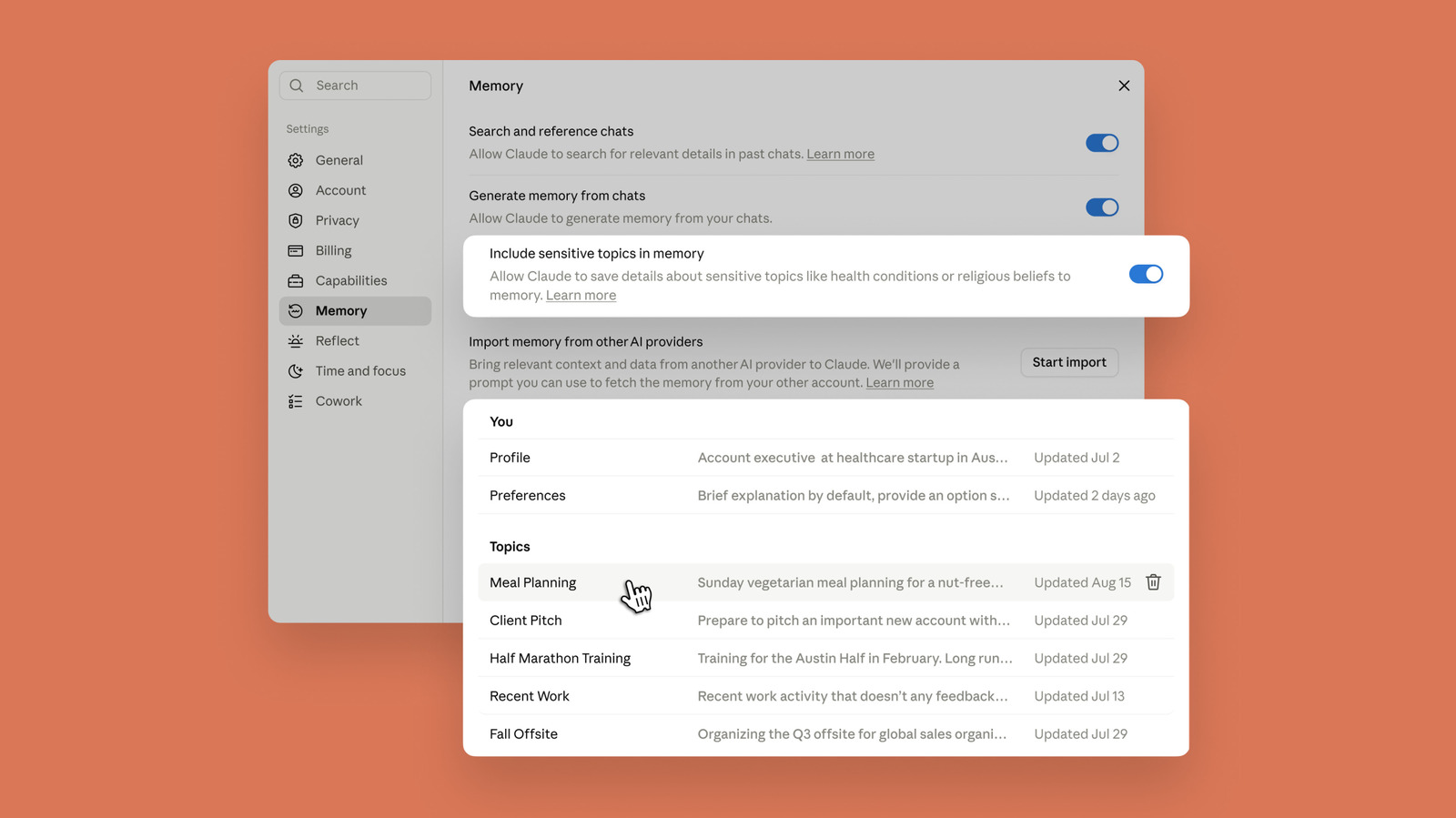
Claude can share remembered context between regular chat and Cowork.
Why It Matters
Shared memory could make multi-step AI workflows more consistent across conversations and work sessions. For teams, it may reduce context-switching friction, but memory management and data governance will become more important.
What To Do Next
If shared memory is available in your Claude workspace, enable it and test whether a project brief persists correctly between Claude chat and Cowork.
Key Points
- •Claude can share remembered context between regular chat and Cowork.
- •The feature is designed to retain project information and user preferences.
- •Users should spend less time repeating instructions and background context.
🧠 Deep Insight
Background and context from public sources — not the original article. 11 sources cited.
🔑 Enhanced Key Takeaways
- •The memory system operates in real-time, updating dynamically during active sessions rather than relying on post-session summarization.
- •Shared memory is restricted to cloud-based Cowork sessions and is explicitly disabled for local execution environments.
- •Anthropic implemented a 'sensitive topics' filter that excludes categories like health and politics by default, requiring manual user opt-in.
- •Enterprise and Team plans require an explicit administrative override to enable the memory feature, reflecting a privacy-first deployment strategy.
- •The update is part of a strategic partnership with Bain & Company to position Claude as a comprehensive AI workplace agent for enterprise transformation.
📊 Competitor Analysis▸ Show
| Feature | Claude (Cowork) | OpenAI (Operator) | Google (Gemini Code Assist) |
|---|---|---|---|
| Memory Persistence | Cross-platform unified | Session-based | Project-scoped |
| Pricing | Tiered (Free/Pro/Max/Ent) | Subscription | Enterprise/Cloud-based |
| Agentic Capability | High (Multi-step) | High (Browser-based) | High (IDE-integrated) |
🛠️ Technical Deep Dive
- Architecture utilizes a unified cloud-based memory store that synchronizes state between chat interfaces and Cowork agent instances.
- Implements a granular CRUD (Create, Read, Update, Delete) management system for individual memory entries accessible via user settings.
- Employs a default-deny policy for sensitive data categories, utilizing a classification layer to filter memory ingestion.
- Requires cloud-side state synchronization, which is bypassed during local execution to ensure data sovereignty for local development workflows.
🔮 Future ImplicationsAI analysis grounded in cited sources
⏳ Timeline
📎 Sources (11)
Factual claims are grounded in the sources below. Forward-looking analysis is AI-generated interpretation.
Weekly AI Recap
Read this week's curated digest of top AI events →
👉Related Updates


AI-curated news aggregator. All content rights belong to original publishers.
Original source: TechCrunch AI ↗
This is a summary, not the original. Read the source, or get the weekly briefing.
Weekly AI briefing
One email a week. Unsubscribe anytime.