🐼Pandaily•Freshcollected in 28m
Chinese Suppliers Advance High-Purity PFA for Semiconductor Localization
💡Critical supply chain update for semiconductor infrastructure and hardware localization strategies.
⚡ 30-Second TL;DR
What Changed
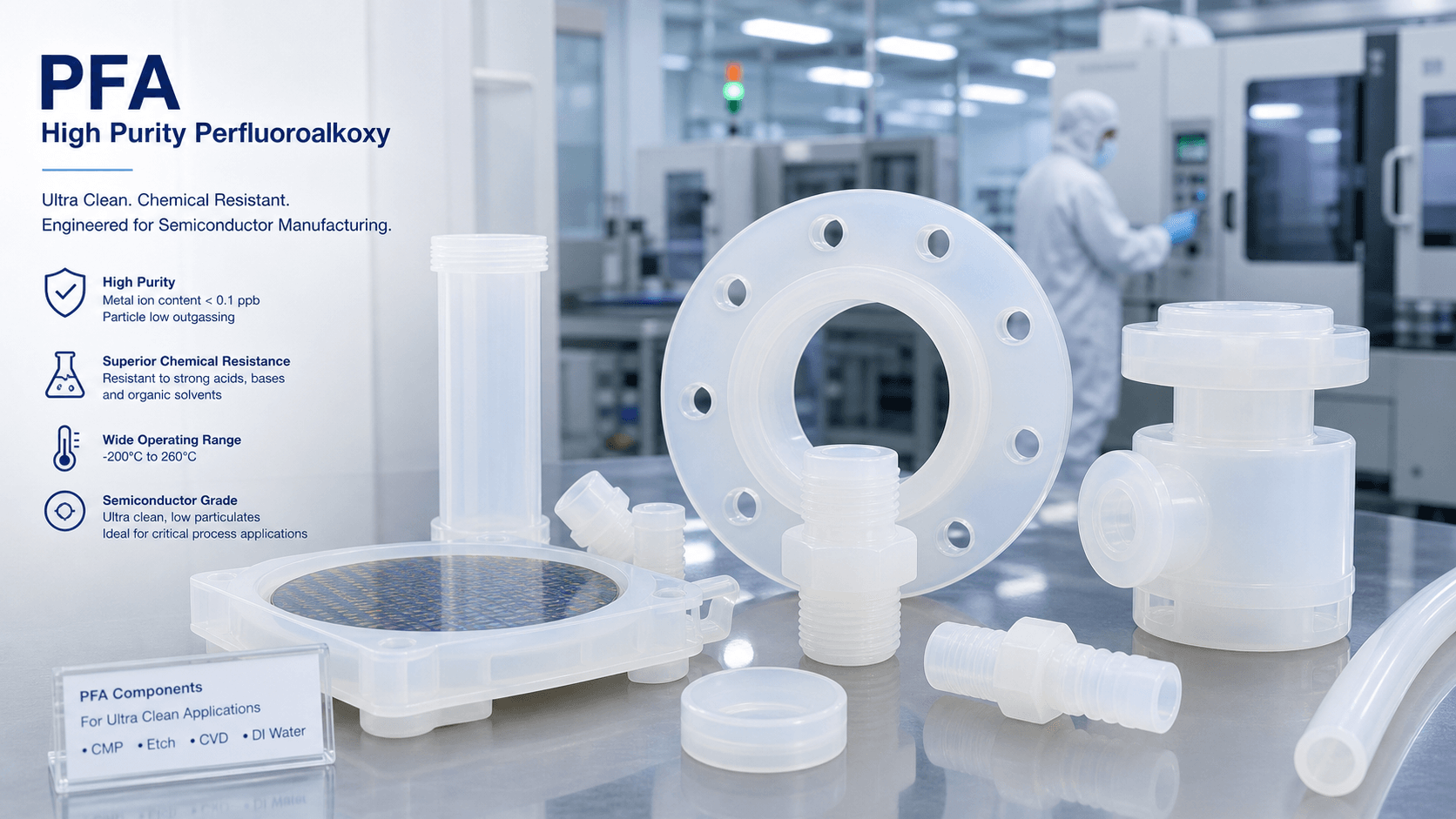
High-purity PFA is essential for semiconductor wet processing equipment.
Why It Matters
Localization of high-purity PFA reduces reliance on foreign suppliers for critical wet-processing materials. This strengthens the resilience of the domestic semiconductor manufacturing ecosystem.
What To Do Next
Monitor domestic supply chain shifts if you are sourcing materials for semiconductor wet-bench equipment.
Who should care:Enterprise & Security Teams
Key Points
- •High-purity PFA is essential for semiconductor wet processing equipment.
- •Chinese suppliers are actively advancing batch verification processes.
- •The initiative supports the broader goal of semiconductor supply chain localization.
🧠 Deep Insight
AI-generated analysis for this event.
🔑 Enhanced Key Takeaways
- •High-purity PFA (perfluoroalkoxy) is critical for semiconductor manufacturing because it exhibits extreme chemical inertness and ultra-low metal ion leaching, preventing contamination in wet etching and cleaning processes.
- •The push for localization is driven by export controls and supply chain security concerns, as the high-purity PFA market has historically been dominated by international giants like Chemours, Daikin, and Solvay.
- •Chinese chemical firms are focusing on achieving 'electronic grade' purity levels, which require advanced purification technologies to remove trace metallic impurities to the parts-per-trillion (ppt) level.
- •The verification process involves rigorous testing by domestic semiconductor equipment manufacturers and wafer fabs to ensure that the material does not degrade under the harsh acidic and alkaline environments of sub-7nm process nodes.
- •Beyond PFA, the localization effort extends to other fluorinated materials like PTFE and PVDF, which are also essential for the fluid handling systems and piping infrastructure in semiconductor fabrication plants.
📊 Competitor Analysis▸ Show
| Feature | Chinese Suppliers (Emerging) | International Incumbents (Chemours/Daikin/Solvay) |
|---|---|---|
| Purity Levels | Reaching ppt levels (Verification) | Established ppt/ppq levels |
| Market Maturity | Early-stage / Batch Verification | Decades of field-proven reliability |
| Supply Chain | Localized / Short lead times | Global / Subject to trade policy |
| Cost | Competitive (Targeting lower TCO) | Premium pricing |
| Process Nodes | Targeting 28nm to 7nm | Proven at 3nm and below |
🛠️ Technical Deep Dive
- Material Composition: PFA is a copolymer of tetrafluoroethylene (TFE) and perfluoroalkyl vinyl ether (PAVE), providing superior thermal stability compared to PTFE.
- Purity Requirements: Semiconductor-grade PFA must maintain metal ion concentrations (e.g., Fe, Cu, Ni, Cr) below 10-50 ppt to prevent wafer defects.
- Surface Characteristics: High-purity PFA components are manufactured using specialized molding techniques to ensure ultra-smooth internal surfaces, minimizing particle entrapment and biofilm formation.
- Chemical Resistance: Exhibits near-universal resistance to aggressive chemicals including sulfuric acid, hydrogen peroxide, and hydrofluoric acid used in RCA cleaning processes.
- Thermal Stability: Maintains mechanical integrity at continuous operating temperatures up to 260 degrees Celsius.
🔮 Future ImplicationsAI analysis grounded in cited sources
Chinese semiconductor fabs will increase domestic PFA procurement by 20% by 2028.
Successful batch verification will lead to qualification in non-critical sub-systems, gradually expanding to critical wet-bench components as trust in material consistency grows.
International PFA suppliers will face significant margin compression in the Chinese market.
The entry of qualified domestic alternatives will force global incumbents to adjust pricing strategies to maintain market share against lower-cost local competitors.
⏳ Timeline
2023-05
Increased government focus on 'Electronic Grade' fluoropolymer self-sufficiency in national industrial plans.
2024-02
Initial pilot production of high-purity PFA resins reported by leading Chinese chemical manufacturers.
2025-09
First major domestic semiconductor equipment OEMs begin formal testing of Chinese-made PFA piping and valves.
2026-04
Expansion of batch verification programs to include advanced lithography and etching support infrastructure.
📰
Weekly AI Recap
Read this week's curated digest of top AI events →
👉Related Updates


AI-curated news aggregator. All content rights belong to original publishers.
Original source: Pandaily ↗