Chinese STEM talent returning from US
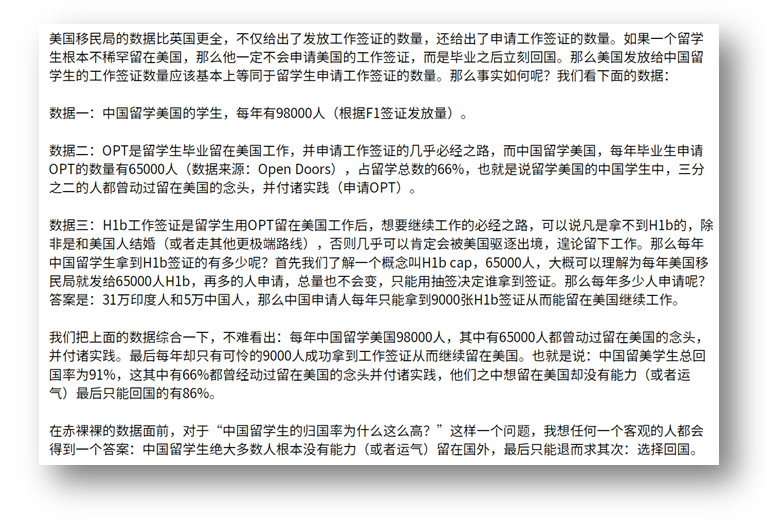
Understand the macro-level shift in global AI talent mobility and the impact on the US-China tech ecosystem.
30-Second TL;DR
What Changed
Significant increase in Chinese students returning home after completing US studies.
Why It Matters
The return of top-tier STEM talent to China is reshaping the global AI and technology R&D landscape.
What To Do Next
Monitor cross-border talent mobility data to adjust recruitment strategies for global AI research teams.
Key Points
- •Significant increase in Chinese students returning home after completing US studies.
- •US visa policy tightening and economic pressures are accelerating talent return.
- •The 'study abroad to stay' model is becoming less viable for many graduates.
Deep Insight
Background and context from public sources — not the original article. 19 sources cited.
Enhanced Key Takeaways
- •The US Proclamation 10043, issued in May 2020, specifically barred Chinese graduate students and researchers affiliated with institutions supporting China's military-civil fusion strategy, estimated to affect 16-27% of annual Chinese STEM graduate enrollees in the US.
- •China actively attracts returning talent through programs like the 'Thousand Talents Plan' (later replaced by the 'Qiming Program') and the 'Young Talented Scientists Program,' alongside a new 'K-Visa for Talent' launched in October 2025, which facilitates entry for young STEM researchers without requiring a prior employment contract.
- •In 2024, approximately 495,000 overseas graduates returned to China, marking a 19.1% increase from 2023, with a cumulative 6.44 million Chinese students returning home between 1978 and 2024, representing 86% of those who completed their studies abroad.
- •China's high-tech sectors, including artificial intelligence, biotech, renewables, advanced manufacturing, robotics, smart hardware, and aerospace, are experiencing significant growth and are primary destinations for returning STEM professionals.
- •China's share of global top 20% AI talent (at the undergraduate level) increased from 29% in 2019 to 51% by 2025, with Chinese institutions accounting for nine out of the top ten universities producing authors for the 2025 Neural Information Processing Systems Conference (NeurIPS).
Future ImplicationsAI analysis grounded in cited sources
Timeline
- 2007China launches 'Talent Superpower Strategy' to enhance its human capital in science and technology.
- 2010China elevates the 'Thousand Talents Plan' to a top-level national program to attract overseas experts.
- 2018US Department of Justice implements the 'China Initiative,' increasing scrutiny on Chinese scientists and researchers.
- 2020-05US issues Proclamation 10043, restricting F- and J-visas for Chinese graduate students and researchers linked to military-civil fusion.
- 2024495,000 overseas graduates return to China, a 19.1% increase from the previous year.
- 2025-10China launches the 'K-Visa for Talent' to attract foreign STEM talent, offering facilitated entry and residency without a prior job offer.
Sources (19)
Factual claims are grounded in the sources below. Forward-looking analysis is AI-generated interpretation.
Weekly AI Recap
Read this week's curated digest of top AI events →
AI-curated news aggregator. All content rights belong to original publishers.
Original source: 虎嗅 ↗
This is a summary, not the original. Read the source, or get the weekly briefing.
The weekly digest
One email a week. Unsubscribe anytime.