Chinese Researchers Map Five Stages to Self-Improving AI
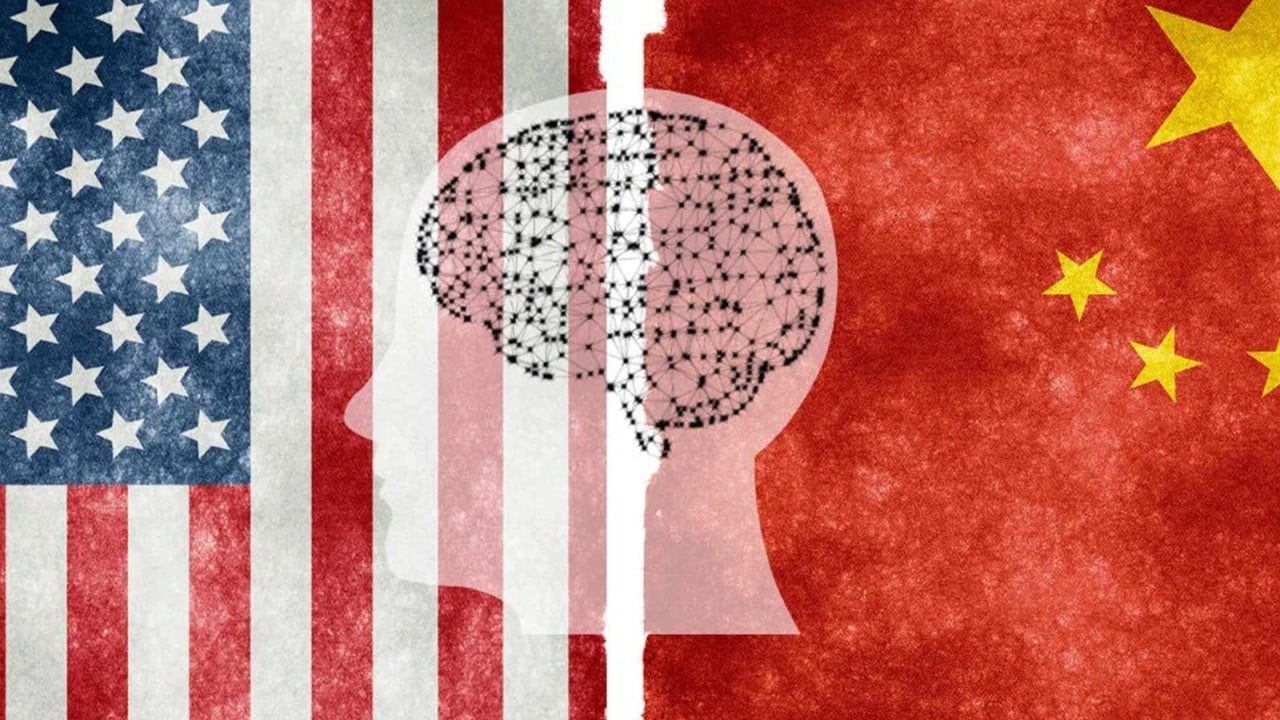
A five-stage roadmap frames recursive self-improvement as an actionable research program.
30-Second TL;DR
What Changed
The paper outlines five stages for recursive self-improvement.
Why It Matters
The roadmap could influence research priorities around automated coding, evaluation, and model design. It also raises major questions about verification, control, and whether self-improvement claims can be measured reliably.
What To Do Next
Add independent evaluations and rollback gates to any experiment that lets an AI agent modify model code or training pipelines.
Key Points
- •The paper outlines five stages for recursive self-improvement.
- •Contributors include ByteDance, Tsinghua University, and Shanghai AI Lab.
- •The goal is AI systems that improve successor systems autonomously.
Deep Insight
Background and context from public sources — not the original article. 8 sources cited.
Enhanced Key Takeaways
- •The research paper is titled "The Last AI Built by Humans: Toward Genuine Recursive Self-Improvement" (arXiv:2609.11873) and includes 33 co-authors, incorporating Shanghai Jiao Tong University alongside ByteDance, Tsinghua, and Shanghai AI Lab.
- •The authors establish a formal criterion for 'genuine' recursive self-improvement (RSI), requiring performance enhancements to permanently persist and transfer across generational lineages rather than disappearing after in-context sessions.
- •The framework's highest tier, Stage 5 ('Recursive Meta-Improvement'), centers on AI systems iteratively refining the core meta-algorithms and methods used to engineer AI itself.
- •The publication aligns with broader Chinese industry initiatives toward autonomous model development, including DeepSeek's automated coding harnesses and MiniMax's automated GPU kernel optimization.
- •Release of the roadmap sparked pushback against voluntary pacing proposals raised by US AI executives, with Chinese analysts arguing that self-imposed slowdowns would entrench Silicon Valley's compute advantages.
Technical Deep Dive
- Publication Citation: Released as arXiv preprint arXiv:2609.11873, authored by 33 researchers across ByteDance, Tsinghua University, Shanghai AI Lab, and Shanghai Jiao Tong University.
- Architectural Scope of Genuine RSI: Strictly demarcated from session-based in-context adaptation; improvements must alter model weights or architectural specifications so they are inherited by downstream successor generations without human involvement.
- Stage 1 (Human-Guided Execution): AI executes rigid, human-engineered self-training and data generation pipelines without modifying the workflow.
- Stage 2 (Autonomous Strategy Selection): Systems select operational self-upgrade pathways and optimization techniques from a portfolio of viable strategies instead of executing static routines.
- Stages 3–4 (Autonomous Exploration & Ingestion): Systems independently determine data deficits, actively curating external knowledge, simulation environments, and training experiences post-deployment.
- Stage 5 (Recursive Meta-Improvement): Fully closed self-directed loop where AI automates and optimizes the underlying meta-learning rules, optimization mathematics, and model architectures governing future generations.
Future ImplicationsAI analysis grounded in cited sources
Timeline
- 2026-09ByteDance, Tsinghua, and partner institutions publish the five-stage recursive self-improvement roadmap on arXiv
Sources (8)
Factual claims are grounded in the sources below. Forward-looking analysis is AI-generated interpretation.
Weekly AI Recap
Read this week's curated digest of top AI events →
Related Updates



AI-curated news aggregator. All content rights belong to original publishers.
Original source: SCMP Technology ↗
This is a summary, not the original. Read the source, or get the weekly briefing.
The weekly digest
One email a week. Unsubscribe anytime.