Chinese Motor Makers Race for Humanoid Robot Dominance
💡Understand the hardware supply chain shifts driving the mass production of humanoid robots.
⚡ 30-Second TL;DR
What Changed
Nearly 20 Chinese motor manufacturers are pivoting toward humanoid robotics.
Why It Matters
The rapid scaling of these motor technologies will likely lower the bill of materials (BOM) for humanoid robots, accelerating mass production capabilities.
What To Do Next
Evaluate the cost-performance ratio of Chinese-manufactured frameless torque motors for your next robotics prototype.
Key Points
- •Nearly 20 Chinese motor manufacturers are pivoting toward humanoid robotics.
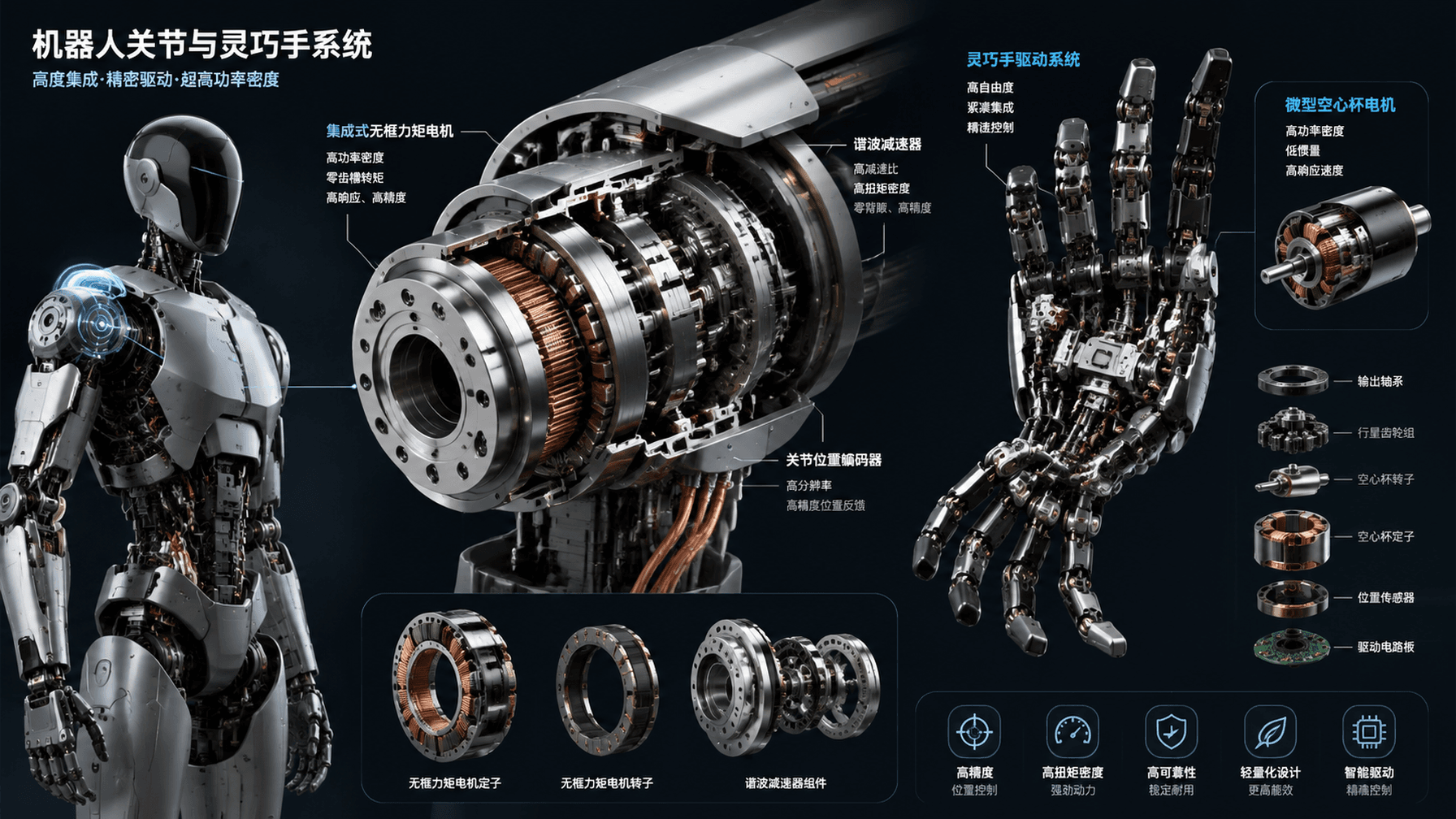
- •Frameless torque motors are identified as a critical component for robot joints.
- •Hollow cup motors are emerging as a dominant technical pathway for precision movement.
🧠 Deep Insight
AI-generated analysis for this event — not the original article.
🔑 Enhanced Key Takeaways
- •Chinese motor manufacturers are increasingly integrating localized harmonic reducers and planetary gear sets alongside motors to offer 'actuator modules' rather than just standalone motors.
- •Government-backed initiatives, such as the 'Robot + Application' action plan, are providing subsidies to motor firms that achieve mass production milestones for humanoid-specific components.
- •Supply chain localization is a primary driver, as Chinese firms aim to replace imported components from Japanese and European incumbents like Maxon or Harmonic Drive to reduce costs by 30-50%.
- •The industry is shifting toward high-torque-density designs that utilize rare-earth permanent magnets, specifically focusing on thermal management solutions to prevent performance degradation during continuous operation.
- •Major motor companies are forming strategic alliances with humanoid robot OEMs (Original Equipment Manufacturers) to co-develop custom motor form factors, moving away from off-the-shelf catalog products.
📊 Competitor Analysis▸ Show
| Feature | Chinese Motor Makers (Frameless/Hollow Cup) | Japanese/European Incumbents (e.g., Maxon, Harmonic Drive) |
|---|---|---|
| Cost | Highly competitive (Mass production focus) | Premium (High R&D overhead) |
| Lead Time | Short (Domestic supply chain) | Long (Global logistics/backlog) |
| Torque Density | Rapidly improving (Closing the gap) | Industry benchmark (High reliability) |
| Customization | High (Co-development with OEMs) | Moderate (Standardized product lines) |
🛠️ Technical Deep Dive
- Frameless Torque Motors: Utilize high-pole-count designs to maximize torque-to-weight ratios, essential for minimizing the inertia of robot limbs.
- Hollow Cup (Coreless) Motors: Feature a self-supporting coil winding structure that eliminates iron losses, enabling high acceleration and efficiency in small-scale robotic hands and fingers.
- Thermal Management: Implementation of advanced potting compounds and integrated heat sinks to maintain magnetic flux density under high-load conditions.
- Material Science: Adoption of high-grade neodymium-iron-boron (NdFeB) magnets with high coercivity to withstand high-temperature demagnetization during peak torque output.
🔮 Future ImplicationsAI analysis grounded in cited sources
⏳ Timeline
Weekly AI Recap
Read this week's curated digest of top AI events →
👉Related Updates


AI-curated news aggregator. All content rights belong to original publishers.
Original source: Pandaily ↗
This is a summary, not the original. Read the source, or get the weekly briefing.
Weekly AI briefing
One email a week. Unsubscribe anytime.