China's SpaceSail aims to challenge Starlink's satellite dominance
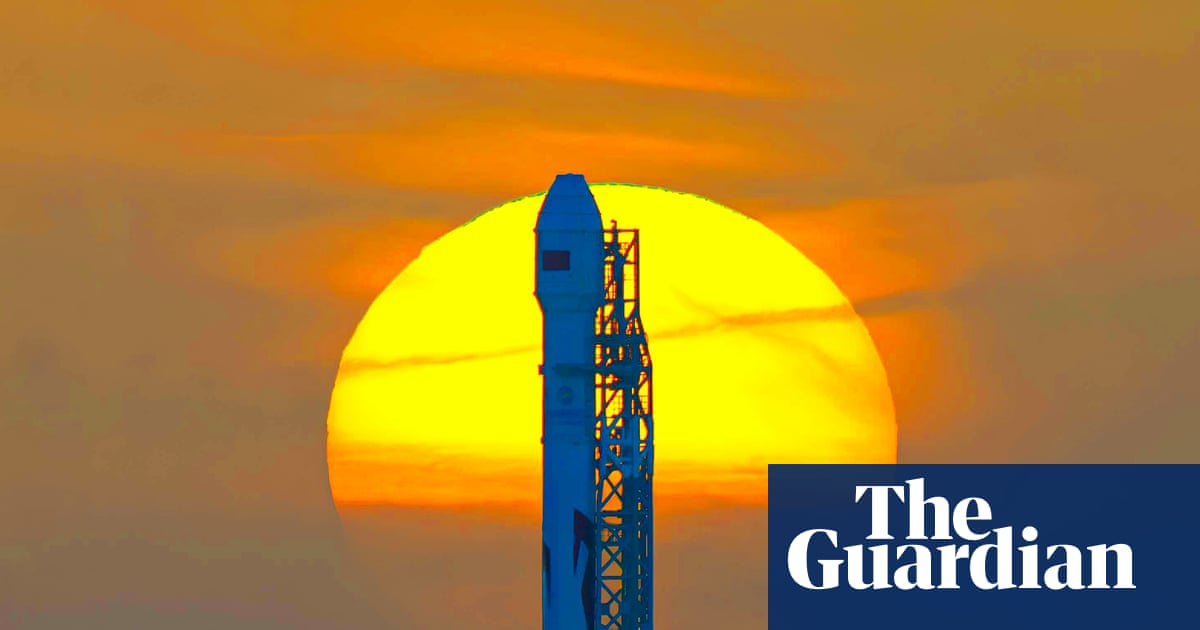
A major geopolitical shift in satellite infrastructure that could impact global connectivity and data routing.
30-Second TL;DR
What Changed
SpaceSail is a Chinese state-backed satellite internet project.
Why It Matters
If successful, SpaceSail could break the current Western monopoly on global satellite internet, creating a bifurcated market for infrastructure and data sovereignty.
What To Do Next
Monitor the regulatory landscape for satellite data transmission if you are building global edge-computing or IoT applications.
Key Points
- •SpaceSail is a Chinese state-backed satellite internet project.
- •The constellation is currently scaling up from a few hundred satellites.
- •The company is actively negotiating with dozens of countries for international deployment.
Deep Insight
AI-generated analysis for this event — not the original article.
Enhanced Key Takeaways
- •SpaceSail, officially known as Shanghai Spacecom Satellite Technology (SSST), is a key component of China's 'G60 Starlink' initiative, which aims to launch over 12,000 satellites by 2030.
- •The project is heavily supported by the Shanghai municipal government, which has integrated it into broader regional industrial development plans to foster a domestic space manufacturing ecosystem.
- •SpaceSail utilizes a modular satellite bus design that allows for rapid mass production, significantly reducing the cost per unit compared to traditional satellite manufacturing.
- •The company has faced significant regulatory hurdles in Western markets due to national security concerns regarding data sovereignty and potential surveillance capabilities.
- •SpaceSail's deployment strategy focuses heavily on the Global South, particularly in regions where Starlink has faced regulatory delays or where governments seek to reduce reliance on US-based infrastructure.
Competitor Analysis
- SpaceSail (SSST)
- Chinese State/Shanghai Govt
- Starlink (SpaceX)
- Private (SpaceX)
- Kuiper (Amazon)
- Private (Amazon)
- SpaceSail (SSST)
- Global South/Domestic China
- Starlink (SpaceX)
- Global/Commercial/Military
- Kuiper (Amazon)
- Enterprise/Global
- SpaceSail (SSST)
- Long March Series
- Starlink (SpaceX)
- Falcon 9 / Starship
- Kuiper (Amazon)
- Vulcan Centaur / New Glenn
- SpaceSail (SSST)
- Early Constellation
- Starlink (SpaceX)
- 6,000+ Satellites
- Kuiper (Amazon)
- Prototype Phase
| Feature | SpaceSail (SSST) | Starlink (SpaceX) | Kuiper (Amazon) |
|---|---|---|---|
| Primary Backing | Chinese State/Shanghai Govt | Private (SpaceX) | Private (Amazon) |
| Target Market | Global South/Domestic China | Global/Commercial/Military | Enterprise/Global |
| Launch Vehicle | Long March Series | Falcon 9 / Starship | Vulcan Centaur / New Glenn |
| Current Scale | Early Constellation | 6,000+ Satellites | Prototype Phase |
Technical Deep Dive
- Satellite Architecture: Employs a flat-panel design optimized for multi-satellite stacking on launch vehicles to maximize payload efficiency.
- Frequency Bands: Operates primarily in Ku and V-bands to provide high-throughput broadband connectivity.
- Manufacturing: Utilizes a 'digital factory' approach in Shanghai, capable of producing hundreds of satellites annually through automated assembly lines.
- Orbital Configuration: Designed for Low Earth Orbit (LEO) at altitudes between 500km and 1,200km to minimize latency for end-users.
Future ImplicationsAI analysis grounded in cited sources
Timeline
- 2023-11Shanghai Spacecom Satellite Technology (SSST) officially secures major funding for the G60 constellation.
- 2024-08SpaceSail successfully launches its first batch of prototype satellites into LEO via a Long March 6A rocket.
- 2025-05SpaceSail signs initial memorandum of understanding with several African nations for satellite internet infrastructure.
- 2026-02SSST announces the completion of its first automated high-volume satellite production facility in Shanghai.
Weekly AI Recap
Read this week's curated digest of top AI events →
Related Updates

AI-curated news aggregator. All content rights belong to original publishers.
Original source: The Guardian Technology ↗
This is a summary, not the original. Read the source, or get the weekly briefing.
The weekly digest
One email a week. Unsubscribe anytime.