China's Space Arm: 18K Parts, 15 Years
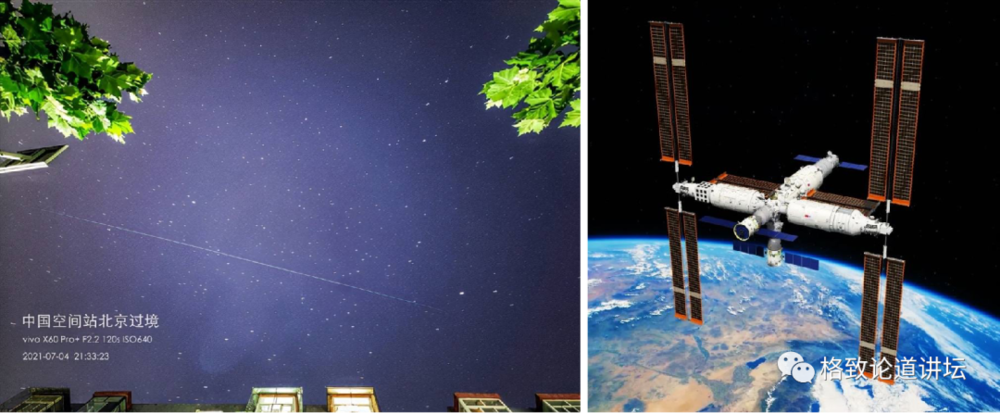
💡15yr space robotics breakdown: 7DOF design, zero-g tests, 18K parts mastery.
⚡ 30-Second TL;DR
What Changed
7 joints for 7 degrees of freedom, mimicking human shoulder-elbow-wrist
Why It Matters
Advances embodied robotics for autonomous space ops, offering lessons in durable hardware and control systems for AI practitioners in harsh environments. Highlights integration of perception, manipulation, and code scale for complex robots.
What To Do Next
Prototype 7-DOF arm in ROS/Gazebo using air-bearing sim for zero-g robotics testing.
Key Points
- •7 joints for 7 degrees of freedom, mimicking human shoulder-elbow-wrist
- •1.8万 parts, 50万行代码, developed by 100+ team over 15 years since 2006
- •Zero-g testing via air-cushion bearings creating hair-thin gas film
- •Thermal vacuum tests from -100°C to +100°C for space endurance
- •Launched 2021, performs real-time patrols and astronaut support
🧠 Deep Insight
Background and context from public sources — not the original article. 9 sources cited.
🔑 Enhanced Key Takeaways
- •A complementary small 7-degree-of-freedom robotic arm on the Wentian module has a 5m operating radius and 3-ton maximum load, enabling higher precision operations with 5x better position accuracy than the large arm.[1][2][3]
- •Both large and small arms feature sensors for visual measurement, joint torque, and end-effector force, supporting independent or combined use for missions like spacecraft capture.[1][2]
- •The arms can relocate by 'crawling' via head-tail swaps on adapters across station modules, extending the effective range to 15m when combined.[1][3][4]
🛠️ Technical Deep Dive
- •Large arm: 10m (or 10.2m) reach, 25-ton payload, 7 DOF, mounted on Tianhe core module.[1][3][4]
- •Small arm: 5m reach, 3-ton (or ~4.5-ton equivalent) payload, 7 DOF, mounted on Wentian module, superior precision (5x position, 2x attitude accuracy).[1][3]
- •Sensors: visual measurement, joint torque, end-effector force on both arms.[1][2]
- •Relocation capability: Crawling via robotic arm adapters on station surfaces for flexible positioning.[1][4]
- •Developer: China Academy of Space Technology 502 Research Institute (CAST 502).[8]
🔮 Future ImplicationsAI analysis grounded in cited sources
⏳ Timeline
📎 Sources (9)
Factual claims are grounded in the sources below. Forward-looking analysis is AI-generated interpretation.
- spj.science.org — Space
- eurekalert.org — 1051342
- youtube.com — Watch
- eoportal.org — Tiangong Space Station
- spaceref.com — Overview of Chinas Tiangong Space Station
- unoosa.org — Css 1stao Handbook 2018
- en.wikipedia.org — Tianhe Core Module
- escholarship.org — Qt2js0c5r8 Nosplash 308ba05cdedfb90ab23d648da59e3bb6
- chinapower.csis.org — Chinese Space Station
Weekly AI Recap
Read this week's curated digest of top AI events →
👉Related Updates


AI-curated news aggregator. All content rights belong to original publishers.
Original source: 虎嗅 ↗
This is a summary, not the original. Read the source, or get the weekly briefing.
Weekly AI briefing
One email a week. Unsubscribe anytime.