China's New Tech Hubs and Their Impact on Housing
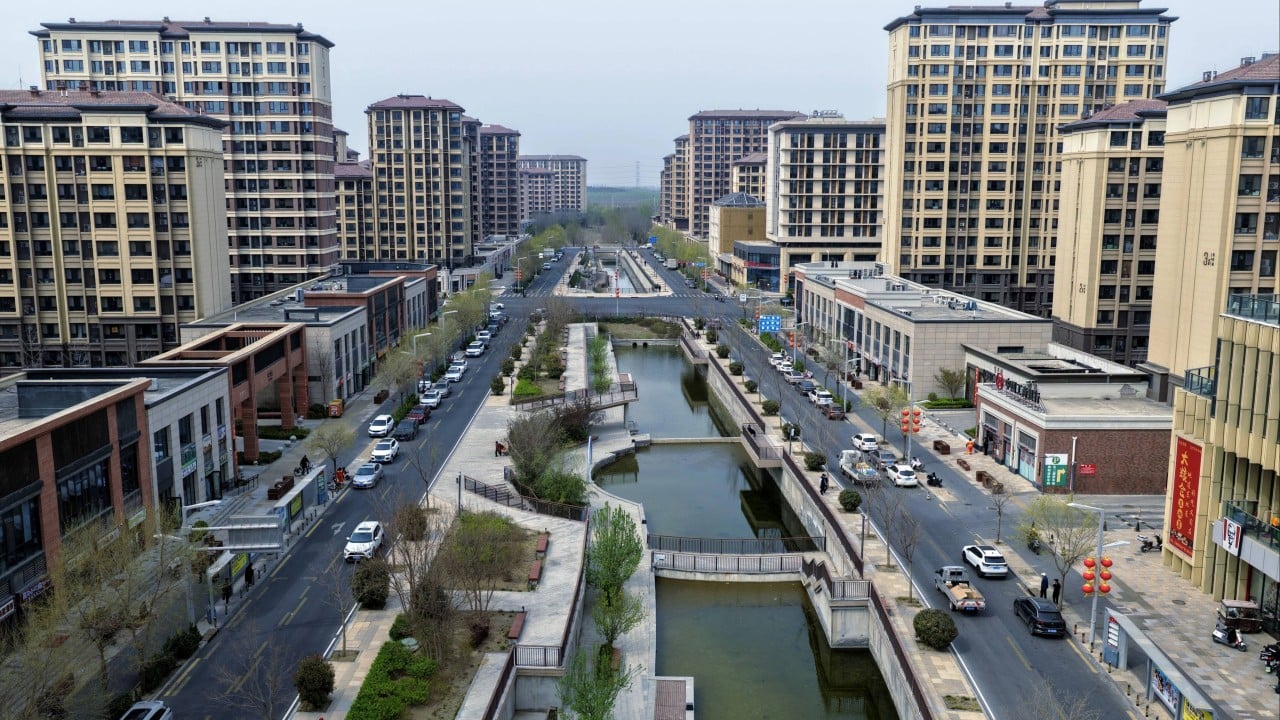
Understand how China's strategic AI and chip hub expansion affects regional operational costs and talent distribution.
30-Second TL;DR
What Changed
Tech firms are expanding R&D and headquarters into northern regions near Beijing.
Why It Matters
The shift of AI and semiconductor R&D hubs to northern China could influence regional talent migration and operational costs for tech companies. Practitioners should monitor these geographic shifts for potential changes in local infrastructure and talent availability.
What To Do Next
Evaluate the regional talent pool and infrastructure costs in Hebei and Tianjin if planning to establish or expand R&D operations in northern China.
Key Points
- •Tech firms are expanding R&D and headquarters into northern regions near Beijing.
- •Local governments expect AI and chip companies to revitalize slumping property markets.
- •Market analysts predict rental demand will rise, but home sales growth will remain conservative.
Deep Insight
AI-generated analysis for this event — not the original article.
Enhanced Key Takeaways
- •The Beijing-Tianjin-Hebei (Jing-Jin-Ji) integration strategy is a central government initiative aimed at decongesting Beijing's non-capital functions, which directly drives the relocation of tech firms to Hebei and Tianjin.
- •Local governments in these regions are offering significant tax incentives and subsidized land grants specifically for AI and semiconductor startups to attract talent away from the high-cost Beijing core.
- •The 'Hukou' (household registration) reform in Tianjin has been accelerated to allow tech workers relocating from Beijing to more easily access local public services, a key factor in stabilizing long-term rental demand.
- •Infrastructure projects, such as the high-speed rail expansion connecting Beijing's Zhongguancun tech hub to Tianjin's Binhai New Area, have reduced commute times to under 45 minutes, facilitating a 'commuter-tech' workforce model.
- •Recent data indicates that while commercial real estate occupancy in these new hubs is rising, residential property inventory remains high, leading to a decoupling of commercial tech growth and residential price appreciation.
Future ImplicationsAI analysis grounded in cited sources
Timeline
- 2014-02President Xi Jinping elevates the Beijing-Tianjin-Hebei integration to a national development strategy.
- 2017-04Establishment of the Xiongan New Area in Hebei to serve as a primary destination for Beijing's non-capital functions.
- 2023-09Tianjin introduces new policies to attract high-tech enterprises and talent to the Binhai New Area.
- 2025-05Major Beijing-based AI firms announce the opening of secondary R&D headquarters in Tianjin.
Weekly AI Recap
Read this week's curated digest of top AI events →
Related Updates




AI-curated news aggregator. All content rights belong to original publishers.
Original source: SCMP Technology ↗
This is a summary, not the original. Read the source, or get the weekly briefing.
The weekly digest
One email a week. Unsubscribe anytime.