China's Innovative Drug BD Market Hits $100B Milestone
💡Understand the structural shift in $100B drug licensing deals and the rising role of AI in global pharma R&D.
⚡ 30-Second TL;DR
What Changed
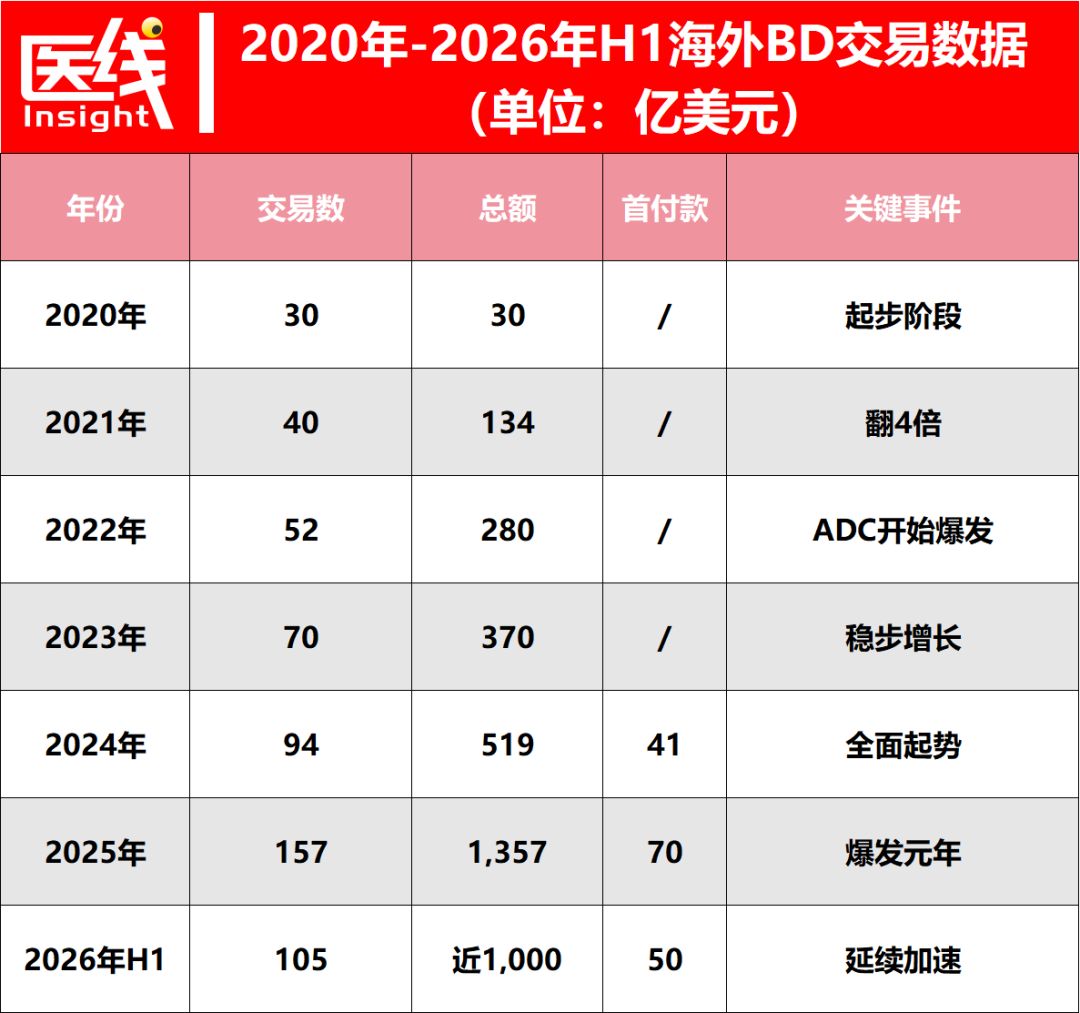
2026 H1 saw 105 licensing-out deals with total transaction value nearing $100 billion.
Why It Matters
The shift toward early-stage 'bundled' deals suggests MNCs are prioritizing innovation efficiency, potentially turning Chinese biotech firms into 'external R&D centers' if value retention strategies are not optimized.
What To Do Next
Evaluate your R&D pipeline for 'platform-level' potential rather than single-asset value to align with current MNC acquisition trends.
Key Points
- •2026 H1 saw 105 licensing-out deals with total transaction value nearing $100 billion.
- •Shift from single-asset deals to 'bundled' partnerships and early-stage pipeline licensing.
- •AI-driven drug discovery is becoming a core engine for global pharmaceutical value creation.
- •Increased reliance on complex structures like NewCo and equity swaps for long-term alignment.
🧠 Deep Insight
AI-generated analysis for this event — not the original article.
🔑 Enhanced Key Takeaways
- •The surge in deal value is heavily driven by the 'ADC (Antibody-Drug Conjugate) gold rush,' with Chinese biotech firms accounting for a significant portion of global ADC licensing activity in 2026.
- •Regulatory shifts in China, specifically the NMPA's updated guidelines on multi-regional clinical trials (MRCTs), have accelerated the speed at which Chinese assets can be integrated into global development programs.
- •Cross-border deal structures now frequently include 'option-to-acquire' clauses that allow multinational corporations to defer full acquisition costs until Phase II clinical data is validated.
- •There is a marked increase in 'reverse licensing' deals, where global pharmaceutical companies are licensing early-stage assets from Chinese firms to fill gaps in their own internal R&D pipelines caused by patent cliffs.
- •The valuation of these deals is increasingly tied to 'milestone-heavy' payment structures, where upfront payments remain modest compared to the total potential deal value, reflecting cautious risk-sharing between parties.
🛠️ Technical Deep Dive
- Integration of Generative AI platforms (e.g., AlphaFold 3, RoseTTAFold All-Atom) in the lead optimization phase has reduced the time-to-IND (Investigational New Drug) filing by an average of 6-9 months for Chinese biotech firms.
- Implementation of 'Digital Twin' clinical trial simulations is being used to predict patient response rates in early-stage licensing deals, increasing the confidence of global partners in Chinese-developed assets.
- Advanced ADC linker-payload technologies, specifically those utilizing site-specific conjugation and novel topoisomerase I inhibitors, are the primary technical differentiators in the current licensing wave.
🔮 Future ImplicationsAI analysis grounded in cited sources
⏳ Timeline
Weekly AI Recap
Read this week's curated digest of top AI events →
👉Related Updates


AI-curated news aggregator. All content rights belong to original publishers.
Original source: 虎嗅 ↗
This is a summary, not the original. Read the source, or get the weekly briefing.
The weekly digest
One email a week. Unsubscribe anytime.