Academic Integrity Crisis: The Cost of AI-Assisted Plagiarism
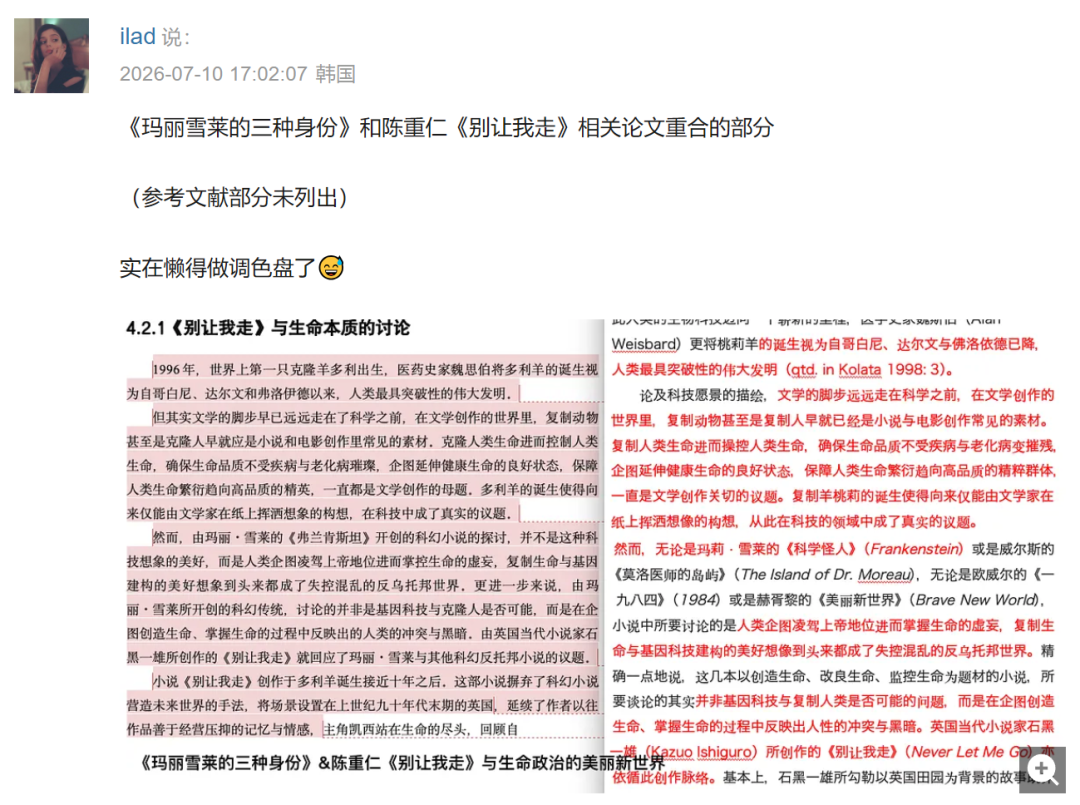
💡See the real-world consequences of AI-assisted plagiarism in high-stakes academic environments.
⚡ 30-Second TL;DR
What Changed
Plagiarism remains a critical academic offense regardless of the tools used to generate content.
Why It Matters
This case underscores the growing scrutiny on academic work, forcing researchers and students to be more transparent about their use of AI tools in formal publications.
What To Do Next
If using AI for academic or formal writing, ensure full disclosure and rigorous manual verification of all citations and data to avoid integrity violations.
Key Points
- •Plagiarism remains a critical academic offense regardless of the tools used to generate content.
- •The ease of AI-assisted writing increases the risk of academic misconduct if not strictly regulated.
- •Institutional review processes are becoming more rigorous in detecting AI-assisted or automated plagiarism.
🧠 Deep Insight
AI-generated analysis for this event — not the original article.
🔑 Enhanced Key Takeaways
- •The Jiang Fangzhou case has sparked a broader debate in China regarding the 'AI-generated content' (AIGC) labeling standards for academic submissions, with universities increasingly adopting mandatory AI-detection software.
- •Legal experts note that current copyright laws in China are struggling to define authorship when AI models are used, complicating the prosecution of academic fraud cases involving generative tools.
- •The Ministry of Education in China has recently updated its guidelines to explicitly classify the use of AI to generate research data or thesis text as a form of 'academic misconduct' rather than just 'improper citation'.
- •Academic institutions are shifting from traditional plagiarism checkers (which compare text against databases) to stylometric analysis tools that identify patterns characteristic of specific LLMs.
- •The incident has led to a surge in demand for 'AI-human hybrid' verification services, where institutions hire third-party experts to audit the research process and raw data logs of graduate students.
🛠️ Technical Deep Dive
- Detection systems now utilize perplexity and burstiness metrics to differentiate between human-authored text and LLM-generated output.
- Stylometric analysis involves training classifiers on datasets of known AI-generated text to identify latent semantic patterns and token probability distributions.
- Advanced institutional review processes now require the submission of version control logs (e.g., Git history or document edit history) to prove the incremental development of academic work.
🔮 Future ImplicationsAI analysis grounded in cited sources
⏳ Timeline
Weekly AI Recap
Read this week's curated digest of top AI events →
👉Related Updates



AI-curated news aggregator. All content rights belong to original publishers.
Original source: 虎嗅 ↗
This is a summary, not the original. Read the source, or get the weekly briefing.
The weekly digest
One email a week. Unsubscribe anytime.