Systemic Antibody Misuse in Biomedical AI Research
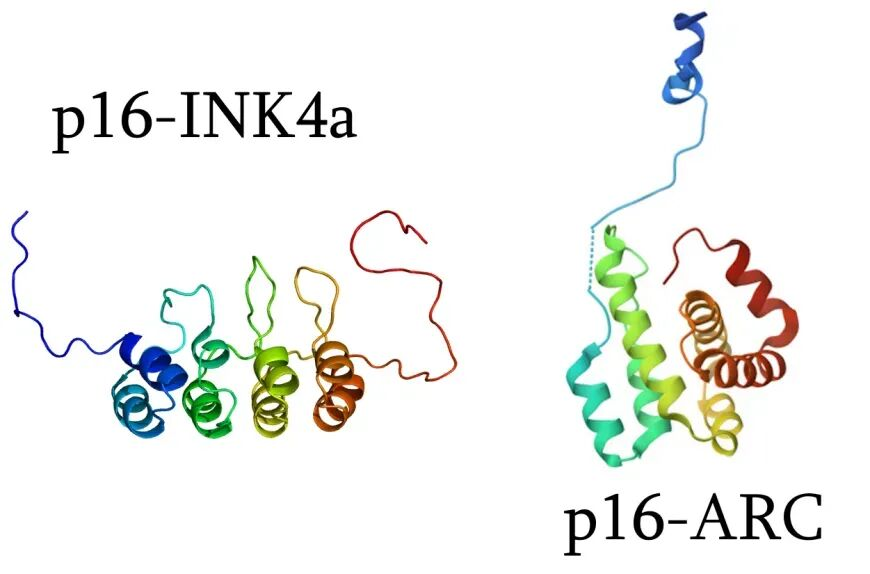
💡Critical warning for AI researchers: your biological training data might be built on systemic scientific errors.
⚡ 30-Second TL;DR
What Changed
Researchers frequently misidentify proteins due to naming confusion and lack of validation.
Why It Matters
AI models trained on biological datasets are susceptible to 'garbage in, garbage out' if the underlying experimental data is fundamentally flawed.
What To Do Next
Implement strict data validation pipelines and cross-reference biological training data against verified protein databases before model training.
Key Points
- •Researchers frequently misidentify proteins due to naming confusion and lack of validation.
- •20-30% of published research may rely on non-specific or incorrect antibody data.
- •Flawed data entering the pipeline compromises downstream AI drug target discovery.
🧠 Deep Insight
AI-generated analysis for this event — not the original article.
🔑 Enhanced Key Takeaways
- •The 'antibody reproducibility crisis' is exacerbated by the lack of standardized nomenclature, where different antibodies are often assigned the same name by vendors, leading to cross-reactivity issues.
- •AI models trained on large-scale biological datasets, such as those from the Protein Data Bank (PDB) or public omics repositories, inadvertently ingest 'garbage-in, garbage-out' data when antibody-based validation is flawed.
- •The NIH and other funding bodies have begun implementing stricter 'Rigor and Reproducibility' guidelines, requiring researchers to provide RRIDs (Research Resource Identifiers) for antibodies to combat this issue.
- •Automated image analysis tools used in high-throughput screening often fail to detect non-specific binding patterns that human experts might identify, leading to the propagation of false-positive protein expression data.
- •Recent studies suggest that the cost of irreproducible preclinical research, largely driven by reagent failure including antibodies, exceeds $28 billion annually in the United States alone.
🛠️ Technical Deep Dive
- Antibody validation protocols now emphasize the use of knockout (KO) or knockdown (KD) cell lines as the gold standard for verifying specificity.
- Mass spectrometry-based proteomics is increasingly used as an orthogonal validation method to confirm that the protein targeted by an antibody matches the expected molecular weight and identity.
- AI-driven antibody design platforms (e.g., those using generative models like RFdiffusion) are being repurposed to predict antibody-antigen binding affinity to filter out potentially non-specific candidates before wet-lab validation.
- Western Blotting, while traditional, is being replaced or augmented by capillary-based immunoassay systems (like Wes or Jess) that provide more quantitative and reproducible data with lower sample requirements.
🔮 Future ImplicationsAI analysis grounded in cited sources
⏳ Timeline
Weekly AI Recap
Read this week's curated digest of top AI events →
👉Related Updates




AI-curated news aggregator. All content rights belong to original publishers.
Original source: 虎嗅 ↗
This is a summary, not the original. Read the source, or get the weekly briefing.
The weekly digest
One email a week. Unsubscribe anytime.