China’s Growth Is Riding the AI Wave
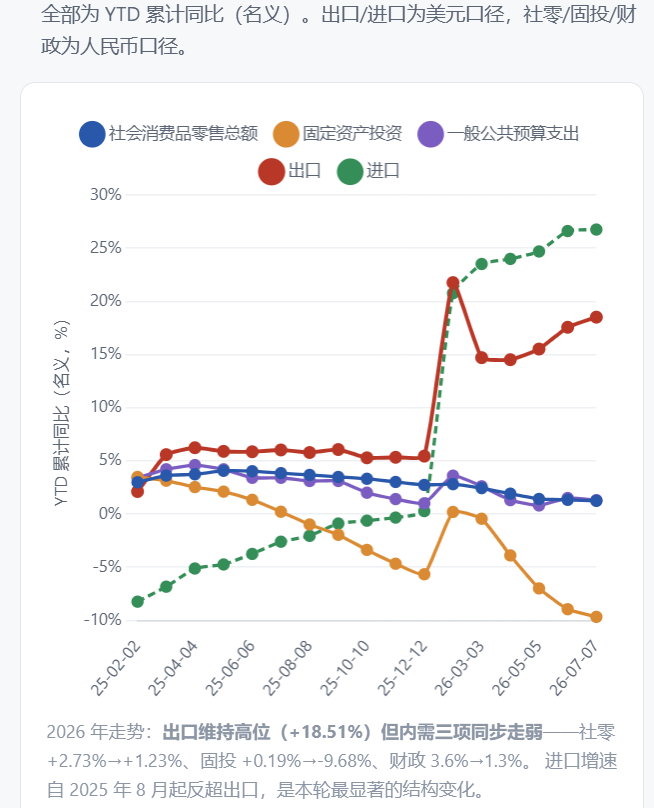
💡China’s AI hardware export boom is powerful—but its dependence on overseas demand may be dangerously fragile.
⚡ 30-Second TL;DR
What Changed
Fixed-asset investment and retail consumption remain weak, while imports and exports—especially AI-related hardware inputs—are growing rapidly.
Why It Matters
AI infrastructure companies may face strong near-term demand but also heightened exposure to export controls, geopolitical friction, and inventory corrections. Founders should distinguish sustainable end-user demand from AI-cycle-driven stockpiling.
What To Do Next
Audit your AI hardware or infrastructure roadmap by modeling a 20–30% decline in overseas AI capex and identifying suppliers and components with the highest concentration risk.
Key Points
- •Fixed-asset investment and retail consumption remain weak, while imports and exports—especially AI-related hardware inputs—are growing rapidly.
- •Integrated circuit imports are unusually strong, reflecting stockpiling, production expansion, and demand from global AI hardware supply chains.
- •Export growth is increasingly driven by integrated circuits and computer-communications products, linking China’s manufacturing cycle to overseas AI spending.
- •The article warns that relying on external AI demand creates a fragile growth structure because key demand comes from markets also imposing trade barriers.
Weekly AI Recap
Read this week's curated digest of top AI events →
👉Related Updates



AI-curated news aggregator. All content rights belong to original publishers.
Original source: 虎嗅 ↗
This is a summary, not the original. Read the source, or get the weekly briefing.
Weekly AI briefing
One email a week. Unsubscribe anytime.