🐯虎嗅•Freshcollected in 28m
China's First Commercial Brain-Computer Interface Implant
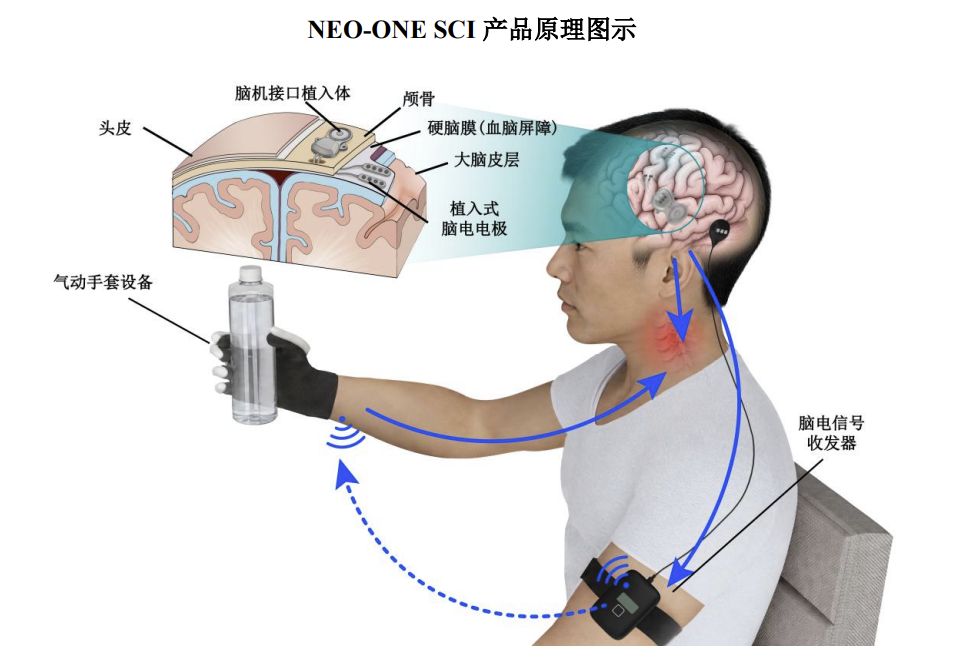
💡First commercial BCI implant in China marks a major breakthrough in neuro-prosthetic medical technology.
⚡ 30-Second TL;DR
What Changed
First implanted BCI medical device approved for commercial use in China.
Why It Matters
This milestone validates the clinical path for BCI technology in China and sets a precedent for future neuro-prosthetic medical device approvals.
What To Do Next
If you are in the medical AI space, study the regulatory pathway and clinical trial design of the NEO-ONE SCI for future BCI product development.
Who should care:Researchers & Academics
Key Points
- •First implanted BCI medical device approved for commercial use in China.
- •Uses epidural signal acquisition to balance signal quality and safety.
- •Assists cervical spinal cord injury patients in regaining hand grasping functionality.
- •Requires intensive 6-hour daily training for patients to optimize signal recognition.
🧠 Deep Insight
AI-generated analysis for this event.
🔑 Enhanced Key Takeaways
- •The NEO-ONE system was developed by NeuraMatrix, a Beijing-based neurotechnology startup founded by researchers from Tsinghua University.
- •The device utilizes a minimally invasive epidural approach, which avoids penetrating the brain parenchyma to reduce the risk of gliosis and long-term tissue damage.
- •The system integrates a proprietary high-bandwidth wireless data transmission module that allows for real-time signal processing without tethered cables.
- •Clinical trials for the device were conducted in collaboration with major Chinese neurosurgical centers, focusing specifically on patients with chronic cervical spinal cord injuries (C4-C5 level).
- •The commercial approval follows a 'Green Channel' fast-track review process by the National Medical Products Administration (NMPA) for innovative medical devices.
📊 Competitor Analysis▸ Show
| Feature | NEO-ONE (NeuraMatrix) | Neuralink (Telepathy) | Synchron (Stentrode) |
|---|---|---|---|
| Implantation Method | Epidural (Minimally Invasive) | Intracortical (Penetrating) | Endovascular (Stent-based) |
| Primary Target | Spinal Cord Injury Rehab | Motor/Neurological Control | Motor/Communication |
| Signal Acquisition | Epidural Surface Array | Intracortical Microelectrodes | Vascular Stent Electrodes |
| Commercial Status | NMPA Approved (China) | FDA IDE (US) | FDA Breakthrough (US) |
🛠️ Technical Deep Dive
- Signal Acquisition: Employs a high-density epidural electrode array placed over the motor cortex to capture electrocorticography (ECoG) signals.
- Data Processing: Utilizes an on-board ASIC (Application-Specific Integrated Circuit) for local signal amplification and digitization to minimize noise.
- Decoding Architecture: Implements a deep learning-based decoder that translates neural firing patterns into motor intent for external prosthetic or functional electrical stimulation (FES) systems.
- Power Management: Features transcutaneous inductive charging to power the internal implant, eliminating the need for battery replacement surgeries.
- Latency: Achieves sub-50ms end-to-end latency from neural signal acquisition to device actuation.
🔮 Future ImplicationsAI analysis grounded in cited sources
Expansion into stroke rehabilitation markets by 2028.
The modular nature of the neural decoder allows for software updates to target motor recovery in stroke patients beyond spinal cord injury.
Integration with robotic exoskeletons for full-limb mobility.
Current hand-grasping success provides a foundational neural control interface that can be scaled to drive lower-limb robotic systems.
⏳ Timeline
2019-11
NeuraMatrix founded by Tsinghua University alumni.
2022-05
Completion of Series A funding round to accelerate BCI hardware development.
2024-09
Initiation of first-in-human clinical trials for the NEO-ONE system.
2026-06
NMPA grants commercial approval for the NEO-ONE BCI system.
📰
Weekly AI Recap
Read this week's curated digest of top AI events →
👉Related Updates

AI-curated news aggregator. All content rights belong to original publishers.
Original source: 虎嗅 ↗