🐯虎嗅•Freshcollected in 17m
China's Economic Transition: New Drivers vs. Weak Demand
💡Identify the key sectors in China's economy receiving policy support, specifically AI and advanced manufacturing.
⚡ 30-Second TL;DR
What Changed
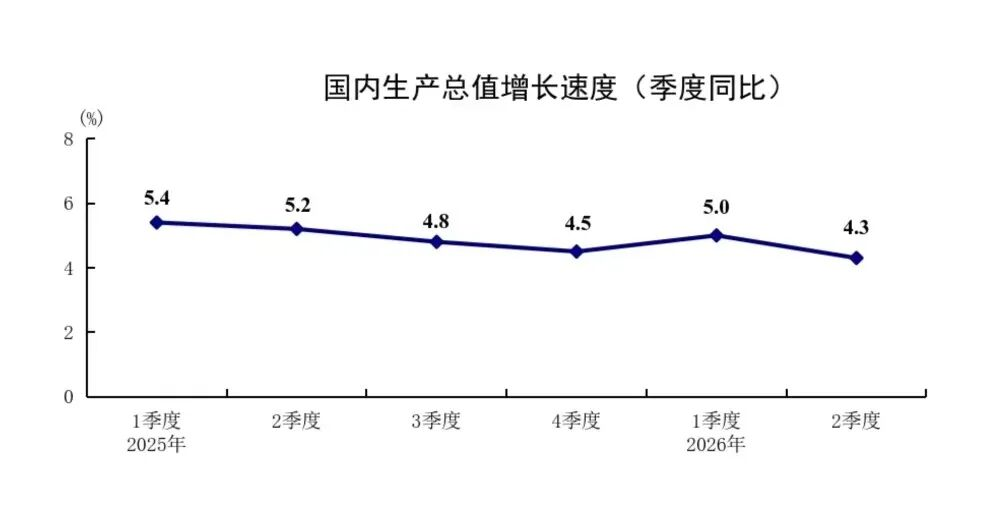
H1 GDP grew by 4.7%, with high-tech manufacturing increasing by 13.3%.
Why It Matters
The shift toward 'new quality productive forces' like AI and advanced manufacturing creates significant opportunities for B2B tech and industrial AI solutions.
What To Do Next
Focus R&D on industrial AI applications, as government policy is heavily favoring high-tech manufacturing and smart infrastructure.
Who should care:Enterprise & Security Teams
Key Points
- •H1 GDP grew by 4.7%, with high-tech manufacturing increasing by 13.3%.
- •AI and new energy vehicles are key drivers of economic structural transition.
- •Domestic consumption remains weak, requiring long-term policy adjustments.
🧠 Deep Insight
AI-generated analysis for this event.
🔑 Enhanced Key Takeaways
- •The 4.7% GDP growth rate in H1 2026 fell slightly below the government's annual target of approximately 5%, highlighting the persistent drag from the property sector crisis.
- •China's 'New Three' exports—electric vehicles, lithium-ion batteries, and solar cells—faced increased scrutiny and trade barriers from the EU and US, impacting export growth momentum in Q2 2026.
- •Local government debt resolution remains a critical bottleneck, with the central government shifting focus toward 'debt-for-bond' swaps to stabilize regional fiscal health.
- •The People's Bank of China (PBOC) has maintained a cautious monetary stance, prioritizing liquidity support for high-tech sectors while avoiding broad-based stimulus to prevent currency depreciation.
- •Demographic headwinds, specifically a shrinking working-age population, are accelerating the push for industrial automation and AI integration to maintain manufacturing productivity.
🔮 Future ImplicationsAI analysis grounded in cited sources
China will likely implement a significant fiscal stimulus package in Q4 2026.
The persistent weakness in domestic consumption and the failure to meet the 5% growth target will force policymakers to move beyond monetary easing toward direct fiscal intervention.
High-tech manufacturing will surpass real estate as the primary contributor to GDP by 2027.
The structural transition is being institutionalized through state-led investment funds, effectively decoupling industrial growth from the declining property market.
⏳ Timeline
2023-12
Central Economic Work Conference emphasizes 'New Productive Forces' as the core development strategy.
2024-03
The 'Two Sessions' officially prioritize high-tech manufacturing and AI as the primary engines for economic recovery.
2025-01
PBOC announces targeted RRR cuts to support the transition toward advanced manufacturing sectors.
2026-01
Implementation of new fiscal guidelines aimed at reducing local government debt burdens to free up capital for industrial investment.
📰
Weekly AI Recap
Read this week's curated digest of top AI events →
👉Related Updates
AI-curated news aggregator. All content rights belong to original publishers.
Original source: 虎嗅 ↗