🐯虎嗅•Freshcollected in 14m
German manufacturing crisis and the hidden champions
💡Learn how industrial shifts in the automotive sector affect the hardware-software integration landscape.
⚡ 30-Second TL;DR
What Changed
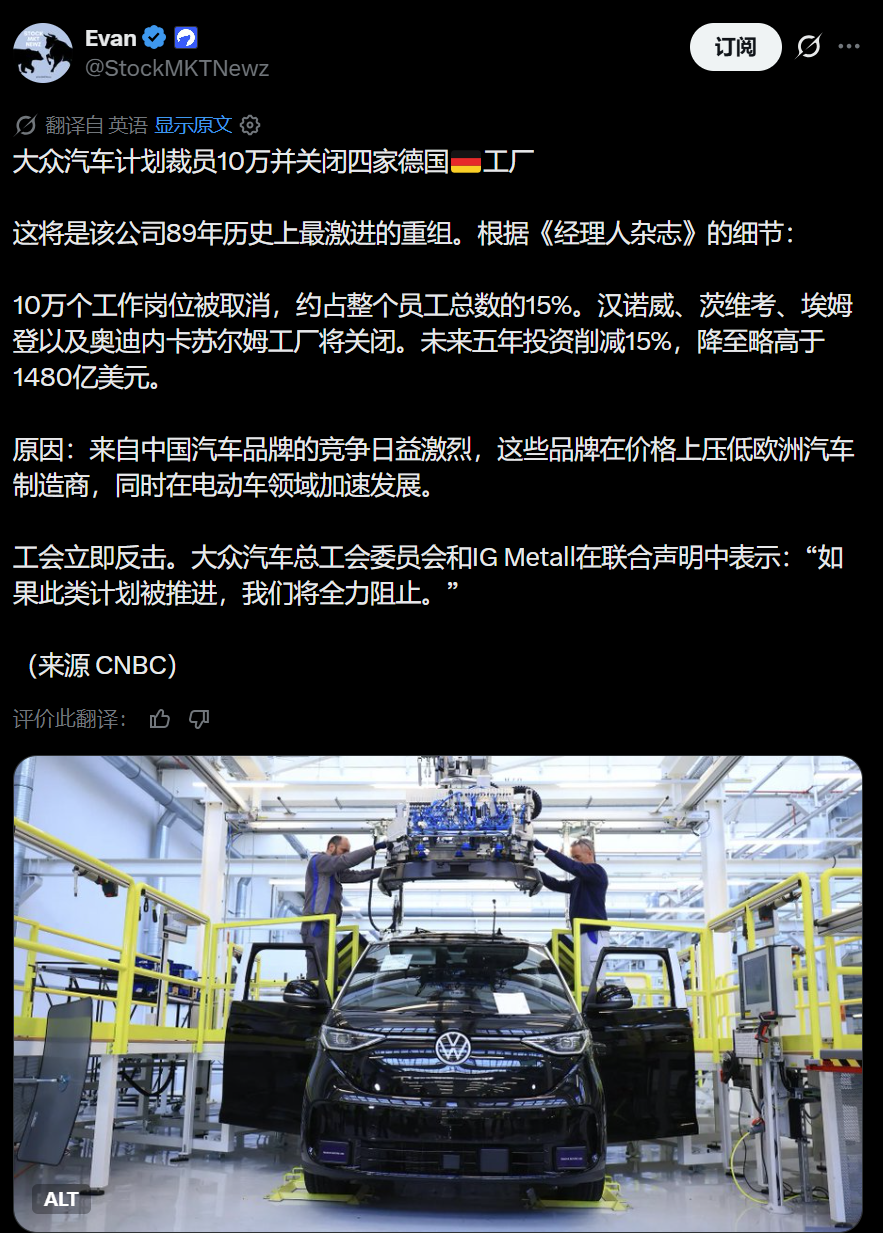
Volkswagen plans to cut 100,000 jobs and close 4 German factories by 2030.
Why It Matters
The decline of traditional automotive giants forces a massive restructuring of the European industrial landscape.
What To Do Next
Analyze how supply chain volatility in hardware manufacturing impacts the integration of AI-driven automotive software.
Who should care:Enterprise & Security Teams
Key Points
- •Volkswagen plans to cut 100,000 jobs and close 4 German factories by 2030.
- •The shift to electric vehicles and competition from Chinese manufacturers are disrupting traditional supply chains.
- •Hidden champions are specialized SMEs that rely on long-term stability rather than stock market performance.
🧠 Deep Insight
AI-generated analysis for this event.
🔑 Enhanced Key Takeaways
- •The German 'Mittelstand' faces a 'double whammy' of high energy costs following the decoupling from Russian natural gas and a structural decline in demand for internal combustion engine (ICE) components.
- •German automotive suppliers are increasingly shifting production to Eastern Europe and North America to mitigate domestic cost pressures, leading to 'hollowing out' concerns in the German industrial heartland.
- •The European Union's 'Green Deal' and strict CO2 fleet emission targets are forcing German manufacturers to accelerate electrification faster than their supply chains can adapt, creating a 'transition gap'.
- •Many hidden champions are struggling with 'digital transformation debt,' lacking the capital and specialized talent to integrate AI and software-defined vehicle (SDV) technologies into their legacy hardware products.
- •German government initiatives, such as the 'Future Fund' (Zukunftsfonds), are attempting to bridge the financing gap for SMEs, but critics argue these measures are insufficient to offset the loss of competitive advantage in global markets.
🛠️ Technical Deep Dive
- Transition from mechanical-heavy engineering to software-defined vehicle (SDV) architectures requires suppliers to shift from Tier 1 hardware manufacturing to integrated software-hardware stacks.
- The shift to 800V electrical architectures in EVs necessitates new power electronics, specifically Silicon Carbide (SiC) semiconductors, which many traditional German suppliers are currently sourcing from non-German firms.
- Modular production platforms (like VW's MEB and SSP) reduce the number of unique parts, directly threatening the business models of specialized SMEs that previously thrived on high-variety, low-volume component manufacturing.
🔮 Future ImplicationsAI analysis grounded in cited sources
Consolidation of the German automotive supply base will accelerate.
Small, specialized firms unable to pivot to EV-specific components or software integration will likely be acquired by larger conglomerates or face insolvency by 2028.
German industrial output will see a permanent shift toward high-end automation.
To combat high labor and energy costs, surviving manufacturers are forced to adopt extreme levels of industrial automation and AI-driven process optimization to remain cost-competitive.
⏳ Timeline
2021-07
Volkswagen announces 'NEW AUTO' strategy focusing on software and electrification.
2022-02
Geopolitical shifts lead to a sharp increase in energy costs, impacting German manufacturing margins.
2023-12
Volkswagen initiates a 10-billion-euro cost-cutting program to improve efficiency.
2025-03
Volkswagen confirms plans for significant workforce reductions and facility restructuring.
📰
Weekly AI Recap
Read this week's curated digest of top AI events →
👉Related Updates

AI-curated news aggregator. All content rights belong to original publishers.
Original source: 虎嗅 ↗