China’s DRAM Race Enters a New Phase
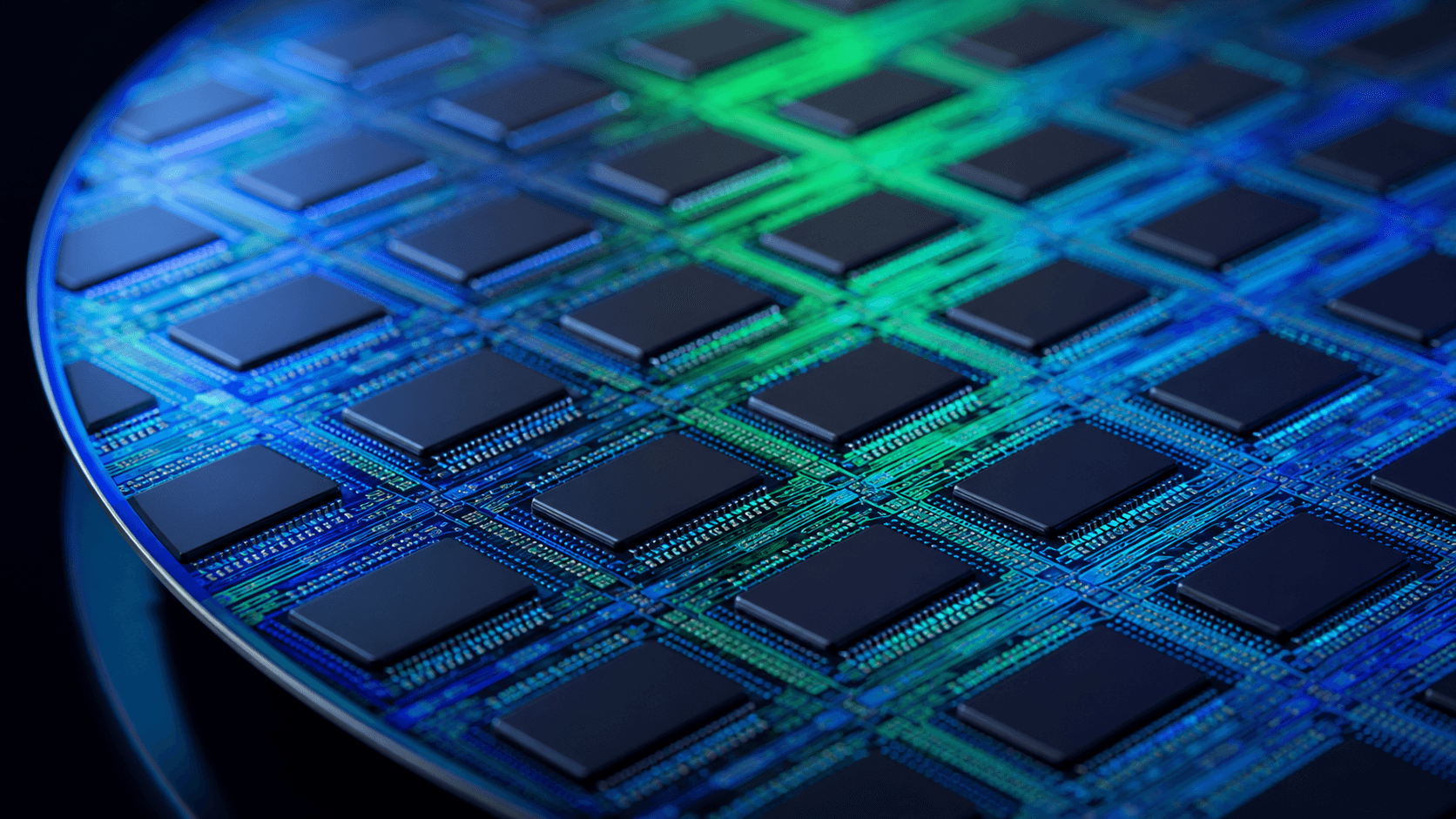
China’s DRAM push could reshape memory sourcing, pricing, and supply resilience for AI servers.
30-Second TL;DR
What Changed
Jinhua and CXMT began their DRAM efforts in 2016 to challenge the leading memory suppliers.
Why It Matters
A stronger domestic DRAM base could eventually broaden memory sourcing options for AI servers and reduce dependence on the incumbent suppliers. However, export controls and qualification requirements mean AI companies should not assume that new capacity immediately translates into production-ready alternatives.
What To Do Next
Ask procurement and systems engineering to evaluate CXMT DRAM qualification requirements for your AI-server platforms before treating it as a drop-in alternative.
Key Points
- •Jinhua and CXMT began their DRAM efforts in 2016 to challenge the leading memory suppliers.
- •A US blacklist halted Jinhua’s trajectory just before mass production.
- •CXMT’s A-share IPO marks a major financing and commercialization milestone for China’s memory sector.
- •The decade illustrates how policy, export controls, capital access, and manufacturing execution shape AI-memory competition.
Deep Insight
AI-generated analysis for this event — not the original article.
Enhanced Key Takeaways
- •CXMT has successfully transitioned to 17nm and 19nm process nodes, significantly narrowing the technology gap with legacy DRAM leaders.
- •The Chinese government's 'Big Fund' (China Integrated Circuit Industry Investment Fund) has been a primary driver of capital for CXMT, providing the necessary liquidity to bypass traditional venture capital constraints.
- •CXMT's product portfolio has expanded beyond standard DDR4 to include LPDDR4X and LPDDR5, targeting the mobile and edge AI device markets.
- •Despite export controls, CXMT has utilized domestic supply chain partnerships for equipment and materials to maintain production continuity.
- •The IPO process for CXMT is heavily scrutinized by domestic regulators to ensure alignment with national 'self-reliance' goals in semiconductor manufacturing.
Competitor Analysis
- CXMT (China)
- 17nm - 19nm
- Samsung (South Korea)
- 12nm - 14nm (1b/1c)
- Micron (USA)
- 10nm - 13nm (1-beta/1-gamma)
- CXMT (China)
- Domestic China / Consumer
- Samsung (South Korea)
- Global / Enterprise / AI
- Micron (USA)
- Global / Enterprise / AI
- CXMT (China)
- DDR4 / LPDDR4X
- Samsung (South Korea)
- HBM3E / DDR5 / LPDDR5X
- Micron (USA)
- HBM3E / DDR5 / LPDDR5X
- CXMT (China)
- Restricted by US Entity List
- Samsung (South Korea)
- Unrestricted
- Micron (USA)
- Unrestricted
| Feature | CXMT (China) | Samsung (South Korea) | Micron (USA) |
|---|---|---|---|
| Process Node | 17nm - 19nm | 12nm - 14nm (1b/1c) | 10nm - 13nm (1-beta/1-gamma) |
| Primary Market | Domestic China / Consumer | Global / Enterprise / AI | Global / Enterprise / AI |
| Technology Focus | DDR4 / LPDDR4X | HBM3E / DDR5 / LPDDR5X | HBM3E / DDR5 / LPDDR5X |
| Export Status | Restricted by US Entity List | Unrestricted | Unrestricted |
Technical Deep Dive
- CXMT utilizes a proprietary DRAM architecture that leverages domestic manufacturing equipment, focusing on high-volume production of DDR4 and LPDDR4X memory modules.
- The company has implemented advanced lithography techniques, reportedly utilizing multi-patterning to achieve sub-20nm feature sizes without access to EUV technology.
- CXMT's memory controllers are increasingly integrated with domestic SoC designs to optimize power efficiency for mobile and IoT applications.
- The manufacturing process emphasizes high-yield production of commodity DRAM to secure market share in the Chinese domestic electronics sector.
Future ImplicationsAI analysis grounded in cited sources
Timeline
- 2016-05CXMT is established in Hefei, Anhui Province, with backing from the Hefei municipal government.
- 2018-07CXMT completes its first 12-inch wafer fabrication facility and begins pilot production.
- 2019-09CXMT officially announces the mass production of its first-generation 19nm DDR4 memory chips.
- 2023-10CXMT secures a massive funding round, reportedly exceeding 39 billion yuan, to accelerate R&D and capacity expansion.
- 2026-05CXMT initiates the formal process for an A-share IPO on the Shanghai Stock Exchange.
Weekly AI Recap
Read this week's curated digest of top AI events →
Related Updates




AI-curated news aggregator. All content rights belong to original publishers.
Original source: Pandaily ↗
This is a summary, not the original. Read the source, or get the weekly briefing.
The weekly digest
One email a week. Unsubscribe anytime.