China’s Dexterous Hand Market Enters Mass Production
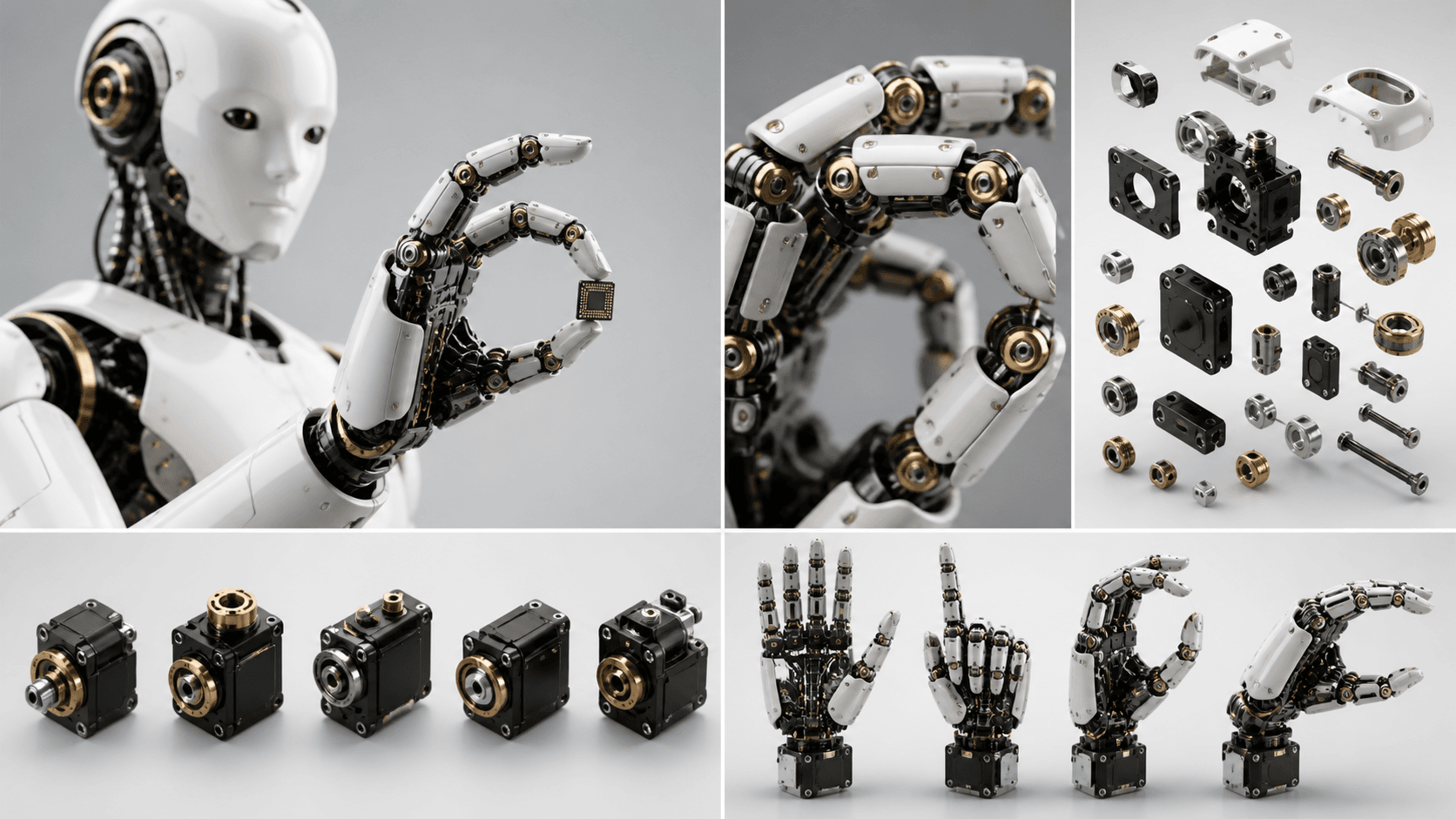
China’s dexterous-hand leaders are moving from demos toward scale—key context for embodied-AI builders.
30-Second TL;DR
What Changed
Yinshi Robotics, Lingxin, LinJieDian, and BrainCo form the sector’s emerging top tier.
Why It Matters
The transition to mass production could make dexterous hands more accessible for humanoid robotics and embodied-AI deployments. Increased competition may accelerate improvements in reliability, cost, and integration readiness.
What To Do Next
Create a supplier shortlist covering Yinshi Robotics, Lingxin, LinJieDian, and BrainCo, then request production samples and verify their control interfaces, sensing capabilities, and integration timelines.
Key Points
- •Yinshi Robotics, Lingxin, LinJieDian, and BrainCo form the sector’s emerging top tier.
- •China’s dexterous-hand industry is shifting from technology demonstrations to mass production.
- •Industry funding in H1 2026 reportedly surpassed 25 billion yuan.
- •Shipment forecasts for dexterous hands have reached 70,200 units.
Deep Insight
AI-generated analysis for this event — not the original article.
Enhanced Key Takeaways
- •The surge in mass production is largely driven by the integration of large multimodal models (LMMs) which have significantly reduced the time required for dexterous hands to learn complex manipulation tasks.
- •Supply chain localization efforts in China have focused on reducing the cost of high-torque density actuators and tactile sensors, which previously accounted for over 60% of total hardware costs.
- •Government-backed industrial funds in regions like Shanghai and Shenzhen are providing direct subsidies to robotics startups that achieve specific 'units-shipped' milestones, accelerating the transition from R&D to commercialization.
- •Standardization efforts are underway via the China Robot Industry Alliance to create unified communication protocols for dexterous hands, aiming to ensure interoperability across different humanoid robot chassis.
- •The shift toward mass production has triggered a pivot in business models, with companies moving from selling individual hardware units to 'Hardware-as-a-Service' (HaaS) models that include ongoing software updates and AI model fine-tuning.
Competitor Analysis
- Yinshi Robotics
- Industrial/Logistics
- Lingxin
- Humanoid Integration
- LinJieDian
- Research/Education
- BrainCo
- Prosthetics/Bionics
- Yinshi Robotics
- Quasi-Direct Drive
- Lingxin
- Integrated Servo
- LinJieDian
- Cable-Driven
- BrainCo
- EMG-Controlled
- Yinshi Robotics
- Mid-Range
- Lingxin
- High-End
- LinJieDian
- Budget
- BrainCo
- Premium
- Yinshi Robotics
- 10,000+ cycles/day
- Lingxin
- Sub-millimeter precision
- LinJieDian
- Rapid prototyping
- BrainCo
- Human-like dexterity
| Feature | Yinshi Robotics | Lingxin | LinJieDian | BrainCo |
|---|---|---|---|---|
| Primary Focus | Industrial/Logistics | Humanoid Integration | Research/Education | Prosthetics/Bionics |
| Actuation Type | Quasi-Direct Drive | Integrated Servo | Cable-Driven | EMG-Controlled |
| Est. Unit Cost | Mid-Range | High-End | Budget | Premium |
| Key Benchmark | 10,000+ cycles/day | Sub-millimeter precision | Rapid prototyping | Human-like dexterity |
Technical Deep Dive
- Actuation Architecture: Most leading Chinese dexterous hands utilize quasi-direct drive (QDD) motors to achieve high back-drivability and force transparency, essential for safe human-robot interaction.
- Tactile Sensing: Implementation of vision-based tactile sensors (e.g., GelSight-inspired) and flexible piezoresistive skin arrays to provide high-resolution pressure mapping.
- Control Systems: Transition from traditional PID control to reinforcement learning (RL) based policies trained in simulation (Sim-to-Real) and fine-tuned on physical hardware.
- Communication: Adoption of EtherCAT or CAN-FD protocols to ensure low-latency feedback loops between the hand's local controller and the robot's central processing unit.
Future ImplicationsAI analysis grounded in cited sources
Timeline
- 2024-03Initial surge in venture capital interest for humanoid-specific component startups in China.
- 2025-01First major industry-wide pilot programs for dexterous hands in automotive assembly lines.
- 2025-11Establishment of the first automated assembly lines dedicated to dexterous hand production.
- 2026-04Announcement of record-breaking H1 funding rounds for the top four dexterous hand manufacturers.
Weekly AI Recap
Read this week's curated digest of top AI events →
Related Updates



AI-curated news aggregator. All content rights belong to original publishers.
Original source: Pandaily ↗
This is a summary, not the original. Read the source, or get the weekly briefing.
The weekly digest
One email a week. Unsubscribe anytime.