China's $1B AI Robot Army for Power Grid
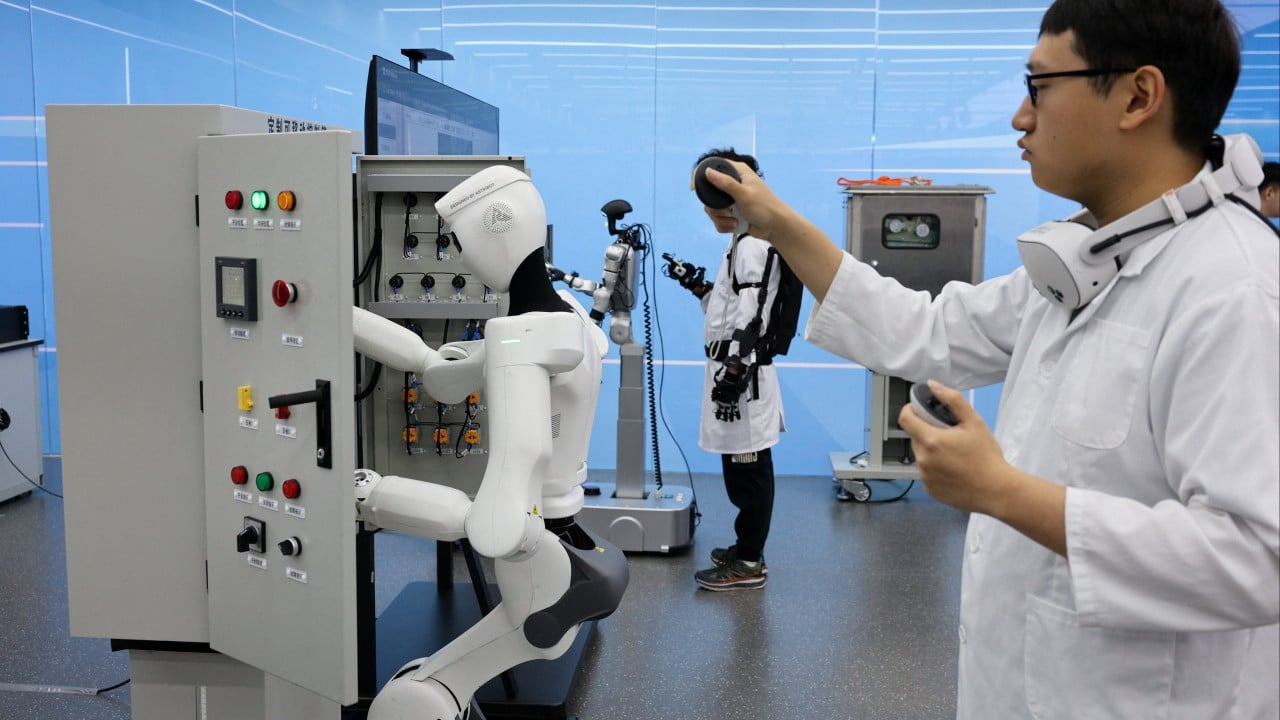
💡China's $1B grid robot push unlocks embodied AI market for infra apps
⚡ 30-Second TL;DR
What Changed
State Grid allocates 6.8B yuan ($1B) for embodied intelligence robots
Why It Matters
This $1B investment signals China's leadership in embodied AI for critical infrastructure, potentially spurring global robotics innovation and supply chain shifts. AI practitioners can tap into emerging markets for industrial automation.
What To Do Next
Monitor State Grid procurement tenders for embodied AI robot opportunities
Key Points
- •State Grid allocates 6.8B yuan ($1B) for embodied intelligence robots
- •Thousands of AI bots to deploy for grid inspection and maintenance
- •Roles include remote substation checks and UHV line repairs
- •Part of China's industrial push into AI-powered infrastructure ops
🧠 Deep Insight
AI-generated analysis for this event — not the original article.
🔑 Enhanced Key Takeaways
- •The initiative leverages the 'Robot + AI' application action plan, a national policy directive aimed at integrating embodied intelligence into critical industrial sectors to mitigate labor shortages and improve safety in hazardous environments.
- •State Grid is collaborating with domestic AI research institutes and robotics startups to develop specialized multimodal large models that allow robots to interpret complex visual data from substations in real-time without cloud latency.
- •The deployment strategy emphasizes 'human-in-the-loop' systems, where robots perform autonomous routine inspections, but complex maintenance tasks are managed via teleoperation using low-latency 5G-Advanced (5.5G) networks.
🛠️ Technical Deep Dive
- •Architecture: Utilizes a hierarchical control system where a central 'Brain' model (likely a customized version of a domestic LLM/VLM) handles high-level task planning, while edge controllers manage real-time motor feedback and obstacle avoidance.
- •Sensors: Robots are equipped with multi-spectral cameras (thermal and visual) for detecting hotspots on electrical components, alongside LiDAR for SLAM (Simultaneous Localization and Mapping) in GPS-denied substation environments.
- •Communication: Integration with private 5G-A networks to ensure sub-10ms latency for remote control and high-bandwidth transmission of high-definition inspection footage.
- •Power Management: Adoption of high-density solid-state batteries to extend operational duration for long-range UHV line inspection missions.
🔮 Future ImplicationsAI analysis grounded in cited sources
⏳ Timeline
Weekly AI Recap
Read this week's curated digest of top AI events →
👉Related Updates


AI-curated news aggregator. All content rights belong to original publishers.
Original source: SCMP Technology ↗
This is a summary, not the original. Read the source, or get the weekly briefing.
The weekly digest
One email a week. Unsubscribe anytime.