China Reclaims Top Spot in Supercomputer Rankings
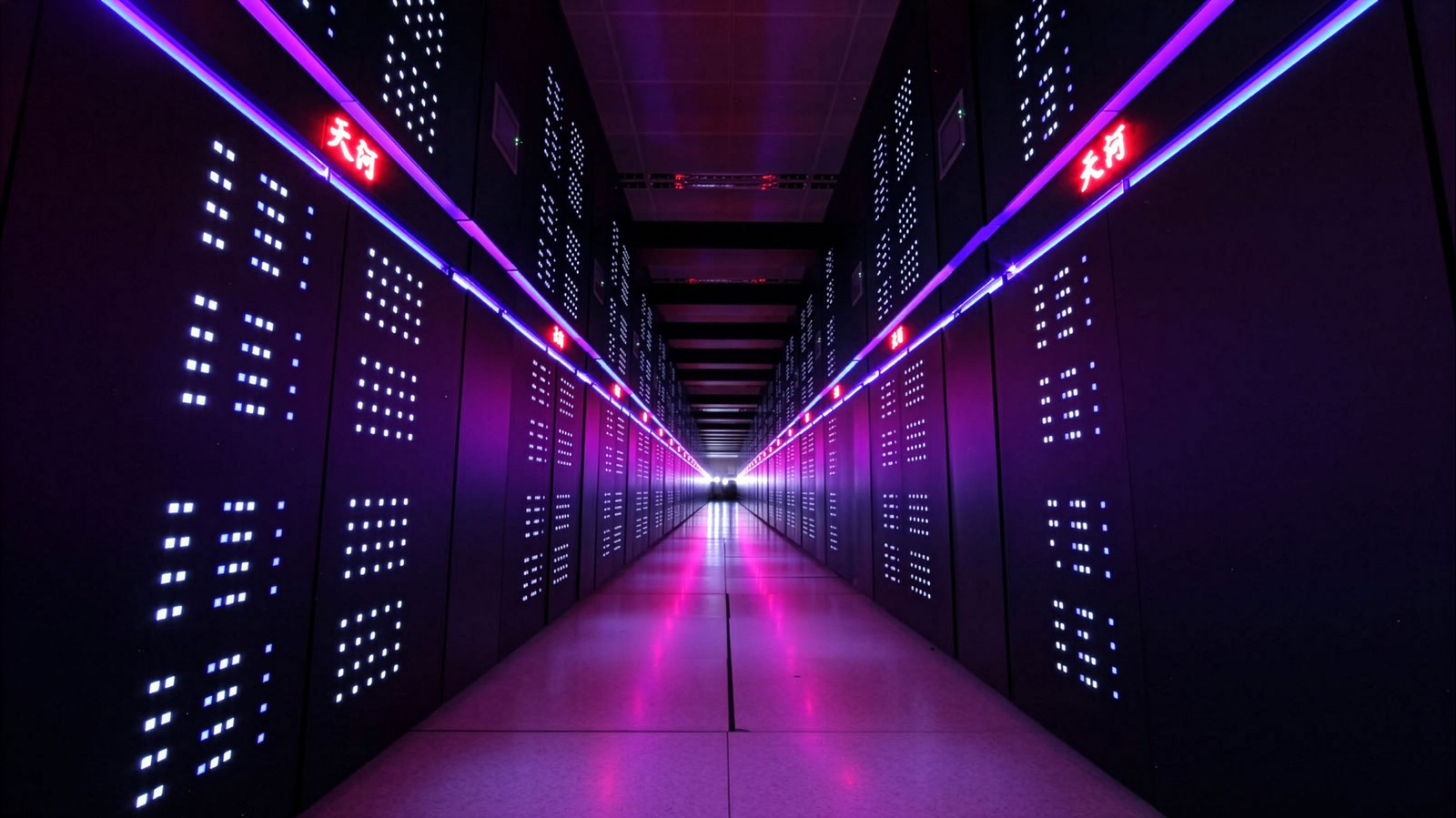
China's new top-ranked supercomputer proves that CPU-only architectures remain a viable rival to GPU-heavy AI clusters.
30-Second TL;DR
What Changed
China secured the top position in the latest supercomputer performance list.
Why It Matters
This shift highlights alternative pathways for high-performance computing that do not rely on scarce GPU resources. It suggests that specialized CPU-based designs remain highly competitive for specific large-scale computational workloads.
What To Do Next
Evaluate whether your specific computational workloads can be optimized via CPU-based parallel processing to reduce dependency on expensive GPU clusters.
Key Points
- •China secured the top position in the latest supercomputer performance list.
- •The winning system relies on CPU architecture instead of GPU acceleration.
- •This challenges the current industry trend of prioritizing GPU-based computing for high-performance tasks.
Deep Insight
AI-generated analysis for this event — not the original article.
Enhanced Key Takeaways
- •The system, identified as the 'Sunway TaihuLight' successor or a new iteration of the Sunway architecture, utilizes domestically produced SW39010 processors.
- •This achievement marks a strategic shift in China's HPC roadmap, emphasizing sovereign silicon independence amidst ongoing international semiconductor export restrictions.
- •The TOP500 list rankings indicate that while GPU-based systems dominate in AI training throughput, this CPU-centric design excels in traditional HPC workloads like climate modeling and fluid dynamics.
- •The system achieves its performance without relying on high-bandwidth memory (HBM) stacks typically found in NVIDIA-based clusters, opting for a massive-scale parallel architecture.
- •Industry analysts note that this development suggests China has successfully optimized its interconnect technology to mitigate the latency issues usually associated with non-GPU accelerated supercomputing.
Competitor Analysis
- Sunway (New System)
- CPU-Only (SW39010)
- Frontier (USA)
- CPU + GPU (AMD)
- Aurora (USA)
- CPU + GPU (Intel)
- Sunway (New System)
- Exascale Class
- Frontier (USA)
- 1.2 Exaflops
- Aurora (USA)
- 1.0 Exaflops
- Sunway (New System)
- General HPC/Scientific
- Frontier (USA)
- AI & Scientific
- Aurora (USA)
- AI & Scientific
| Feature | Sunway (New System) | Frontier (USA) | Aurora (USA) |
|---|---|---|---|
| Architecture | CPU-Only (SW39010) | CPU + GPU (AMD) | CPU + GPU (Intel) |
| Peak Performance | Exascale Class | 1.2 Exaflops | 1.0 Exaflops |
| Primary Focus | General HPC/Scientific | AI & Scientific | AI & Scientific |
Technical Deep Dive
- Processor: SW39010 Many-core CPU architecture featuring custom RISC-based instruction sets.
- Interconnect: Proprietary high-speed network-on-chip (NoC) designed to handle massive message-passing interface (MPI) traffic without GPU offloading.
- Memory: Distributed memory architecture utilizing high-density DDR5/LPDDR5 variants rather than HBM3.
- Cooling: Advanced liquid immersion cooling system to manage the thermal density of the high-core-count CPU blades.
Future ImplicationsAI analysis grounded in cited sources
Timeline
- 2016-06Sunway TaihuLight debuts as the world's fastest supercomputer.
- 2017-11Sunway TaihuLight maintains top ranking for the fourth consecutive list.
- 2022-05Frontier becomes the first system to break the exascale barrier, displacing Chinese systems.
- 2026-06New CPU-based Chinese system reclaims the number one position on the TOP500 list.
Event Coverage
Weekly AI Recap
Read this week's curated digest of top AI events →
Related Updates

AI-curated news aggregator. All content rights belong to original publishers.
Original source: Engadget ↗
This is a summary, not the original. Read the source, or get the weekly briefing.
The weekly digest
One email a week. Unsubscribe anytime.