China Mobile Prepares 03 Satellite for LEO Direct-Connect
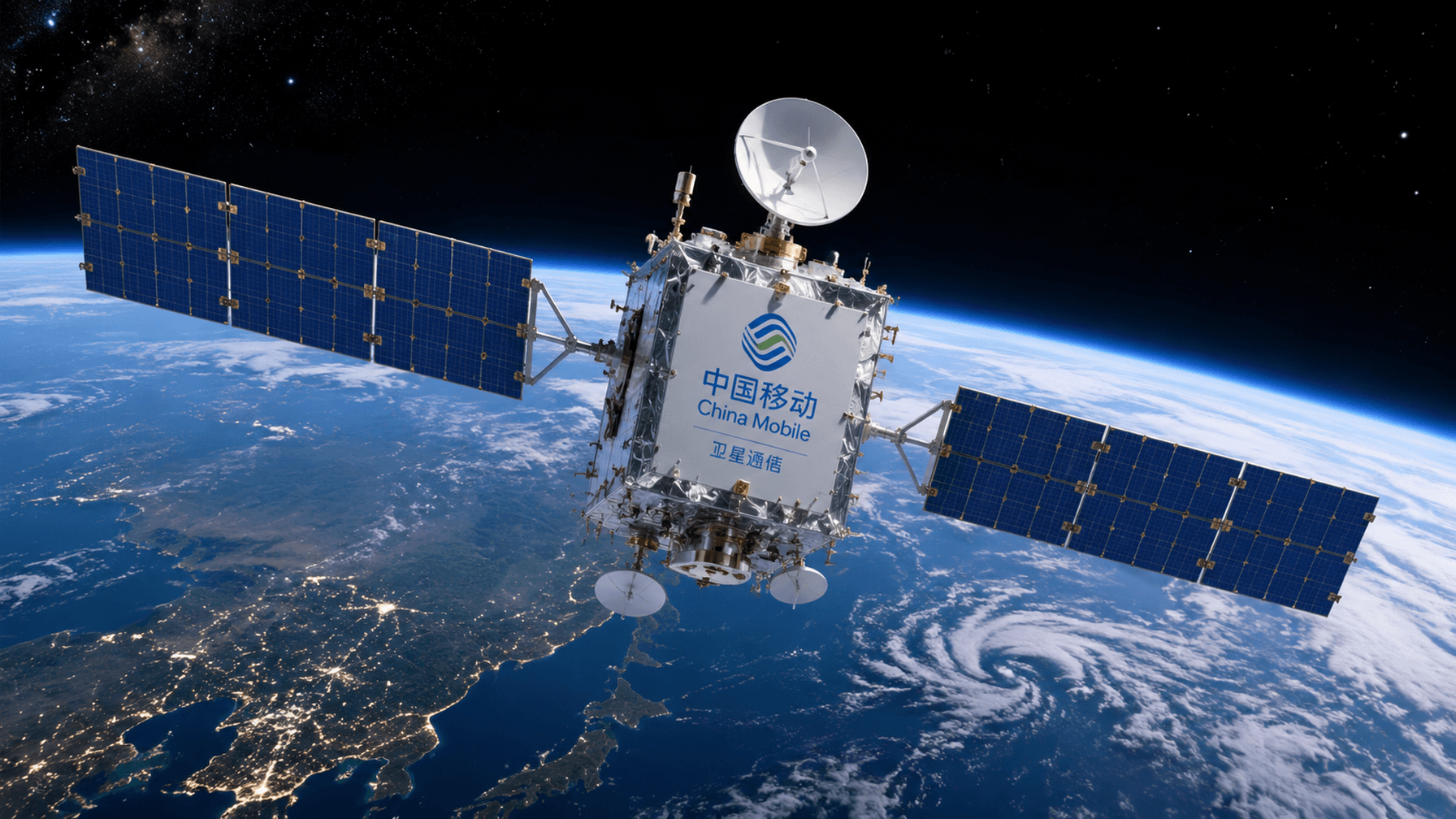
Infrastructure progress in LEO satellites is paving the way for global, high-speed AI connectivity.
30-Second TL;DR
What Changed
03 test satellite features on-board base station technology
Why It Matters
Advancements in satellite-to-phone connectivity are critical for ubiquitous AI agent access, ensuring reliable data transmission for edge-based AI applications in remote areas.
What To Do Next
Monitor the development of 3GPP NTN (Non-Terrestrial Network) standards to prepare your AI applications for satellite-integrated connectivity.
Key Points
- •03 test satellite features on-board base station technology
- •Accelerates LEO direct-connect satellite infrastructure development
- •Strategic competition among major Chinese telecom operators
Deep Insight
AI-generated analysis for this event — not the original article.
Enhanced Key Takeaways
- •The 03 satellite is part of China Mobile's 'China Mobile 01' constellation project, which aims to integrate space-based and terrestrial networks for seamless 6G evolution.
- •The satellite utilizes a regenerative payload architecture, allowing for on-board processing of signals rather than simple bent-pipe relay, reducing latency for direct-to-cell services.
- •China Mobile is collaborating with domestic aerospace entities, including the Shanghai Engineering Center for Microsatellites (SECM), to accelerate the deployment of LEO constellations.
- •The 03 satellite specifically tests the integration of 5G-NTN (Non-Terrestrial Network) standards, enabling standard smartphones to connect without specialized hardware modifications.
- •This initiative aligns with China's broader 'Satellite Internet' national strategy, which seeks to establish a sovereign LEO network to compete with international constellations like Starlink.
Competitor Analysis
- China Mobile (03)
- Regenerative/On-board Base Station
- China SatNet (GW)
- Bent-pipe/Hybrid
- Starlink (Direct-to-Cell)
- Regenerative
- China Mobile (03)
- Domestic/Enterprise/Consumer
- China SatNet (GW)
- National Infrastructure
- Starlink (Direct-to-Cell)
- Global Consumer
- China Mobile (03)
- Native 5G-NTN
- China SatNet (GW)
- Developing
- Starlink (Direct-to-Cell)
- Proprietary/LTE-based
| Feature | China Mobile (03) | China SatNet (GW) | Starlink (Direct-to-Cell) |
|---|---|---|---|
| Architecture | Regenerative/On-board Base Station | Bent-pipe/Hybrid | Regenerative |
| Target Market | Domestic/Enterprise/Consumer | National Infrastructure | Global Consumer |
| 5G Integration | Native 5G-NTN | Developing | Proprietary/LTE-based |
Technical Deep Dive
- Payload: Integrated regenerative base station supporting 5G-NTN protocols.
- Frequency Bands: Operates in S-band and Ka-band for user link and feeder link respectively.
- Processing: On-board digital signal processing (DSP) to handle beamforming and resource allocation.
- Connectivity: Designed for direct-to-handset communication without requiring external satellite terminals.
- Orbit: Low Earth Orbit (LEO) configuration to minimize propagation delay for real-time voice and data services.
Future ImplicationsAI analysis grounded in cited sources
Timeline
- 2023-12China Mobile launches the world's first 5G-NTN test satellite.
- 2024-05China Mobile completes the first LEO satellite-based 5G voice and data call.
- 2025-02China Mobile announces the expansion of its LEO constellation project to include high-throughput satellites.
- 2026-06China Mobile prepares the 03 satellite for launch with advanced on-board base station capabilities.
Weekly AI Recap
Read this week's curated digest of top AI events →
Related Updates




AI-curated news aggregator. All content rights belong to original publishers.
Original source: Pandaily ↗
This is a summary, not the original. Read the source, or get the weekly briefing.
The weekly digest
One email a week. Unsubscribe anytime.