๐Ÿ‡ฌ๐Ÿ‡งStalecollected in 4h

China leads one AI race, US another
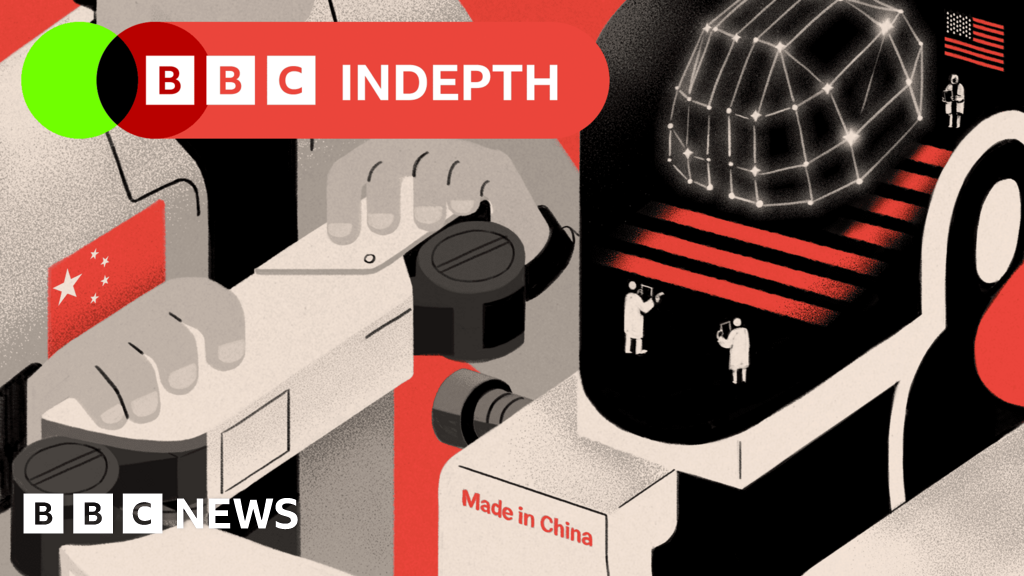
China leads one AI race, US another
PostLinkedIn
๐Ÿ‡ฌ๐Ÿ‡งRead original on BBC Technology

๐Ÿ’กUS-China AI race: identify leaders in key domains to inform strategy

โšก 30-Second TL;DR

What Changed

China leads in one unspecified AI race area

Why It Matters

This US-China AI rivalry shapes global innovation priorities and could restrict technology access for practitioners. Companies may need to diversify supply chains amid escalating tensions.

What To Do Next

Benchmark your AI models against recent Chinese open-source releases like those from Alibaba.

Who should care:Founders & Product Leaders

Key Points

  • โ€ขChina leads in one unspecified AI race area
  • โ€ขUS excels in a different AI competition domain
  • โ€ขBoth countries resist rival dominance
  • โ€ขFuture transformations possible in the rivalry

๐Ÿง  Deep Insight

AI-generated analysis for this event.

๐Ÿ”‘ Enhanced Key Takeaways

  • โ€ขChina's lead is primarily driven by massive state-backed investment in AI-integrated surveillance, facial recognition infrastructure, and industrial automation, leveraging vast datasets from its large population.
  • โ€ขThe US maintains a decisive advantage in foundational Large Language Model (LLM) research, high-end GPU supply chains (e.g., NVIDIA), and the ecosystem of open-source AI development frameworks.
  • โ€ขGeopolitical export controls, specifically US restrictions on advanced semiconductor manufacturing equipment and high-performance AI chips, are the primary friction points shaping the divergent trajectories of both nations.

๐Ÿ”ฎ Future ImplicationsAI analysis grounded in cited sources

Semiconductor self-sufficiency will become the primary metric of AI dominance.
As export controls tighten, the ability to manufacture sub-5nm chips domestically will determine which nation can sustain the compute requirements for next-generation frontier models.
AI-driven cyber warfare will increase in frequency between the two nations.
Both nations are increasingly utilizing AI for automated vulnerability detection and exploitation, making digital infrastructure a primary theater of the ongoing rivalry.

โณ Timeline

2017-07
China releases the 'Next Generation Artificial Intelligence Development Plan' aiming for global leadership by 2030.
2022-10
The US Bureau of Industry and Security implements sweeping export controls on advanced AI chips and semiconductor manufacturing equipment to China.
2023-10
The US updates export controls to further restrict the sale of high-performance AI chips to China, closing previous loopholes.
2024-05
China launches a massive state-backed investment fund to bolster its domestic semiconductor industry in response to US sanctions.
๐Ÿ“ฐ

Weekly AI Recap

Read this week's curated digest of top AI events โ†’

๐Ÿ‘‰Related Updates

AI-curated news aggregator. All content rights belong to original publishers.
Original source: BBC Technology โ†—