China Deploys Robots for Everyday Tasks
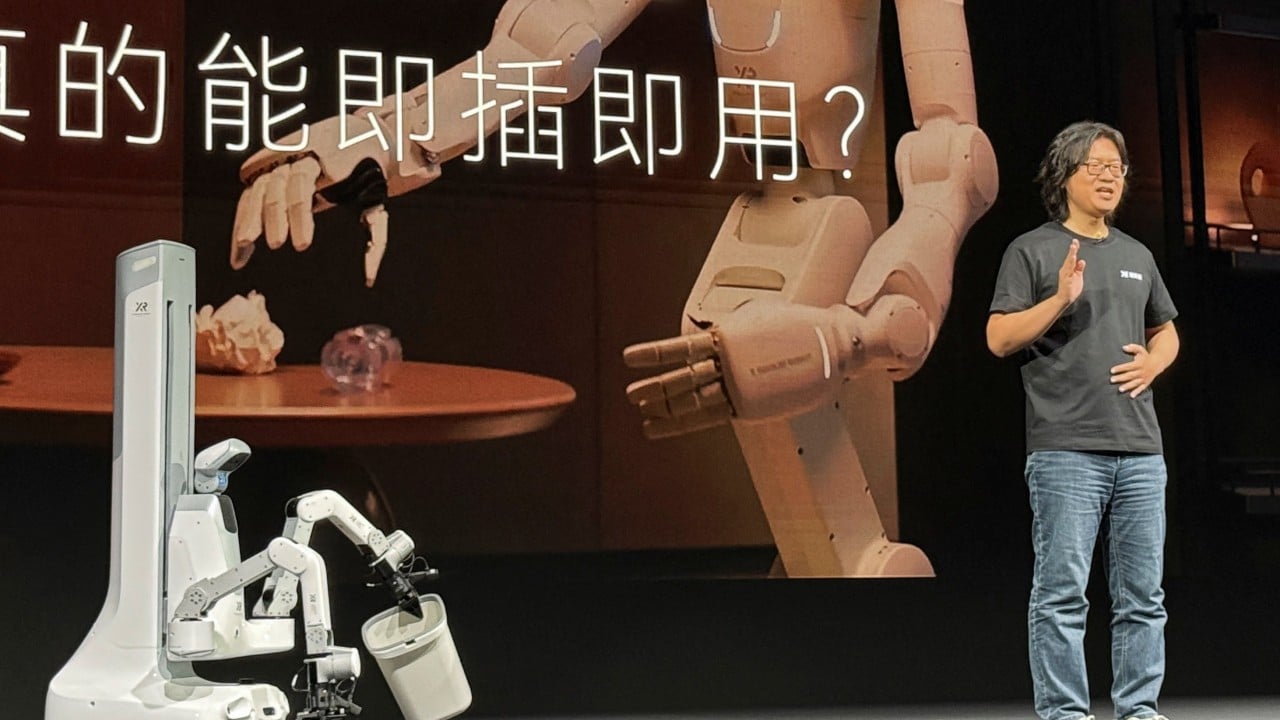
China pioneers embodied AI in cleaning/traffic—essential for robotics builders.
30-Second TL;DR
What Changed
Embodied AI robots sense environments, make decisions, and act physically
Why It Matters
China's robot deployments highlight leadership in embodied AI commercialization, pressuring global competitors to innovate faster. This could lower costs for practical robotics and expand market opportunities for AI practitioners targeting physical AI systems.
What To Do Next
Explore 58.com listings to benchmark embodied AI cleaning robot integrations.
Key Points
- •Embodied AI robots sense environments, make decisions, and act physically
- •Cleaning service on 58.com launched March, combining humans and robots
- •Robots handle traffic direction and hazardous factory equipment repairs
Deep Insight
AI-generated analysis for this event — not the original article.
Enhanced Key Takeaways
- •The integration of robots into 58.com's service ecosystem is part of a broader 'Robot-as-a-Service' (RaaS) business model, allowing SMEs to lease specialized hardware rather than purchasing expensive assets upfront.
- •Chinese government policy, specifically the 'Robot + Application' Action Plan, provides direct subsidies and tax incentives for companies deploying embodied AI in non-manufacturing sectors like elderly care and public sanitation.
- •Recent deployments utilize multi-modal large language models (MLLMs) that allow these robots to interpret natural language instructions from human supervisors, significantly reducing the need for specialized programming skills.
Competitor Analysis
- 58.com Robot Service
- Service/Cleaning
- Tesla Optimus (Deployment)
- General Purpose
- Figure AI (Industrial)
- Industrial/Logistics
- 58.com Robot Service
- RaaS (Leasing)
- Tesla Optimus (Deployment)
- Direct Sales/Internal
- Figure AI (Industrial)
- Enterprise Partnership
- 58.com Robot Service
- High (Human-in-the-loop)
- Tesla Optimus (Deployment)
- Low (Autonomous)
- Figure AI (Industrial)
- Medium (Collaborative)
| Feature | 58.com Robot Service | Tesla Optimus (Deployment) | Figure AI (Industrial) |
|---|---|---|---|
| Primary Focus | Service/Cleaning | General Purpose | Industrial/Logistics |
| Business Model | RaaS (Leasing) | Direct Sales/Internal | Enterprise Partnership |
| Human Interaction | High (Human-in-the-loop) | Low (Autonomous) | Medium (Collaborative) |
Technical Deep Dive
- Architecture: Utilizes a hierarchical control system where a high-level MLLM handles semantic understanding and task planning, while a low-level real-time controller manages motor torque and obstacle avoidance.
- Sensor Suite: Employs a combination of LiDAR for SLAM (Simultaneous Localization and Mapping) and RGB-D cameras for semantic segmentation of household objects.
- Edge Computing: Most decision-making is processed on-device via specialized NPU (Neural Processing Unit) chips to ensure low-latency response in dynamic environments like traffic or busy homes.
Future ImplicationsAI analysis grounded in cited sources
Timeline
- 2023-01China's Ministry of Industry and Information Technology releases the 'Robot + Application' Action Plan.
- 2024-0658.com initiates pilot programs for automated facility management in select Tier-1 cities.
- 2026-03Official launch of the human-robot collaborative cleaning service on the 58.com platform.
Weekly AI Recap
Read this week's curated digest of top AI events →
Related Updates


AI-curated news aggregator. All content rights belong to original publishers.
Original source: SCMP Technology ↗
This is a summary, not the original. Read the source, or get the weekly briefing.
The weekly digest
One email a week. Unsubscribe anytime.