Humanoid Robots Tackle Waste Staff Shortages
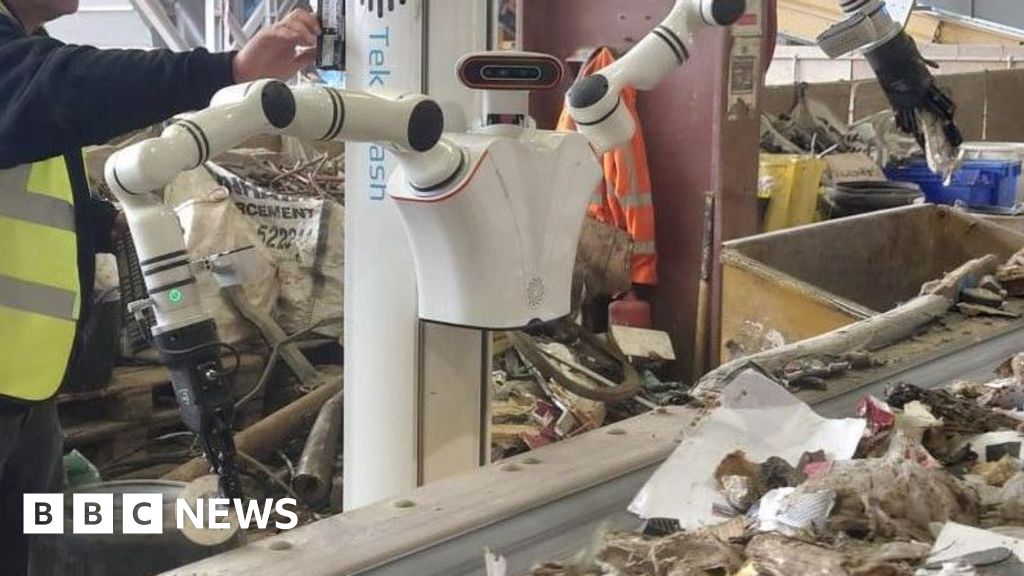
Real-world humanoid robot deployment in waste sorting shows embodied AI scaling industrially
30-Second TL;DR
What Changed
Waste companies face severe staff shortages
Why It Matters
Demonstrates practical embodied AI adoption in industry, potentially accelerating humanoid robot commercialization and reducing reliance on human labor in harsh environments.
What To Do Next
Pilot humanoid robot integrations like Figure 01 for warehouse automation testing.
Key Points
- •Waste companies face severe staff shortages
- •Humanoid robots integrated into waste sorting lines
- •Robots boost automation to address labor gaps
Deep Insight
AI-generated analysis for this event — not the original article.
Enhanced Key Takeaways
- •Waste sorting environments present unique challenges for humanoid hardware, specifically requiring advanced tactile sensing and dust-resistant IP67-rated joints to prevent mechanical failure in high-particulate environments.
- •The integration of Large Vision-Language Models (LVLMs) allows these robots to perform 'semantic sorting,' enabling them to distinguish between complex material types like multi-layer packaging that traditional optical sorters often misclassify.
- •Economic analysis indicates that while initial capital expenditure for humanoid units remains high, the total cost of ownership is trending toward parity with human labor due to 24/7 operational capability and reduced workplace injury liability.
Technical Deep Dive
- •Actuation: High-torque, back-drivable electric actuators with integrated force-torque sensors at each joint to handle variable object weights.
- •Vision System: Multi-modal sensor fusion utilizing RGB-D cameras and LiDAR for real-time spatial mapping and object pose estimation.
- •End-Effectors: Multi-fingered, under-actuated grippers designed for high-compliance grasping of irregular waste shapes.
- •Compute: On-board edge computing utilizing specialized AI accelerators for low-latency inference of sorting algorithms, reducing reliance on cloud connectivity.
Future ImplicationsAI analysis grounded in cited sources
Weekly AI Recap
Read this week's curated digest of top AI events →
Related Updates

AI-curated news aggregator. All content rights belong to original publishers.
Original source: BBC Technology ↗
This is a summary, not the original. Read the source, or get the weekly briefing.
The weekly digest
One email a week. Unsubscribe anytime.