China Bets on Autonomous Heavy Trucks
💡China’s autonomous-driving strategy reveals why controlled freight environments may beat Robotaxis to scale.
⚡ 30-Second TL;DR
What Changed
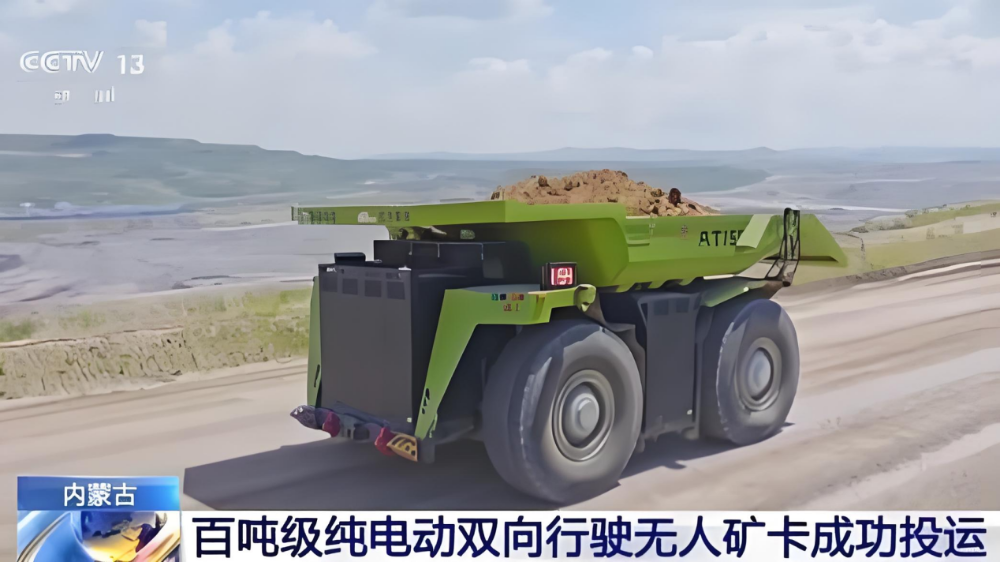
The AT150 is described as China’s first 100-ton-class pure-electric bidirectional autonomous mining truck, with a 136-ton payload.
Why It Matters
The article suggests that autonomous freight may scale faster than urban autonomous passenger services in China because operations are concentrated in controlled industrial environments. For AI and robotics builders, this reinforces the value of domain-specific deployment, infrastructure integration, and measurable unit economics.
What To Do Next
Evaluate a constrained industrial pilot—such as a mine, warehouse yard, or port—using 5G positioning, remote supervision, and platooning KPIs before targeting public-road autonomy.
Key Points
- •The AT150 is described as China’s first 100-ton-class pure-electric bidirectional autonomous mining truck, with a 136-ton payload.
- •It supports autonomous loading, unloading, driving, obstacle avoidance, and parking in temperatures from -30°C to 50°C.
- •The truck uses 3.4 MW, 900 V fast charging, provides more than six hours of range, and reportedly cuts energy costs by 65% versus diesel mining trucks.
- •China’s 5G and vehicle-road coordination infrastructure supports applications such as L4 smart trucks at Yangshan Port.
- •Autonomous freight targets driver shortages and high-risk work while potentially improving margins and reducing fuel costs.
🧠 Deep Insight
Background and context from public sources — not the original article. 8 sources cited.
🔑 Enhanced Key Takeaways
- •China currently operates over 2,100 SAE Level 3+ autonomous heavy-duty trucks, with daily logs exceeding one million kilometers on public highways.
- •The Chinese autonomous mining truck market is projected to grow from RMB 1.9 billion in 2024 to RMB 39.6 billion by 2030, a CAGR of 65.3%.
- •CATL has strategically entered the heavy-duty sector by acquiring a 24.87% stake in Qiyuan Green Power to scale battery-swapping infrastructure.
- •Pony AI has achieved a 70% reduction in hardware costs for its Gen-4 autonomous heavy-duty trucks compared to previous iterations, facilitating commercial scaling.
- •Chinese firms are actively exporting autonomous mining machinery to Australia, the Middle East, South America, and Europe to meet global decarbonization demands.
📊 Competitor Analysis▸ Show
| Feature | AT150 (Mining) | Pony AI Gen-4 | Waymo (Freight) |
|---|---|---|---|
| Primary Focus | Mining/Closed Loop | Long-haul/Bulk | Hub-to-Hub Logistics |
| Hardware Cost | N/A | 70% reduction vs Gen-3 | Proprietary/High |
| Energy Strategy | 900V Fast Charging | Battery Swapping | Electric/Hybrid |
| Deployment Scale | 100-ton class | 500-1000 units planned | Pilot/Limited |
🛠️ Technical Deep Dive
- Payload Capacity: 136-ton maximum capacity for the AT150 model.
- Power Architecture: 900V high-voltage electrical system supporting 3.4 MW fast charging.
- Thermal Management: Engineered for operational stability in extreme environments ranging from -30C to 50C.
- Autonomy Level: L4 capability featuring integrated autonomous loading, unloading, and obstacle avoidance.
- Infrastructure Integration: Utilizes 5G-enabled vehicle-road coordination (V2X) for port-based navigation.
🔮 Future ImplicationsAI analysis grounded in cited sources
⏳ Timeline
📎 Sources (8)
Factual claims are grounded in the sources below. Forward-looking analysis is AI-generated interpretation.
Weekly AI Recap
Read this week's curated digest of top AI events →
👉Related Updates

AI-curated news aggregator. All content rights belong to original publishers.
Original source: 虎嗅 ↗
This is a summary, not the original. Read the source, or get the weekly briefing.
Weekly AI briefing
One email a week. Unsubscribe anytime.