China Activates Major Research Facilities for Global Scientific Use
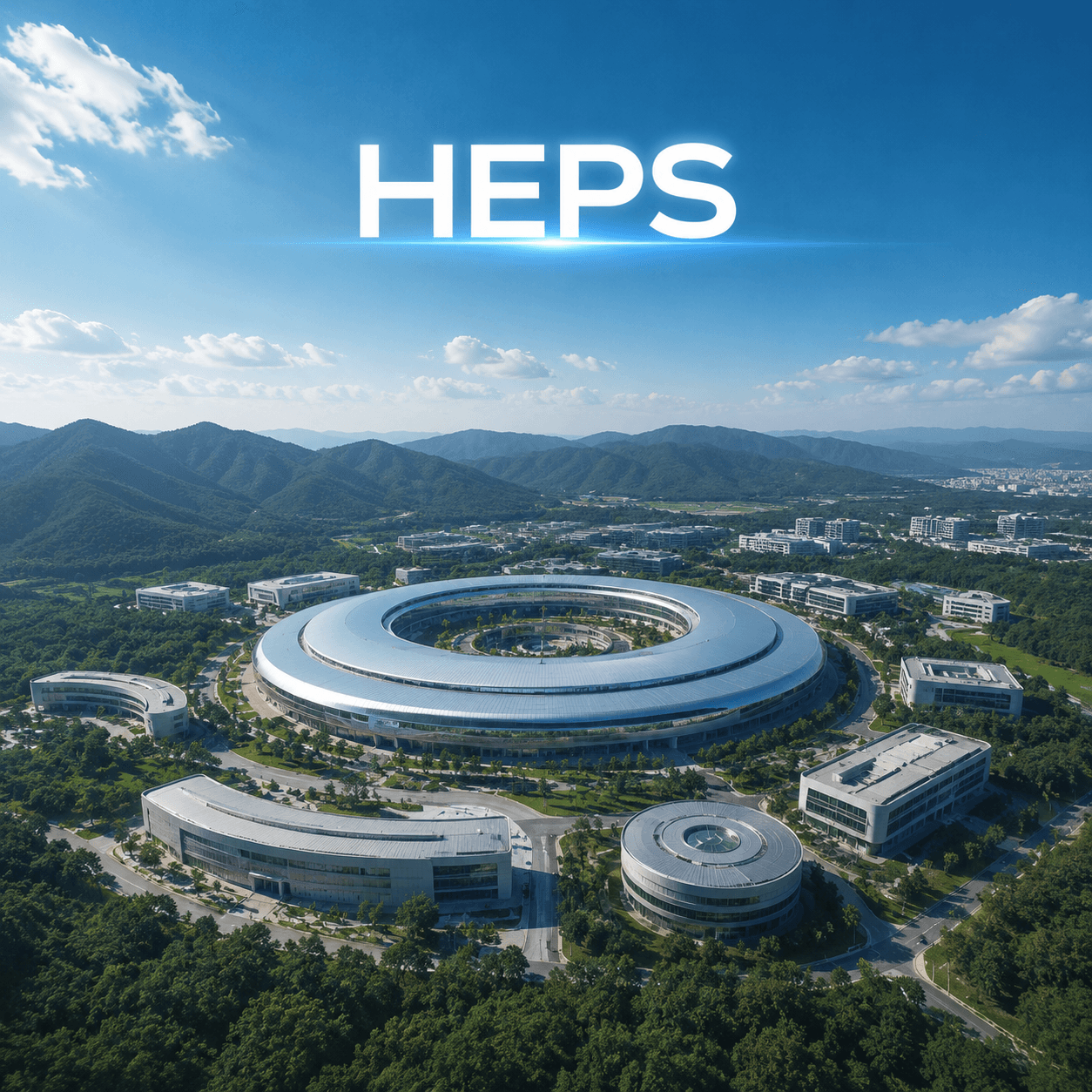
💡Access world-class physical research infrastructure to validate AI-driven material and hardware simulations.
⚡ 30-Second TL;DR
What Changed
Activation of 37 major scientific facility platforms in Huairou.
Why It Matters
These high-end research tools provide the physical infrastructure necessary for breakthroughs in AI-driven material science and semiconductor research.
What To Do Next
Explore partnership opportunities with Huairou Science City if your AI research requires high-fidelity physical data or material simulation validation.
Key Points
- •Activation of 37 major scientific facility platforms in Huairou.
- •Includes the High Energy Photon Source for advanced material and structural analysis.
- •Open to global collaboration, spanning from academic institutions like Cambridge to industrial giants like BYD.
🧠 Deep Insight
Background and context from public sources — not the original article. 16 sources cited.
🔑 Enhanced Key Takeaways
- •Huairou Science City is strategically positioned as one of China's four national science centers, outlined in the 14th Five-Year Plan (2021-25), aiming to integrate basic science, research, and technological services to drive national innovation.
- •Beyond the High Energy Photon Source (HEPS), Huairou Science City hosts other major national scientific facilities, including the Synergetic Extreme Condition User Facility (SECUF) and the National Multimode Trans-Scale Biomedical Imaging Center, which offers unprecedented precision in visualizing disease progression.
- •The High Energy Photon Source (HEPS) is a fourth-generation synchrotron light source, designed to be among the world's brightest, capable of producing X-rays a trillion times brighter than the sun, with capabilities for nanometer spatial resolution, picosecond time resolution, and milli-electron volt energy resolution.
- •Huairou Science City has attracted over 23,000 leading researchers, including 77 Academicians from the Chinese Academy of Sciences and Chinese Academy of Engineering, 28 highly cited international scientists, and over 600 foreign experts, fostering a densely packed area for groundbreaking scientific research.
- •The facilities in Huairou Science City are designed to support a wide range of scientific domains, including materials, space, life, earth systems, and information and intelligence, with a long-term goal to become a world-leading science city and national science center by 2050.
📊 Competitor Analysis▸ Show
While direct 'pricing' is not applicable for national research infrastructures, a comparison of key features for similar fourth-generation synchrotron light sources can be made:
| Feature | High Energy Photon Source (HEPS), China | MAX IV Laboratory, Sweden | Sirius, Brazil | Extremely Brilliant Source (ESRF-EBS), France | Advanced Photon Source (APS), USA |
|---|---|---|---|---|---|
| Generation | 4th Generation Diffraction-Limited Storage Ring | 4th Generation | 4th Generation | 4th Generation | 4th Generation (Upgrade) |
| Electron Energy | 6 GeV | 3 GeV | 3 GeV | 6 GeV | 6 GeV (Upgrade) |
| Circumference | 1360.4 m | 528 m | 518 m | 844 m | 1104 m (Upgrade) |
| Emittance | < 0.06 nm·rad (horizontal) | ~0.2 nm·rad | ~0.25 nm·rad | ~0.067 nm·rad | ~0.04 nm·rad (Upgrade) |
| Brightness | > 1x10^22 phs/s/mm²/mrad²/0.1%BW | Very High | Very High | World's first 4th gen. high-energy SR | Very High |
| Initial Beamlines | 14 (expandable to >90) | 16 | 13 | 40 | 60+ |
| Key Capabilities | nm spatial, ps time, meV energy resolution | High coherence, ultrafast | High coherence, spectroscopy | Ultrafast dynamics, coherent imaging | High-resolution imaging, spectroscopy |
🛠️ Technical Deep Dive
- Accelerator Type: Fourth-generation diffraction-limited storage ring synchrotron light source.
- Electron Energy: 6 Gigaelectron Volts (GeV).
- Storage Ring Circumference: 1360.4 meters.
- Electron Beam Emittance: Ultra-low, better than 0.06 nm·rad (horizontal).
- Brightness: Expected to exceed 1x10^22 photons/s/mm²/mrad²/0.1%BW.
- Photon Energy Range: Hard X-ray beams spanning approximately 7 keV to over 300 keV.
- Resolution Capabilities: Nanometer (nm) spatial resolution, picosecond (ps) time resolution, and milli-electron volt (meV) energy resolution.
- Lattice Design: Based on a modified hybrid seven-bend achromat (7BA) design.
- Injector System: Comprises a linear accelerator (linac) injecting at 500 MeV, a booster synchrotron ramping to 6 GeV, and two high-energy transport lines.
- Beamlines: Initially 14 public beamlines and experimental stations, with the capacity to expand to over 90.
- Research Fields: Designed for applications in physics, chemistry, materials science, biology, engineering materials, energy and environment, medicine, food industry, and petrochemistry.
🔮 Future ImplicationsAI analysis grounded in cited sources
⏳ Timeline
📎 Sources (16)
Factual claims are grounded in the sources below. Forward-looking analysis is AI-generated interpretation.
Weekly AI Recap
Read this week's curated digest of top AI events →
👉Related Updates

AI-curated news aggregator. All content rights belong to original publishers.
Original source: Pandaily ↗
This is a summary, not the original. Read the source, or get the weekly briefing.
Weekly AI briefing
One email a week. Unsubscribe anytime.