ChatGPT Images 2.0: AI Thinks Before Drawing
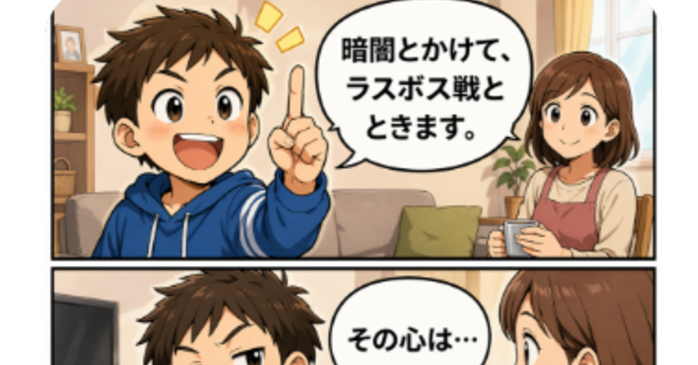
💡Reasoning-based image gen with top Japanese text accuracy—key for multilingual AI apps.
⚡ 30-Second TL;DR
What Changed
AI employs reasoning process before generating images
Why It Matters
This upgrade boosts ChatGPT's multimodal abilities, aiding global users especially in Asia with better non-English support. It positions OpenAI stronger in creative AI tools.
What To Do Next
Test ChatGPT Images 2.0 with Japanese prompts to evaluate reasoning-driven image quality.
Key Points
- •AI employs reasoning process before generating images
- •Enhanced precision for Japanese text in outputs
- •Official announcement of ChatGPT Images 2.0 model
🧠 Deep Insight
AI-generated analysis for this event — not the original article.
🔑 Enhanced Key Takeaways
- •The model utilizes a 'Chain-of-Thought' (CoT) reasoning layer that decomposes user prompts into visual composition plans before pixel generation begins.
- •OpenAI has integrated a specialized Japanese character encoding optimization, reducing common rendering errors like stroke order inaccuracies and character hallucinations.
- •The update introduces a 'Visual Feedback Loop' where the model self-critiques its initial draft against the reasoning plan, allowing for iterative refinement before the final image is presented to the user.
📊 Competitor Analysis▸ Show
| Feature | ChatGPT Images 2.0 | Midjourney v7 | Google Imagen 4 |
|---|---|---|---|
| Reasoning Engine | Integrated CoT | Prompt-to-Pixel | Latent Diffusion |
| Japanese Text Accuracy | High (Optimized) | Moderate | Moderate |
| Pricing | Subscription/API | Subscription | API/Cloud |
🛠️ Technical Deep Dive
- Architecture: Employs a dual-stage transformer pipeline where the first stage generates a structured 'scene graph' and the second stage performs latent diffusion based on that graph.
- Reasoning Layer: Uses a hidden chain-of-thought process that explicitly maps spatial relationships and text placement constraints before the diffusion process starts.
- Text Rendering: Implements a character-aware attention mechanism specifically trained on CJK (Chinese, Japanese, Korean) datasets to improve glyph fidelity.
🔮 Future ImplicationsAI analysis grounded in cited sources
⏳ Timeline
Weekly AI Recap
Read this week's curated digest of top AI events →
👉Related Updates
AI-curated news aggregator. All content rights belong to original publishers.
Original source: ITmedia AI+ (日本) ↗
This is a summary, not the original. Read the source, or get the weekly briefing.
The weekly digest
One email a week. Unsubscribe anytime.