ChangXin Turns a Decade Into a DRAM Windfall
💡AI memory demand turned ChangXin from a decade-long cash burner into a profit machine—but the cycle may turn again.
⚡ 30-Second TL;DR
What Changed
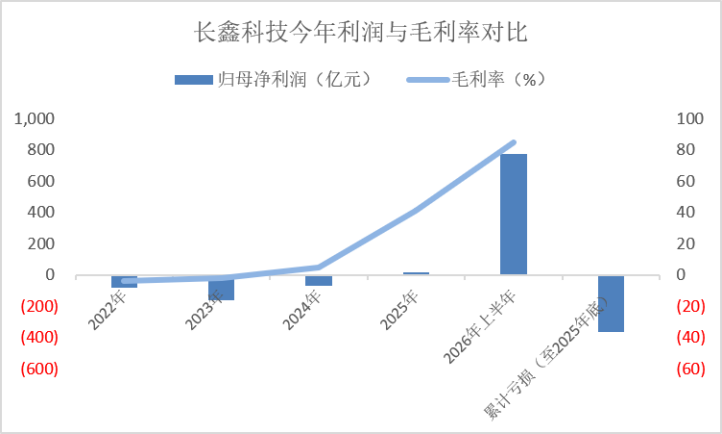
Revenue grew 873.64% year over year, while first-half attributable net profit reached 77.61 billion yuan.
Why It Matters
ChangXin’s results highlight how AI infrastructure demand is reshaping the memory market and creating an opening for a Chinese DRAM supplier. The unusually high profitability may attract aggressive global capacity expansion, increasing the risk that today’s shortage-driven gains will reverse sharply.
What To Do Next
Before committing to an AI server design, benchmark ChangXin DDR5 against Micron and SK hynix for bandwidth, yield, qualification time, and long-term supply.
Key Points
- •Revenue grew 873.64% year over year, while first-half attributable net profit reached 77.61 billion yuan.
- •AI server memory demand and major suppliers shifting capacity toward HBM have tightened the supply of general-purpose DRAM.
- •ChangXin is the only mainland China DRAM manufacturer described as achieving large-scale production, with customers including Xiaomi, OPPO, vivo, Lenovo, and Huawei.
- •The company skipped the 17nm generation and moved directly to a 16nm 1Z process, beginning DDR5 mass production in late 2024.
- •Samsung, SK hynix, and Micron remain one to two generations ahead in DRAM and HBM, while new capacity could weaken pricing from late 2027 to 2028.
🧠 Deep Insight
Background and context from public sources — not the original article. 17 sources cited.
🔑 Enhanced Key Takeaways
- •CXMT completed the largest A-share IPO of 2026 on July 27, raising $8.6 billion and achieving a market capitalization of approximately 3 trillion yuan.
- •The company has successfully initiated mass production of LPDDR6 memory, which is currently being integrated into flagship mobile devices such as Xiaomi's latest foldable smartphones.
- •CXMT has filed a formal lawsuit against the U.S. Department of Defense to contest its inclusion on the list of companies allegedly supporting the Chinese military.
- •Global DRAM market share for CXMT expanded to approximately 7.6%–8% in Q1 2026, up from 4.7% in the preceding quarter.
- •By the end of 2025, the company reached a manufacturing capacity of 240,000 wafers per month, though further scaling remains restricted by ongoing U.S. export controls on semiconductor manufacturing equipment.
📊 Competitor Analysis▸ Show
| Feature | ChangXin (CXMT) | Samsung / SK Hynix / Micron |
|---|---|---|
| Process Node | 16nm (1Z) | 10nm-class (1b/1c) |
| Market Share | ~8% | ~90% (Combined) |
| HBM Capability | Developing/Early Stage | Market Leaders (HBM3e/HBM4) |
| Pricing | Competitive (Domestic focus) | Premium (Global/AI focus) |
🛠️ Technical Deep Dive
- Transitioned from 17nm to 16nm 1Z process node to improve density and power efficiency.
- Achieved mass production of LPDDR6, enabling higher data transfer rates for mobile AI applications.
- Utilizes self-designed DRAM architecture to mitigate reliance on foreign IP.
- Production output is currently limited by the inability to procure EUV lithography tools due to international trade restrictions.
🔮 Future ImplicationsAI analysis grounded in cited sources
⏳ Timeline
📎 Sources (17)
Factual claims are grounded in the sources below. Forward-looking analysis is AI-generated interpretation.
Weekly AI Recap
Read this week's curated digest of top AI events →
👉Related Updates
AI-curated news aggregator. All content rights belong to original publishers.
Original source: 虎嗅 ↗
This is a summary, not the original. Read the source, or get the weekly briefing.
Weekly AI briefing
One email a week. Unsubscribe anytime.