ChaGee Faces Mid-Life Crisis Amid Market Saturation
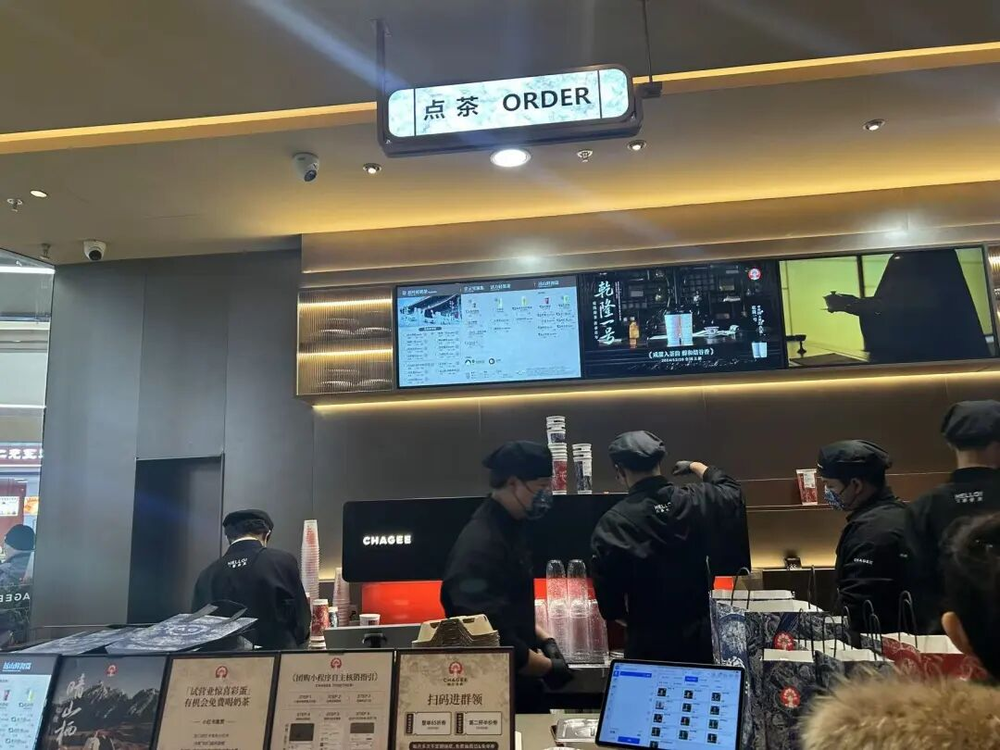
A case study on why rigid operational efficiency models can fail when faced with rapid market shifts and competition.
30-Second TL;DR
What Changed
Market value dropped significantly from its peak, reflecting broader tea industry pressures.
Why It Matters
The decline of ChaGee serves as a cautionary tale for AI-driven retail models that prioritize operational efficiency over product innovation and consumer retention.
What To Do Next
Analyze the limits of hyper-optimized operational models when market demand shifts toward high-frequency product variety.
Key Points
- •Market value dropped significantly from its peak, reflecting broader tea industry pressures.
- •The 'single-product' efficiency model is failing to adapt to rapid product iteration needs.
- •The company is shifting from a supply-chain-profit model to a revenue-sharing model to support franchisees.
Deep Insight
Background and context from public sources — not the original article. 20 sources cited.
Enhanced Key Takeaways
- •ChaGee's market capitalization has significantly declined from its April 2025 IPO valuation of $5.2-7.66 billion to approximately $1.7-1.92 billion by May 2026, with its stock price falling from $28 to around $10.
- •The company's 'single-product efficiency model,' which saw 91% of its 2024 revenue from fresh milk tea, is struggling to compete in China where rivals like HeyTea launch 50-70 new products annually, compared to ChaGee's 8 in the first half of 2025.
- •ChaGee has fully rolled out a new GMV-based revenue-sharing model in 2026, shifting from a supply-chain-profit model to better align incentives with franchisees by cutting raw material costs and offering enhanced discount management.
- •Despite domestic challenges, ChaGee's overseas Gross Merchandise Value (GMV) surged by 75.3% year-over-year in Q3 2025, with plans for significant international expansion in Southeast Asia, North America, and Europe to reduce dependence on the saturated Chinese market.
Competitor Analysis
- Primary Focus / Positioning
- Premium fresh-leaf milk tea, 'Oriental Starbucks'
- Pricing (RMB/cup)
- ~16-20
- Key Features / Strategy
- Focus on original-leaf fresh milk tea, limited SKU, cultural branding, rapid franchise expansion, proprietary 'tea espresso' machines for consistency.
- Primary Focus / Positioning
- Budget-friendly, mass market
- Pricing (RMB/cup)
- ~$1 (for ice cream/tea)
- Key Features / Strategy
- Largest by store count (>46,000 globally), known for affordability and wide accessibility.
- Primary Focus / Positioning
- Premium new-style tea, innovative fruit teas
- Pricing (RMB/cup)
- Higher-end
- Key Features / Strategy
- Strong brand influence, robust supply chains, rapid product iteration (50-70 new items/year), significant market share in high-end segment.
- Primary Focus / Positioning
- Premium new-style tea, baked goods
- Pricing (RMB/cup)
- Higher-end
- Key Features / Strategy
- Focus on premium ingredients and experiential store formats, significant market share in high-end segment.
- Primary Focus / Positioning
- Coffee chain, expanding into tea
- Pricing (RMB/cup)
- ~9.9 (for milk tea)
- Key Features / Strategy
- Aggressive discounting, encroaching on milk tea market with lower-priced alternatives, similar target demographic to ChaGee.
- Primary Focus / Positioning
- Premium coffee, 'Third Space' concept
- Pricing (RMB/cup)
- Higher-end
- Key Features / Strategy
- Refused to participate in aggressive discount wars to protect premium brand positioning, strong brand resilience.
| Competitor | Primary Focus / Positioning | Pricing (RMB/cup) | Key Features / Strategy |
|---|---|---|---|
| ChaGee | Premium fresh-leaf milk tea, 'Oriental Starbucks' | ~16-20 | Focus on original-leaf fresh milk tea, limited SKU, cultural branding, rapid franchise expansion, proprietary 'tea espresso' machines for consistency. |
| Mixue (蜜雪冰城) | Budget-friendly, mass market | ~$1 (for ice cream/tea) | Largest by store count (>46,000 globally), known for affordability and wide accessibility. |
| HeyTea | Premium new-style tea, innovative fruit teas | Higher-end | Strong brand influence, robust supply chains, rapid product iteration (50-70 new items/year), significant market share in high-end segment. |
| Nayuki | Premium new-style tea, baked goods | Higher-end | Focus on premium ingredients and experiential store formats, significant market share in high-end segment. |
| Luckin Coffee | Coffee chain, expanding into tea | ~9.9 (for milk tea) | Aggressive discounting, encroaching on milk tea market with lower-priced alternatives, similar target demographic to ChaGee. |
| Starbucks | Premium coffee, 'Third Space' concept | Higher-end | Refused to participate in aggressive discount wars to protect premium brand positioning, strong brand resilience. |
Technical Deep Dive
- ChaGee utilizes proprietary 'tea espresso' machines to ensure ±2% consistency in brewing across its global network, compared to an estimated ±10% for barista-made products.
- The production process is largely automated, allowing for tea preparation in as little as eight seconds per cup and ensuring consistent productivity levels regardless of employee experience.
- The introduction of fully automatic tea-making equipment has reportedly reduced labor demand by 70%.
- ChaGee's operations leverage fully digitalized standard operating procedures (SOPs), enabling direct sharing of operational data with upstream suppliers to optimize production schedules.
- A mobile app with approximately 177 million registered users and 45 million active users drives around 90% of customer footfall.
Future ImplicationsAI analysis grounded in cited sources
Timeline
- 2017-06ChaGee founded in Yunnan by Zhang Junjie.
- 2019Opened first overseas stores in Malaysia and Singapore.
- 2021-01Received Series A investment of RMB 160 million.
- 2021-05Received Series B investment of RMB 160 million.
- 2021-06Headquarters relocated to Chengdu.
- 2025-04-17Went public on Nasdaq (ticker: CHA), raising $411 million.
Sources (20)
Factual claims are grounded in the sources below. Forward-looking analysis is AI-generated interpretation.
Weekly AI Recap
Read this week's curated digest of top AI events →
AI-curated news aggregator. All content rights belong to original publishers.
Original source: 虎嗅 ↗
This is a summary, not the original. Read the source, or get the weekly briefing.
The weekly digest
One email a week. Unsubscribe anytime.