Carbon Target Shift Unbinds Renewables for AI Power
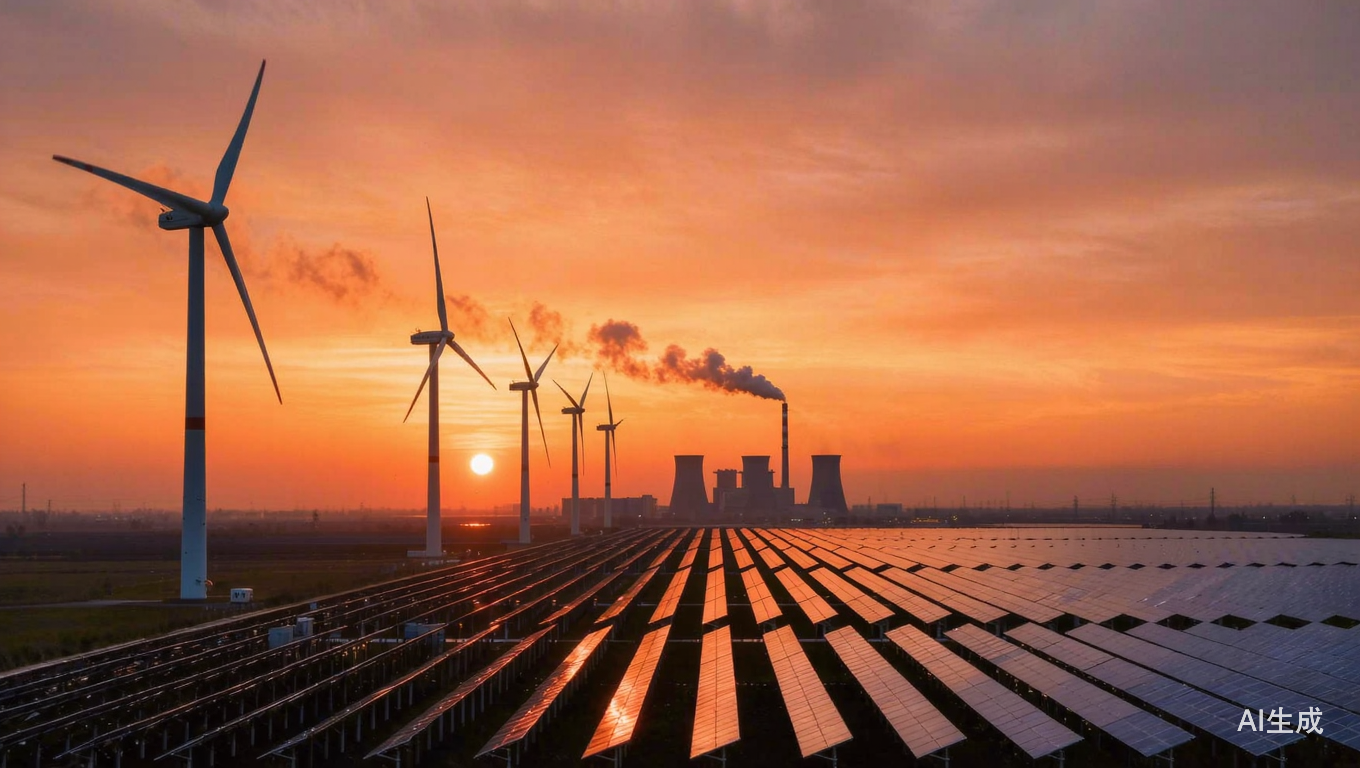
💡Policy unlocks unlimited renewables powering AI data centers
⚡ 30-Second TL;DR
What Changed
Constraint shifts from total energy to CO2 emissions only, freeing clean energy growth
Why It Matters
Unlimited green power expansion eases AI data center energy constraints in China.
What To Do Next
Assess green energy subsidies for scaling your AI training clusters in China.
Key Points
- •Constraint shifts from total energy to CO2 emissions only, freeing clean energy growth
- •3.8% intensity drop allows 1.2% absolute CO2 rise for fossil buffer amid 5% GDP growth
- •AI+energy prioritized; compute power drives PV/storage orders
- •Non-fossil energy >20%; storage hits 144.7GW, up 85% YoY
🧠 Deep Insight
Background and context from public sources — not the original article. 8 sources cited.
🔑 Enhanced Key Takeaways
- •Experts from CREA describe the 3.8% carbon intensity target as 'alarmingly lax', potentially allowing absolute CO2 emissions to rise by 0.5-1.0% in 2026 amid expected GDP growth[1].
- •The 15th Five-Year Plan (2026-2030) sets a binding 17% carbon intensity reduction from 2026 levels, down from the prior 18% target, leaving room for 3-6% overall emissions increase[1][2].
- •China plans to replace 30 million metric tons of coal annually with renewables over the next five years and establish a national low-carbon transition fund for hydrogen and green fuels[1][3].
- •No absolute emissions cap was included, though a total control system for 'dual-carbon' goals is promised, with coal consumption targeted to peak by 2030 without phase-down[2][4].
🔮 Future ImplicationsAI analysis grounded in cited sources
⏳ Timeline
📎 Sources (8)
Factual claims are grounded in the sources below. Forward-looking analysis is AI-generated interpretation.
- carbonbrief.org — China Briefing 5 March 2026 New Five Year Climate Goals Revealed at Two Sessions Meeting
- renewablematter.eu — China Five Year Plan Lower Growth Targets Reduces Climate Ambitions
- eco-business.com — China Sets 17 Per Cent Carbon Intensity Cut in New Five Year Climate Plan
- Semafor — Chinas Announces New Climate Targets in 5 Year Plan
- carbon-pulse.com — 489810
- stratnewsglobal.com — China Unveils New Five Year Plan to Cut Carbon Intensity
- climatechangenews.com — China Eases Climate Target but Clean Energy Could Still Cut Emissions Experts Say
- 350.org — 350 Org Response to Chinas 15th Five Year Plan Insufficient Progress
Weekly AI Recap
Read this week's curated digest of top AI events →
👉Related Updates

AI-curated news aggregator. All content rights belong to original publishers.
Original source: 虎嗅 ↗
This is a summary, not the original. Read the source, or get the weekly briefing.
Weekly AI briefing
One email a week. Unsubscribe anytime.