Can Joint-Venture EVs Escape the Launch Spike?
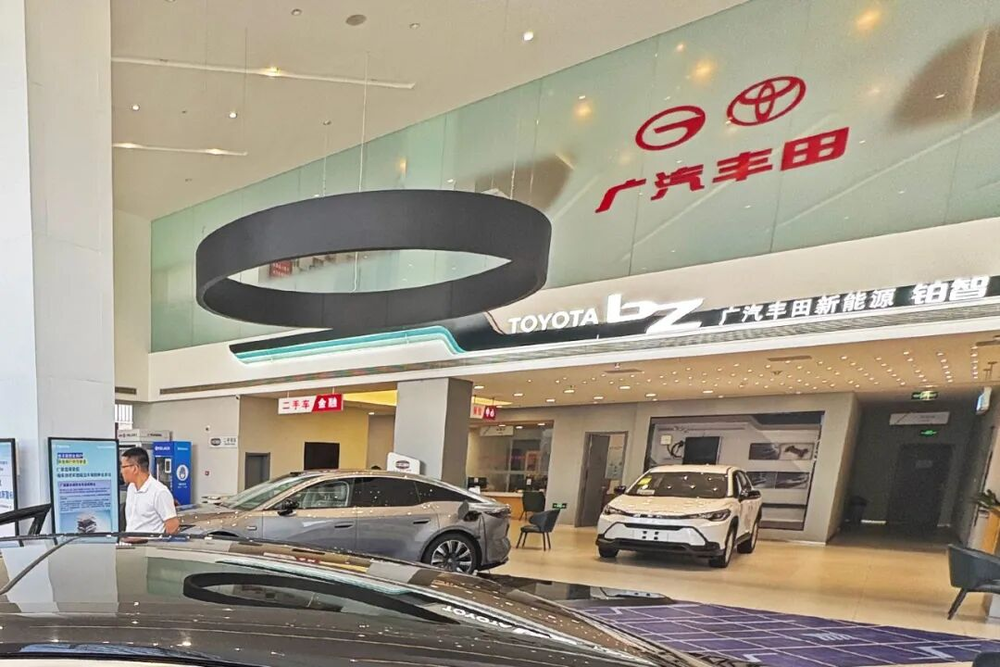
Joint-venture EVs are selling—but mostly to existing owners, exposing the real challenge for automotive AI.
30-Second TL;DR
What Changed
GAC Toyota’s bZ-branded models helped it achieve more than 50,000 first-half sales and support overall positive growth.
Why It Matters
The early success of joint-venture EVs does not yet prove a durable competitive recovery. AI and intelligent-driving suppliers should expect automakers to demand sustained software updates, measurable driver-assistance performance, and lifecycle engagement rather than one-time launch features.
What To Do Next
Run a six-month retention test for your driver-assistance feature, tracking post-launch usage and performance after the initial order spike.
Key Points
- •GAC Toyota’s bZ-branded models helped it achieve more than 50,000 first-half sales and support overall positive growth.
- •Buick’s Electra E7 buyers are mostly 35–40-year-old existing customers, especially families prioritizing assisted driving, efficiency, and rear-seat features.
- •Dongfeng Nissan’s NX8 exceeded 10,000 cumulative deliveries, but some orders were diverted from its own N6 and N7 models.
- •New-energy vehicles account for roughly 10%–30% of sales at visited joint-venture dealerships, leaving fuel cars as the core business.
- •Mainstream joint-venture new-energy penetration was only 11.9% in June, versus 81.8% for domestic brands.
Deep Insight
AI-generated analysis for this event — not the original article.
Enhanced Key Takeaways
- •Joint-venture (JV) automakers are increasingly adopting 'China-first' R&D strategies, partnering with local tech giants like Momenta and Huawei to bridge the intelligent cockpit and autonomous driving gap.
- •The 'Launch Spike' phenomenon is exacerbated by aggressive price-cutting strategies where JVs offer heavy subsidies to clear inventory, often cannibalizing their own internal combustion engine (ICE) resale values.
- •Data indicates that JV new energy vehicle (NEV) retention rates are significantly lower than domestic Chinese brands, as customers often migrate to pure-play EV brands after their first JV-EV ownership experience.
- •Supply chain localization for JV-EVs has reached over 80% in some cases, yet the cost structure remains higher than domestic competitors due to legacy overheads and slower software-defined vehicle (SDV) integration.
- •Regulatory pressure in China, specifically regarding Corporate Average Fuel Consumption (CAFC) credits, is the primary driver for the current JV-EV launch wave, rather than purely organic market demand.
Competitor Analysis
- JV-EVs (e.g., bZ, Electra)
- Improving (Local Partnerships)
- Domestic Leaders (e.g., BYD, Xiaomi)
- Native/High Integration
- Legacy ICE Models
- Basic/Legacy
- JV-EVs (e.g., bZ, Electra)
- Mid-to-High (Premium)
- Domestic Leaders (e.g., BYD, Xiaomi)
- Aggressive/Value-Driven
- Legacy ICE Models
- Low/Discounted
- JV-EVs (e.g., bZ, Electra)
- L2+ (Partner-dependent)
- Domestic Leaders (e.g., BYD, Xiaomi)
- L2+/L3 (In-house/Advanced)
- Legacy ICE Models
- Basic L1/L2
- JV-EVs (e.g., bZ, Electra)
- Low (10-30% of sales)
- Domestic Leaders (e.g., BYD, Xiaomi)
- High (>80% of sales)
- Legacy ICE Models
- Declining (Core revenue)
| Feature | JV-EVs (e.g., bZ, Electra) | Domestic Leaders (e.g., BYD, Xiaomi) | Legacy ICE Models |
|---|---|---|---|
| Software/OS | Improving (Local Partnerships) | Native/High Integration | Basic/Legacy |
| Pricing | Mid-to-High (Premium) | Aggressive/Value-Driven | Low/Discounted |
| AD/ADAS | L2+ (Partner-dependent) | L2+/L3 (In-house/Advanced) | Basic L1/L2 |
| Market Penetration | Low (10-30% of sales) | High (>80% of sales) | Declining (Core revenue) |
Technical Deep Dive
- Most JV-EVs are transitioning from global platforms (like e-TNGA) to localized architectures that support 800V high-voltage charging and centralized electronic/electrical (E/E) architectures.
- Integration of local SoC (System-on-Chip) providers like Horizon Robotics is becoming standard to replace imported chips, reducing costs and improving supply chain resilience.
- Implementation of 'Zone' control architectures is replacing traditional distributed ECU setups to enable faster Over-the-Air (OTA) updates for intelligent driving features.
- Battery chemistry is shifting toward LFP (Lithium Iron Phosphate) for entry-to-mid-range models to maintain price competitiveness against domestic rivals.
Future ImplicationsAI analysis grounded in cited sources
Timeline
- 2022-10Toyota launches the bZ4X in China, marking a major shift toward dedicated EV platforms for the JV.
- 2023-07SAIC-GM announces a massive investment in local software R&D to accelerate the Electra series development.
- 2024-04Beijing Auto Show highlights the 'China-for-China' strategy, with JVs showcasing models developed specifically for local consumer preferences.
- 2025-06JV NEV penetration rates hit a critical low, prompting a wave of aggressive pricing and localized tech partnerships.
- 2026-01Dongfeng Nissan accelerates the rollout of the N-series, focusing on localized intelligent cockpit features to combat domestic brand dominance.
Weekly AI Recap
Read this week's curated digest of top AI events →
AI-curated news aggregator. All content rights belong to original publishers.
Original source: 虎嗅 ↗
This is a summary, not the original. Read the source, or get the weekly briefing.
The weekly digest
One email a week. Unsubscribe anytime.