Cambricon Posts RMB2.3B Profit, Delivery Is Next
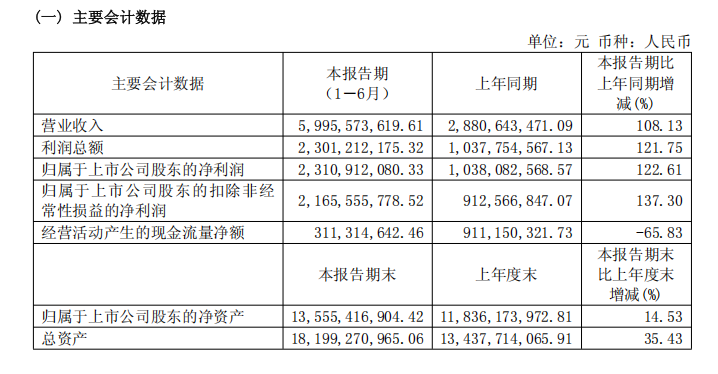
Cambricon’s profits are surging, but AI developers still need to watch chip supply and delivery execution.
30-Second TL;DR
What Changed
Cambricon reported RMB2.3 billion in first-half profit.
Why It Matters
Strong profitability could give Cambricon more resources to expand AI-chip production and compete for supply. Delivery constraints remain a practical risk for developers and enterprises evaluating Cambricon-based deployments.
What To Do Next
Before adopting Cambricon hardware, request a written delivery schedule and validate your inference stack against the available SDK and compiler toolchain.
Key Points
- •Cambricon reported RMB2.3 billion in first-half profit.
- •The company is competing to secure additional production capacity.
- •Second-half results will depend on chip delivery execution.
Deep Insight
AI-generated analysis for this event — not the original article.
Enhanced Key Takeaways
- •Cambricon's profit turnaround marks a significant shift from its historical pattern of heavy R&D-driven net losses, signaling improved operational efficiency or high-margin product mix.
- •The company's production capacity constraints are primarily linked to ongoing US-led export controls restricting access to advanced lithography and foundry services for high-end AI accelerators.
- •Cambricon has increasingly pivoted its business model toward large-scale AI training clusters for domestic Chinese cloud providers and government-backed research institutions to offset consumer-side volatility.
- •The reported RMB 2.3 billion profit is heavily influenced by the recognition of long-term software licensing and integrated hardware-software solution contracts rather than pure hardware sales.
- •Supply chain diversification efforts have intensified, with Cambricon reportedly qualifying multiple domestic semiconductor manufacturing partners to mitigate risks associated with international foundry dependencies.
Competitor Analysis
- Cambricon (MLU Series)
- Domestic China (Public/Private)
- Huawei (Ascend Series)
- Domestic China (Strategic)
- NVIDIA (H/B Series)
- Global (High-End/Export Restricted)
- Cambricon (MLU Series)
- Cambricon Neuware
- Huawei (Ascend Series)
- CANN / MindSpore
- NVIDIA (H/B Series)
- CUDA
- Cambricon (MLU Series)
- Domestic Foundries (SMIC)
- Huawei (Ascend Series)
- Domestic Foundries (SMIC)
- NVIDIA (H/B Series)
- TSMC (Global)
- Cambricon (MLU Series)
- Inference & Training Efficiency
- Huawei (Ascend Series)
- Large-scale LLM Training
- NVIDIA (H/B Series)
- Universal AI/HPC Leadership
| Feature | Cambricon (MLU Series) | Huawei (Ascend Series) | NVIDIA (H/B Series) |
|---|---|---|---|
| Primary Market | Domestic China (Public/Private) | Domestic China (Strategic) | Global (High-End/Export Restricted) |
| Software Ecosystem | Cambricon Neuware | CANN / MindSpore | CUDA |
| Manufacturing | Domestic Foundries (SMIC) | Domestic Foundries (SMIC) | TSMC (Global) |
| Performance Focus | Inference & Training Efficiency | Large-scale LLM Training | Universal AI/HPC Leadership |
Technical Deep Dive
- Architecture: Utilizes the proprietary MLU (Machine Learning Unit) architecture, which employs a scalar, vector, and matrix processing unit design optimized for tensor operations.
- Memory Integration: Recent generations have shifted toward high-bandwidth memory (HBM) integration to alleviate the memory wall bottleneck in large language model (LLM) training.
- Interconnect: Features proprietary chip-to-chip interconnect technology designed to scale across multi-node clusters, aiming to replicate the functionality of NVLink in domestic environments.
- Software Stack: Relies on the Neuware platform, which provides a compiler, runtime, and library support (MLU-Ops) to map deep learning frameworks like PyTorch and TensorFlow to hardware primitives.
Future ImplicationsAI analysis grounded in cited sources
Timeline
- 2016-03Cambricon Technologies is founded as a spin-off from the Chinese Academy of Sciences.
- 2017-11Release of the MLU100, the company's first cloud-based AI processor.
- 2020-07Cambricon completes its IPO on the Shanghai Stock Exchange STAR Market.
- 2022-12Cambricon is added to the US Entity List, restricting access to US-origin technology.
- 2025-03Company reports narrowing losses, signaling a shift toward commercial viability.
Event Coverage
Weekly AI Recap
Read this week's curated digest of top AI events →
AI-curated news aggregator. All content rights belong to original publishers.
Original source: 钛媒体 ↗
This is a summary, not the original. Read the source, or get the weekly briefing.
The weekly digest
One email a week. Unsubscribe anytime.