Calterah Takes MmWave Chips Toward IPO
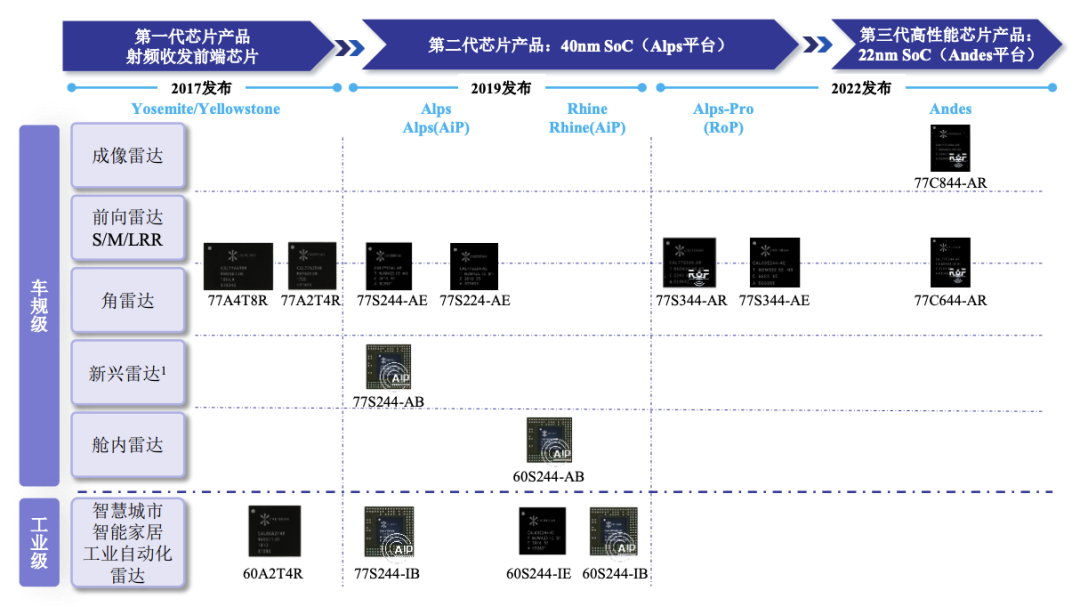
💡Calterah combines 31% Chinese market share with massive losses and supply-chain risk—critical context for automotive AI
⚡ 30-Second TL;DR
What Changed
Calterah plans to raise RMB 3.489 billion through its STAR Market IPO.
Why It Matters
The IPO highlights both the progress and fragility of China’s automotive chip localization effort. For AI and autonomous-driving developers, domestic radar silicon may improve supply options, but long qualification cycles, ongoing losses, and foreign dependency remain major deployment risks.
What To Do Next
Benchmark Calterah’s 77GHz radar SDK and chips on your target vehicle platform, while qualifying at least one alternative supplier before production design-in.
Key Points
- •Calterah plans to raise RMB 3.489 billion through its STAR Market IPO.
- •Its CMOS-based 77GHz radar chips have accumulated more than 30 million shipments.
- •The company held 31.1% of China’s automotive mmWave radar chip market in 2025, but only about 4% globally.
- •Calterah recorded more than RMB 900 million in cumulative losses over three and a half years.
- •More than 50% of procurement comes from overseas suppliers, with the top five reaching 80.16% in Q1 2026.
🧠 Deep Insight
AI-generated analysis for this event.
🔑 Enhanced Key Takeaways
- •Calterah's product portfolio has expanded beyond radar to include SoC (System-on-Chip) solutions integrating radar signal processing and MCU functions to reduce system-level costs for Tier 1 suppliers.
- •The company has successfully entered the supply chains of major Chinese new energy vehicle (NEV) manufacturers, including BYD, SAIC, and Geely, which has been a primary driver of its domestic market share growth.
- •Calterah utilizes a fabless business model, relying heavily on TSMC for wafer fabrication, which contributes to the high dependency on overseas suppliers noted in their IPO prospectus.
- •The company has been actively investing in 4D imaging radar technology, aiming to compete with international incumbents like NXP and Infineon in the high-end autonomous driving sensor market.
- •Despite cumulative losses, Calterah has benefited from significant venture capital backing from firms like Walden International and various state-backed semiconductor investment funds prior to its STAR Market filing.
📊 Competitor Analysis▸ Show
| Competitor | Primary Focus | Market Position | Key Advantage |
|---|---|---|---|
| NXP Semiconductors | Automotive Radar/SoC | Global Leader | Established ecosystem & reliability |
| Infineon | Radar Transceivers | Global Leader | High-performance SiGe/CMOS tech |
| TI (Texas Instruments) | Radar/Analog | Global Leader | Broad portfolio & supply chain scale |
| Calterah | CMOS mmWave Radar | China Market Leader | Cost-efficiency & local support |
🛠️ Technical Deep Dive
- Calterah utilizes CMOS process technology for its 77GHz radar chips, which allows for higher integration of RF and baseband components compared to traditional SiGe (Silicon Germanium) processes.
- Their chip architecture typically features a multi-channel transceiver design (e.g., 3-transmit, 4-receive) to support MIMO (Multiple-Input Multiple-Output) processing for improved angular resolution.
- The company's radar SoCs incorporate proprietary DSP (Digital Signal Processor) cores optimized for FFT (Fast Fourier Transform) and CFAR (Constant False Alarm Rate) algorithms, essential for real-time object detection.
- Recent product generations support LRR (Long Range Radar) and SRR (Short Range Radar) applications, with some chips designed to meet ISO 26262 ASIL-B functional safety standards.
🔮 Future ImplicationsAI analysis grounded in cited sources
⏳ Timeline
Weekly AI Recap
Read this week's curated digest of top AI events →
👉Related Updates



AI-curated news aggregator. All content rights belong to original publishers.
Original source: 虎嗅 ↗