NVIDIA’s Invisible AI Supercloud
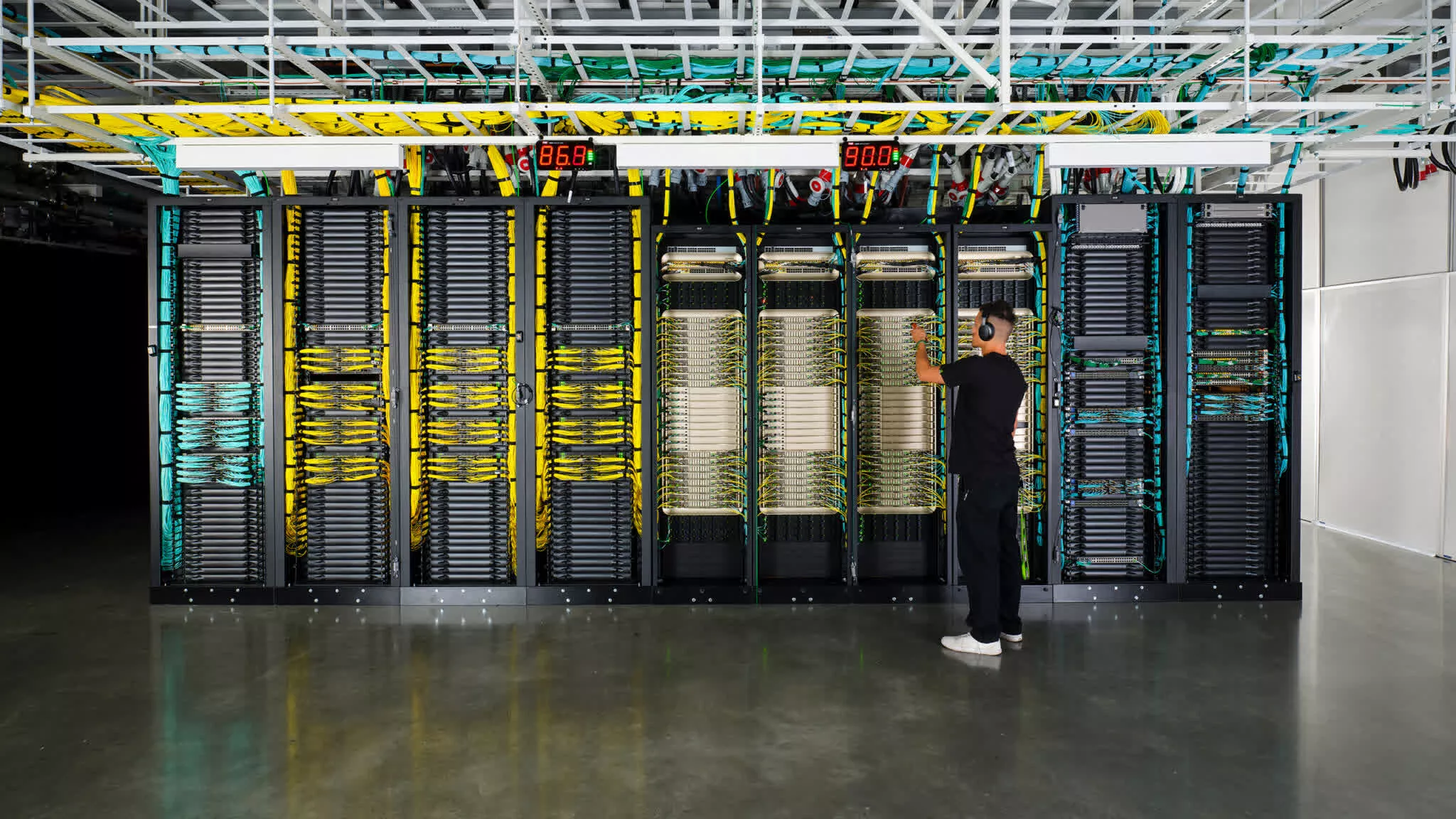
💡NVIDIA may control AI compute expansion through standards and capital—not data-center ownership.
⚡ 30-Second TL;DR
What Changed
NVIDIA may be expanding AI compute capacity without directly owning data centers.
Why It Matters
If this model continues, AI infrastructure providers may become increasingly dependent on NVIDIA-defined technical standards and supply relationships. Founders and enterprises could face less flexibility in hardware selection, cloud architecture, and financing partnerships.
What To Do Next
Map your planned GPU cluster against NVIDIA’s software, hardware, cloud, and financing dependencies before committing to a multi-year AI capacity buildout.
Key Points
- •NVIDIA may be expanding AI compute capacity without directly owning data centers.
- •Its potential influence spans hardware and software standards, infrastructure design, and capital networks.
- •The strategy could give NVIDIA leverage over how AI infrastructure is built and scaled.
🧠 Deep Insight
AI-generated analysis for this event.
🔑 Enhanced Key Takeaways
- •NVIDIA's 'invisible' strategy relies heavily on the NVIDIA AI Enterprise software suite, which acts as a hardware-agnostic abstraction layer that locks customers into the NVIDIA ecosystem regardless of the underlying physical data center provider.
- •The company has pioneered the 'AI Factory' reference architecture, providing standardized blueprints for cooling, power distribution, and rack density that third-party colocation providers must adopt to be 'NVIDIA-certified'.
- •NVIDIA leverages its GPU allocation power as a form of 'soft capital,' effectively dictating which cloud service providers and hyperscalers receive priority access based on their adherence to NVIDIA's infrastructure design standards.
- •Through the NVIDIA DGX Cloud program, the company creates a virtualized supercomputer that spans multiple physical providers, allowing NVIDIA to manage the orchestration layer while offloading the operational burden of power and cooling to partners.
- •Financial engineering plays a role via NVIDIA's strategic investments in AI startups and infrastructure firms, creating a closed-loop ecosystem where NVIDIA hardware is the preferred or mandated compute platform for portfolio companies.
📊 Competitor Analysis▸ Show
| Feature | NVIDIA (Invisible Supercloud) | AMD (Open Ecosystem) | Google (TPU/Custom Silicon) |
|---|---|---|---|
| Hardware Strategy | Proprietary CUDA/NVLink | Open ROCm/Infinity Fabric | Vertical Integration (TPU) |
| Infrastructure Model | Software-defined/Orchestrated | Hardware-focused/Partner-led | Fully Managed/Proprietary |
| Ecosystem Lock-in | High (CUDA dependency) | Low (Open standards) | High (Google Cloud only) |
| Primary Advantage | Software stack maturity | Cost-to-performance ratio | Custom silicon efficiency |
🛠️ Technical Deep Dive
- NVIDIA AI Enterprise: A cloud-native software platform that provides the runtime environment for AI workloads, ensuring consistency across diverse physical infrastructure.
- NVLink Switch System: Enables high-bandwidth, low-latency communication between GPUs across multiple nodes, effectively turning disparate servers into a single unified compute fabric.
- BlueField DPU Integration: Offloads networking, storage, and security tasks from the CPU to the DPU, allowing for 'bare-metal' performance in multi-tenant cloud environments.
- Base Command Platform: The orchestration layer that manages the lifecycle of AI training and inference jobs across the distributed 'invisible' supercloud.
🔮 Future ImplicationsAI analysis grounded in cited sources
⏳ Timeline
Weekly AI Recap
Read this week's curated digest of top AI events →
👉Related Updates

AI-curated news aggregator. All content rights belong to original publishers.
Original source: cnBeta (Full RSS) ↗