ByteDance Rejects External Model Distillation
💡ByteDance is giving up a major model-training shortcut—and the reasoning affects data strategy, compliance, and research
⚡ 30-Second TL;DR
What Changed
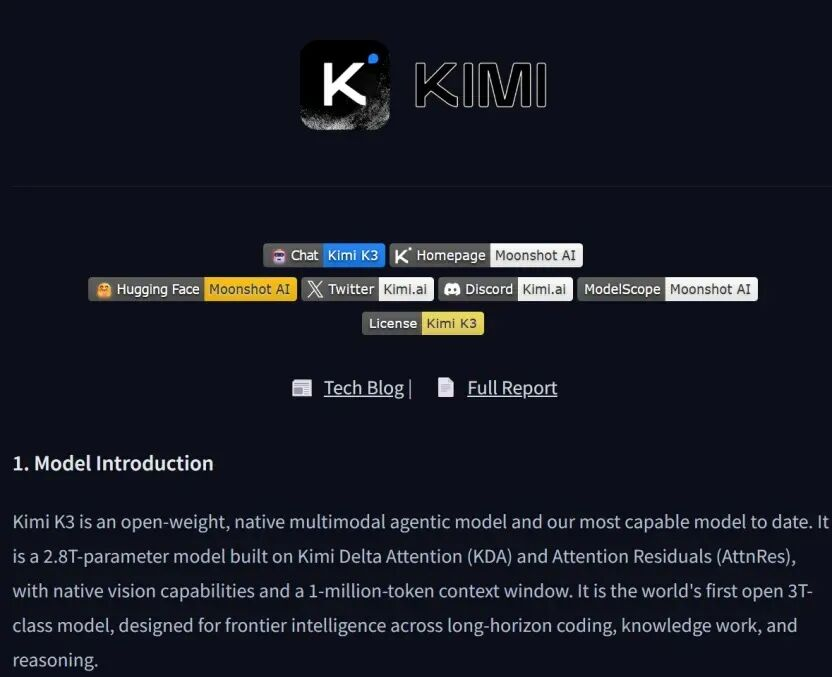
The policy bans distilling both US closed models and domestic open-weight models such as Kimi K3.
Why It Matters
If sustained, the policy could make ByteDance’s model development slower in the short term but improve data provenance, research reproducibility, and legal defensibility. It also signals a broader industry shift from capability imitation toward proprietary data and foundational-model development.
What To Do Next
Audit your training pipeline for third-party model outputs, label synthetic data sources, and add a provenance gate before data enters pretraining.
Key Points
- •The policy bans distilling both US closed models and domestic open-weight models such as Kimi K3.
- •ByteDance previously prohibited adding GPT-generated data to training sets and later acknowledged limited early use in Project Seed.
- •Seed-OSS-36B was released in both synthetic-data and non-synthetic-data variants, reflecting concern about synthetic-data contamination.
- •The decision sacrifices a fast capability-improvement shortcut in favor of independent training and deeper understanding of model fundamentals.
🧠 Deep Insight
AI-generated analysis for this event.
🔑 Enhanced Key Takeaways
- •ByteDance's internal 'Seed' team (Doubao) has shifted focus toward 'native' data generation, prioritizing high-quality human-annotated datasets and environment-based reinforcement learning over model-to-model distillation.
- •The directive is partly a defensive measure against potential intellectual property litigation, as US-based AI labs have increasingly scrutinized the use of their model outputs for training competing foundation models.
- •Internal audits at ByteDance revealed that early iterations of the Doubao model family showed signs of 'model collapse' or stylistic homogenization when trained on excessive synthetic data from GPT-4.
- •The policy aligns with ByteDance's broader 'AI-First' infrastructure strategy, which emphasizes vertical integration of compute, data, and model architecture to reduce reliance on third-party ecosystems.
- •Industry analysts suggest this move is intended to differentiate ByteDance's AGI roadmap from domestic competitors who rely heavily on Llama-based or GPT-distilled architectures to achieve rapid benchmark gains.
📊 Competitor Analysis▸ Show
| Feature | ByteDance (Doubao) | Alibaba (Qwen) | Tencent (Hunyuan) |
|---|---|---|---|
| Distillation Policy | Strict Prohibition | Permissive/Hybrid | Selective/Internal |
| Primary Data Source | Proprietary/Human-Annotated | Mixed/Synthetic/Open | Mixed/Proprietary |
| Benchmark Focus | Long-context/Efficiency | General Purpose/Coding | Enterprise/Multimodal |
🛠️ Technical Deep Dive
- Seed-OSS-36B architecture utilizes a Mixture-of-Experts (MoE) framework designed to optimize inference latency for mobile-first applications.
- The training pipeline incorporates a proprietary 'Data Quality Filter' (DQF) that automatically discards samples exhibiting high perplexity or patterns characteristic of known LLM-generated text.
- ByteDance has invested in custom hardware-software co-design, specifically optimizing their training clusters for non-distilled, high-throughput token processing.
- The model's reinforcement learning from human feedback (RLHF) process relies on a massive, internal workforce to ensure data provenance and alignment with domestic regulatory standards.
🔮 Future ImplicationsAI analysis grounded in cited sources
⏳ Timeline
Weekly AI Recap
Read this week's curated digest of top AI events →
👉Related Updates



AI-curated news aggregator. All content rights belong to original publishers.
Original source: 虎嗅 ↗