California tests smart highway system to reduce traffic
💡A practical example of AI-driven traffic management and smart city infrastructure optimization.
⚡ 30-Second TL;DR
What Changed
New traffic management system uses intelligent ramp metering.
Why It Matters
This represents an application of real-time traffic optimization algorithms, a key area for AI-driven smart city infrastructure.
What To Do Next
Explore open-source traffic simulation frameworks like SUMO to model how AI agents can optimize urban traffic flow.
Key Points
- •New traffic management system uses intelligent ramp metering.
- •Drivers may face up to four-minute waits at highway entrances.
- •Goal is to optimize overall commute times and reduce main-line traffic density.
🧠 Deep Insight
Background and context from public sources — not the original article. 12 sources cited.
🔑 Enhanced Key Takeaways
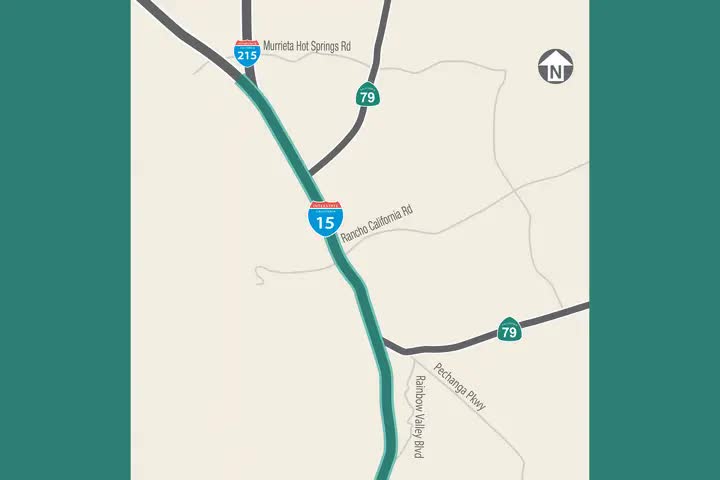
- •The 'smart highway' system is a $33 million, two-year pilot program launched on June 1, 2026, specifically targeting an eight-mile stretch of northbound Interstate 15 in Temecula.
- •This particular system coordinates three adaptive ramp meters located at Temecula Parkway, Rancho California Road, and Winchester Road.
- •Officials clarify that the system relies on algorithms and advanced sensors embedded in the roadway to manage traffic, rather than artificial intelligence for decision-making.
- •The primary goal of adaptive ramp metering is to optimize overall traffic flow, reduce accidents by minimizing merging conflicts, and improve travel time reliability across the entire corridor.
- •This intelligent traffic management approach is considered a more cost-effective solution for alleviating congestion compared to expensive freeway widening projects.
🛠️ Technical Deep Dive
- The system utilizes advanced sensors embedded in the roadway to collect real-time traffic data, including volume, speed, and occupancy.
- Algorithms process this real-time data to dynamically adjust the timing of ramp meters, controlling the rate at which vehicles enter the freeway.
- Digital signs along the freeway display recommended speeds to drivers, aiming to smooth traffic flow and prevent stop-and-go conditions.
- Adaptive ramp metering systems, such as those implemented in the I-80 SMART Corridor, can incorporate Fuzzy Logic algorithms to consider real-time upstream and downstream traffic conditions.
- Queue spill-back detectors are deployed at on-ramps to prevent vehicle queues from extending onto local streets, thereby avoiding impacts on arterial operations.
- More comprehensive 'smart corridor' projects, like the I-80 SMART Corridor, integrate various Intelligent Transportation System (ITS) elements including CCTV cameras, changeable message signs (CMS), lane use signs (LUS), variable advisory speed signs (VASS), and traffic monitoring stations (TMS), all managed from a central Traffic Management Center.
🔮 Future ImplicationsAI analysis grounded in cited sources
⏳ Timeline
📎 Sources (12)
Factual claims are grounded in the sources below. Forward-looking analysis is AI-generated interpretation.
Weekly AI Recap
Read this week's curated digest of top AI events →
👉Related Updates
AI-curated news aggregator. All content rights belong to original publishers.
Original source: cnBeta (Full RSS) ↗
This is a summary, not the original. Read the source, or get the weekly briefing.
The weekly digest
One email a week. Unsubscribe anytime.