CAAC Launches New Low-Altitude Safety Department
Regulatory shift in China's low-altitude airspace; essential for developers building autonomous drone systems.
30-Second TL;DR
What Changed
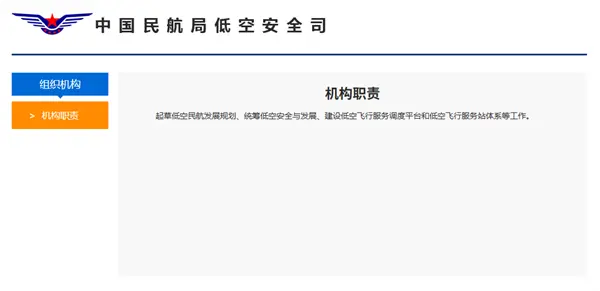
CAAC establishes a dedicated department for low-altitude airspace management.
Why It Matters
This signals a major regulatory push to standardize the low-altitude economy, which is critical for the future of autonomous drone logistics and urban air mobility.
What To Do Next
Monitor the upcoming CAAC technical standards for low-altitude flight scheduling to ensure your drone fleet software remains compliant.
Key Points
- •CAAC establishes a dedicated department for low-altitude airspace management.
- •Focuses on drafting development plans and safety regulations for the low-altitude economy.
- •Prioritizes the construction of unified flight service scheduling and station infrastructure.
Deep Insight
Background and context from public sources — not the original article. 22 sources cited.
Enhanced Key Takeaways
- •The low-altitude economy was first included in China's central government work report in 2024 and subsequently elevated to a strategic emerging industrial cluster in the 15th Five-Year Plan (2026–2030).
- •The CAAC's establishment of this new department follows a similar move by China's National Development and Reform Commission (NDRC), which set up its own Low-Altitude Economy Development Division in December 2024.
- •China's low-altitude economy is projected to reach a market size of RMB 1.5 trillion (approximately USD 211 billion) in 2025, with forecasts indicating a rise to RMB 3.5 trillion by 2035, supported by 3.28 million registered drones in 2025.
- •A revised Civil Aviation Law, set to take effect on July 1, 2026, introduces a dedicated chapter for 'development promotion' and establishes tiered airspace management rules below 300 meters, specifically addressing eVTOLs and new operating models.
- •China launched a national low-altitude flight authorization system in December 2025, designed to streamline approvals through a 'one window acceptance, one network service' approach, aiming to reduce approval times by over 50% and integrating AI and big data for route planning and risk prediction.
Technical Deep Dive
- The new Low-Altitude Safety Department is tasked with building low-altitude flight service dispatch platforms and flight service station systems.
- The CAAC's "Overall Plan for the Development of Low-Altitude Flight Service Support System," issued in June 2018, outlined a three-tier system to be initially established by 2022, comprising a national information management system, seven regional information processing systems, and a network of flight service stations. This system is intended to provide services like flight planning, aviation information, meteorology, and emergency assistance.
- The national low-altitude flight authorization system, launched in December 2025, utilizes AI and big data technologies for automatic optimal route planning, flight risk prediction, and real-time air traffic monitoring, aiming for a unified "one window acceptance, one network service" approach.
- Mandatory national standards for UAV operational identification and real-name registration are effective May 1, 2026, establishing a "one aircraft, one code, full traceability" regime to address unauthorized "black flights."
- The CAAC is accelerating the review of its CCAR-23 regulation, with a revised version (CCAR-23 "Airworthiness Regulations for Normal Aircraft (Draft of Comment)") including "Chapter H Supplementary Requirements for Electric Aircraft" to cover power units, thrust control, and energy storage for eVTOL and Urban Air Mobility (UAM) projects.
- The low-altitude economy air management system market is seeing trends towards urban air mobility management platforms, automated airspace control integration, drone traffic management, and AI-based routing systems, with cloud deployment projected to hold a 53% market share in 2026.
Future ImplicationsAI analysis grounded in cited sources
Timeline
- 2010State Council and Central Military Commission launch 'Guideline on Deepening the Reforms on Low-Altitude Airspace Management'.
- 2018-06CAAC issues 'Overall Plan for the Development of Low-Altitude Flight Service Support System'.
- 2021-02Low-altitude economy included in China's 'National Comprehensive Three-Dimensional Transportation Network Planning Outline'.
- 2024-12National Development and Reform Commission (NDRC) establishes Low-Altitude Economy Development Division.
- 2025-12CAAC releases draft airworthiness standards for unmanned eVTOL aircraft and launches national low-altitude flight authorization system.
- 2026-05-13CAAC officially establishes the Low-Altitude Safety Department.
Sources (22)
Factual claims are grounded in the sources below. Forward-looking analysis is AI-generated interpretation.
Weekly AI Recap
Read this week's curated digest of top AI events →
Related Updates


AI-curated news aggregator. All content rights belong to original publishers.
Original source: cnBeta (Full RSS) ↗
This is a summary, not the original. Read the source, or get the weekly briefing.
The weekly digest
One email a week. Unsubscribe anytime.