ByteDance Launches Seedance 2.0 Video API
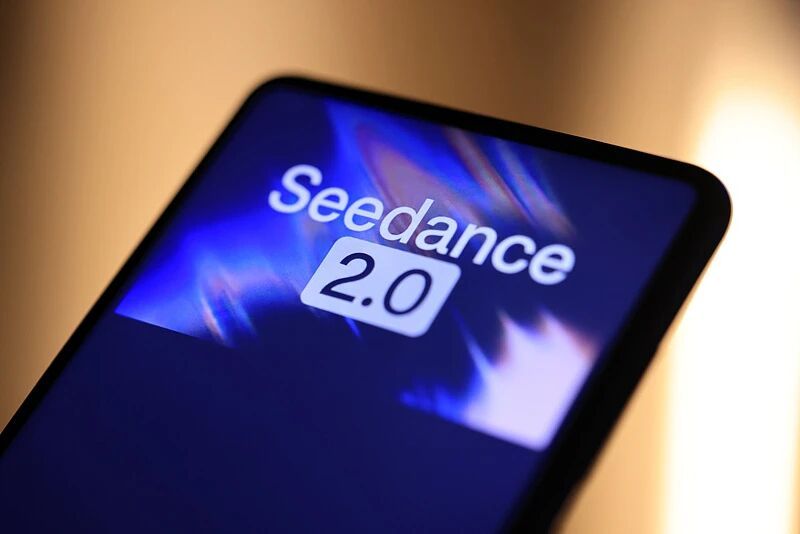
ByteDance's new video API supports 4 input types + built-in safety for devs.
30-Second TL;DR
What Changed
Volcengine provides public API for Seedance 2.0
Why It Matters
This API lowers barriers for developers to integrate advanced video generation into apps, while safety features mitigate legal risks in commercial deployments.
What To Do Next
Register for Volcengine API to test Seedance 2.0 with multimodal prompts.
Key Points
- •Volcengine provides public API for Seedance 2.0
- •Supports text, image, audio, and video inputs
- •Built-in copyright and portrait safety features
Deep Insight
AI-generated analysis for this event — not the original article.
Enhanced Key Takeaways
- •Seedance 2.0 utilizes a proprietary latent diffusion architecture optimized for low-latency inference on Volcengine's cloud infrastructure, specifically targeting enterprise-grade video production workflows.
- •The model incorporates a 'watermarking-by-design' framework that embeds invisible, robust metadata into generated frames to comply with emerging global AI content transparency regulations.
- •ByteDance is positioning Seedance 2.0 as a direct competitor to OpenAI's Sora and Runway's Gen-3, specifically targeting the Chinese domestic market with localized training data and cultural alignment features.
Competitor Analysis
- Seedance 2.0
- China/Enterprise
- OpenAI Sora
- Global/General
- Runway Gen-3 Alpha
- Global/Creative
- Seedance 2.0
- Text/Img/Audio/Video
- OpenAI Sora
- Text/Img/Video
- Runway Gen-3 Alpha
- Text/Img/Video
- Seedance 2.0
- Built-in Portrait/Copyright
- OpenAI Sora
- C2PA/Watermarking
- Runway Gen-3 Alpha
- Content Moderation
- Seedance 2.0
- Volcengine
- OpenAI Sora
- Azure
- Runway Gen-3 Alpha
- AWS/GCP
| Feature | Seedance 2.0 | OpenAI Sora | Runway Gen-3 Alpha |
|---|---|---|---|
| Primary Market | China/Enterprise | Global/General | Global/Creative |
| Multimodal Input | Text/Img/Audio/Video | Text/Img/Video | Text/Img/Video |
| Safety/Compliance | Built-in Portrait/Copyright | C2PA/Watermarking | Content Moderation |
| Infrastructure | Volcengine | Azure | AWS/GCP |
Technical Deep Dive
- •Architecture: Employs a transformer-based diffusion model with temporal attention layers to ensure frame-to-frame consistency in long-form video generation.
- •Inference Optimization: Utilizes custom CUDA kernels for ByteDance's internal GPU clusters, reducing time-to-first-frame by approximately 30% compared to standard diffusion implementations.
- •Safety Layer: Implements a dual-stage filtering system: a pre-generation prompt safety check and a post-generation visual integrity check to detect unauthorized portrait usage.
- •API Capabilities: Supports asynchronous batch processing, allowing enterprise users to queue high-volume video generation tasks via RESTful endpoints.
Future ImplicationsAI analysis grounded in cited sources
Timeline
- 2024-05ByteDance announces initial development of the Seedance video generation project.
- 2025-02Seedance 1.0 enters closed beta testing for select enterprise partners on Volcengine.
- 2025-11ByteDance releases technical whitepaper detailing the safety and copyright frameworks for the Seedance series.
- 2026-04Public API launch of Seedance 2.0 via Volcengine.
Weekly AI Recap
Read this week's curated digest of top AI events →
Related Updates



AI-curated news aggregator. All content rights belong to original publishers.
Original source: Pandaily ↗
This is a summary, not the original. Read the source, or get the weekly briefing.
The weekly digest
One email a week. Unsubscribe anytime.