ByteDance and Alibaba Disable Custom AI Agents Amid Regulation
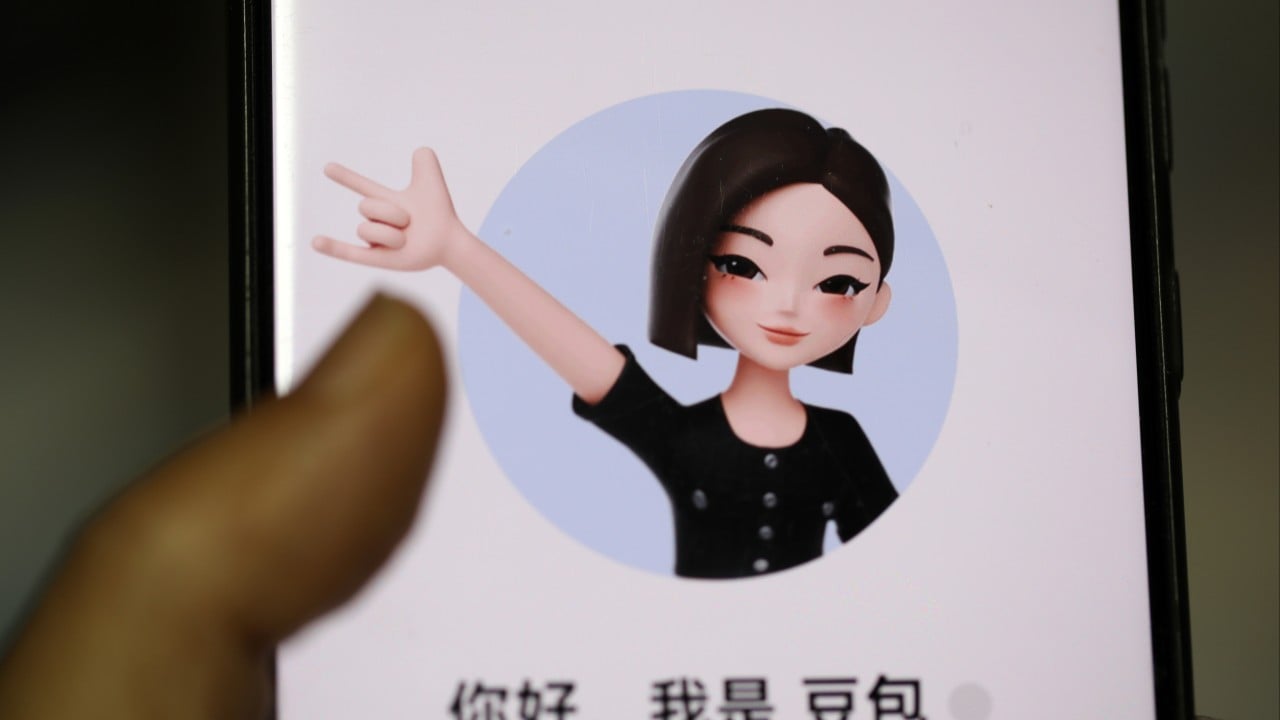
💡Understand how new Chinese AI regulations are forcing major tech firms to strip back agentic features.
⚡ 30-Second TL;DR
What Changed
Doubao will take its custom agent feature offline starting July 15.
Why It Matters
This signals a significant shift in how AI companies in China must design user-facing features to avoid regulatory friction. Developers operating in the region must prioritize compliance over feature-rich, humanlike personalization.
What To Do Next
If you are building AI products for the Chinese market, review your agentic workflows against the latest CAC (Cyberspace Administration of China) guidelines on generative AI.
Key Points
- •Doubao will take its custom agent feature offline starting July 15.
- •Alibaba's Qwen is also adjusting its AI agent offerings to align with new government rules.
- •The move is part of a broader push by Beijing to regulate humanlike AI interaction services.
🧠 Deep Insight
AI-generated analysis for this event — not the original article.
🔑 Enhanced Key Takeaways
- •The regulatory crackdown specifically targets 'anthropomorphic' AI features that could potentially facilitate social engineering, fraud, or the creation of parasocial relationships.
- •The Cyberspace Administration of China (CAC) has mandated that all AI agents must now include mandatory watermarking and explicit disclosure labels to prevent users from mistaking AI for human entities.
- •ByteDance and Alibaba are reportedly re-engineering their agent platforms to focus on 'task-oriented' utility rather than 'personality-driven' or 'companion-style' interactions.
- •Industry analysts suggest this move is a preemptive measure to avoid the stricter licensing requirements that would be triggered if these agents were classified as 'social media' or 'public opinion' services.
- •The new guidelines require companies to maintain a 'human-in-the-loop' verification process for any AI agent that engages in long-term memory storage of user personal data.
📊 Competitor Analysis▸ Show
| Feature | Doubao (ByteDance) | Qwen (Alibaba) | Baidu (Ernie Bot) | Tencent (Hunyuan) |
|---|---|---|---|---|
| Custom Agent Creation | Restricted/Disabled | Restricted/Disabled | Limited/Regulated | Limited/Regulated |
| Primary Focus | Consumer/Entertainment | Enterprise/Cloud | Search/Productivity | Social/Gaming |
| Regulatory Status | Compliance Adjustment | Compliance Adjustment | Pre-compliant | Pre-compliant |
🛠️ Technical Deep Dive
- The regulatory shift forces a transition from 'Persona-based' architectures (which utilize long-term memory and emotional state modeling) to 'Stateless' or 'Session-limited' architectures.
- Companies are implementing 'Safety Guardrail Layers' that intercept LLM output tokens to detect and block attempts at simulating human-like emotional responses or personal identity.
- Data retention policies for agent interactions are being updated to enforce 'Ephemeral Processing,' where user-specific context is purged immediately after task completion to comply with data minimization mandates.
🔮 Future ImplicationsAI analysis grounded in cited sources
⏳ Timeline
Weekly AI Recap
Read this week's curated digest of top AI events →
👉Related Updates
AI-curated news aggregator. All content rights belong to original publishers.
Original source: SCMP Technology ↗
This is a summary, not the original. Read the source, or get the weekly briefing.
Weekly AI briefing
One email a week. Unsubscribe anytime.