Brain implant restores movement for paralysed patient
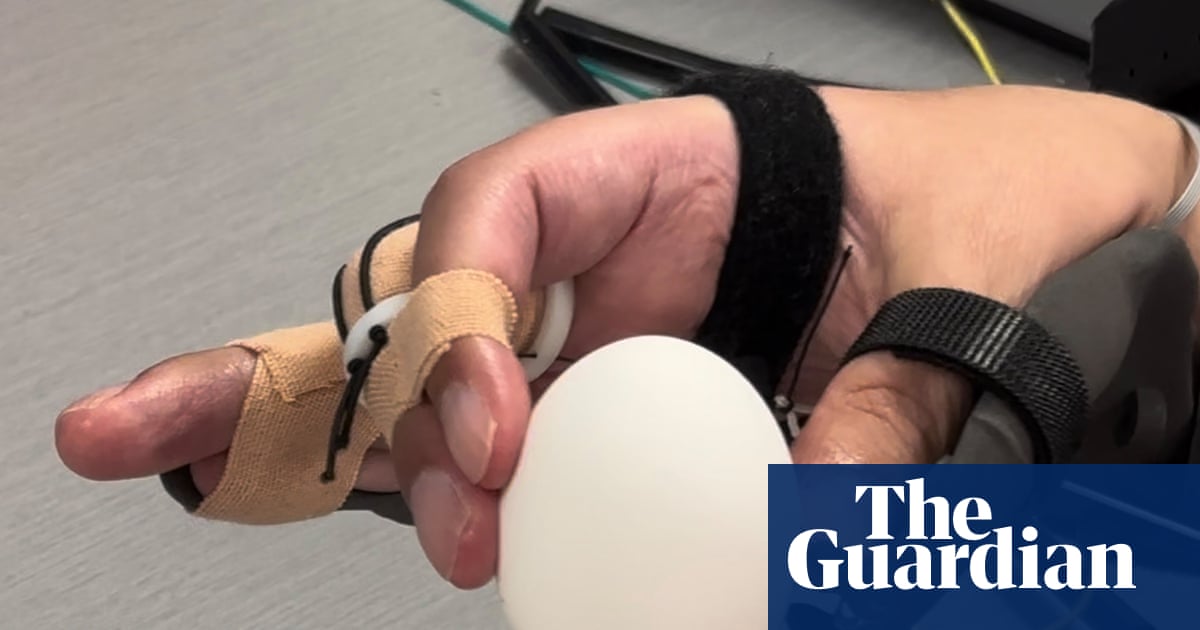
💡A major milestone in BCI and neuro-prosthetics, showing how AI-driven neural bypasses restore physical autonomy.
⚡ 30-Second TL;DR
What Changed
Utilizes a 'double neural bypass' to reconnect the brain to the spinal cord.
Why It Matters
This breakthrough demonstrates the potential of BCI technology to treat severe spinal cord injuries. It highlights the shift toward neuro-prosthetics that provide bidirectional communication between the brain and limbs.
What To Do Next
Explore the latest research on neural decoding algorithms to understand how BCI systems translate intent into motor output.
Key Points
- •Utilizes a 'double neural bypass' to reconnect the brain to the spinal cord.
- •Patient Keith Thomas regained arm and hand movement after six years of paralysis.
- •The system restores both motor function and the sensation of touch.
- •Success follows surgical implantation of electrodes and extensive training.
🧠 Deep Insight
AI-generated analysis for this event.
🔑 Enhanced Key Takeaways
- •The procedure was conducted by researchers at Northwell Health's Feinstein Institutes for Medical Research, marking a significant milestone in 'bioelectronic medicine.'
- •The 'double neural bypass' functions by recording brain signals, processing them via a computer, and then stimulating the spinal cord and muscles through external electrode patches.
- •Unlike traditional brain-computer interfaces (BCIs) that focus solely on motor output, this system incorporates a closed-loop design that uses sensory feedback to adjust stimulation in real-time.
- •Keith Thomas's recovery demonstrated 'plasticity' effects, where he showed sustained improvement in arm strength and sensation even when the system was turned off.
- •The study utilized artificial intelligence to decode the patient's intended movements from brain activity, translating these thoughts into electrical signals for the spinal cord.
📊 Competitor Analysis▸ Show
| Feature | Feinstein Institutes (Double Bypass) | Neuralink (Telepathy) | Synchron (Stentrode) |
|---|---|---|---|
| Primary Focus | Spinal cord/muscle reconnection | Direct brain-to-device control | Endovascular BCI (non-craniotomy) |
| Invasiveness | High (Brain + Spinal surgery) | High (Craniotomy) | Low (Minimally invasive) |
| Feedback Loop | Motor + Sensory | Primarily Motor | Primarily Motor |
🛠️ Technical Deep Dive
- System Architecture: Employs a brain-computer interface (BCI) that records neural activity from the motor cortex via implanted microelectrode arrays.
- Signal Processing: Uses machine learning algorithms to decode neural firing patterns into specific motor intent commands.
- Stimulation Delivery: Employs transcutaneous electrical stimulation (TES) patches placed on the spinal cord and forearm to bypass the injury site.
- Closed-Loop Mechanism: Integrates sensory feedback sensors that provide real-time data to the controller, allowing for adaptive stimulation parameters.
- Hardware: Combines high-density intracranial recording electrodes with externalized stimulation hardware for signal translation.
🔮 Future ImplicationsAI analysis grounded in cited sources
⏳ Timeline
Weekly AI Recap
Read this week's curated digest of top AI events →
👉Related Updates


AI-curated news aggregator. All content rights belong to original publishers.
Original source: The Guardian Technology ↗